Hang-Up Gallery

Cart

Your cart is currently empty.

Browse New Work
Search

Banksy

14 Oct 2026

25 Years of Banksy Behind Diplomatic Walls

Hang-Up was invited to the Swiss Embassy in London to celebrate the 25th anniversary of its extraordinary graffiti collection. We explore the story of Banksy and his contemporaries who transformed the Embassy’s underground garage in 2001. From rare early murals to the anniversary’s Garage Sessions, the collection offers a unique insight into Banksy’s formative years and the evolution of street art into an internationally recognised art form. As the Embassy prepares for refurbishment next year, its commitment to preserving these works ensures this remarkable chapter of art history will endure.

The Swiss Embassy in London is marking 25 years since its underground garage became an extraordinary canvas for Banksy and other pioneering street artists, preserving a rare snapshot of the artist at a formative moment in his career. We were delighted to be invited to the Embassy to mark this milestone, an occasion that offered a rare opportunity to reflect on a collection that captures an important chapter in the history of British street art. With the Embassy set to undergo refurbishment next year, the collection is entering a new chapter, offering a timely opportunity to consider how Banksy’s once-underground art has become an important part of contemporary art history.

Hidden beneath the Swiss Embassy in London is one of the most remarkable concentrations of Banksy’s work in existence. For 25 years, the walls of the Embassy’s underground car park have been covered with works by the elusive British artist and a number of his contemporaries, creating an extraordinary time capsule of London’s street-art scene at the turn of the millennium.

The anniversary was marked by the Garage Sessions, running from 8 to 10 October 2026, which celebrated not only the collection’s history but also the creative spirit that brought the original artists together. Attending the event gave us an opportunity to reflect on the significance of these works and the unusual circumstances in which they were created.

Now, as the collection marks its 25th anniversary, its story is entering a new chapter. The Swiss Embassy is set to undergo a major refurbishment next year, bringing renewed attention to the remarkable artworks that have occupied its walls since 2001. Importantly, the plans recognise the cultural significance of the collection: the original works are intended to be preserved and appropriately displayed as part of the refurbishment.

For a collection that has remained largely hidden from public view for a quarter of a century, this is a particularly significant moment. What began as an unconventional experiment in giving graffiti artists the freedom to create has become an important record of a movement that has since transformed the contemporary art world.
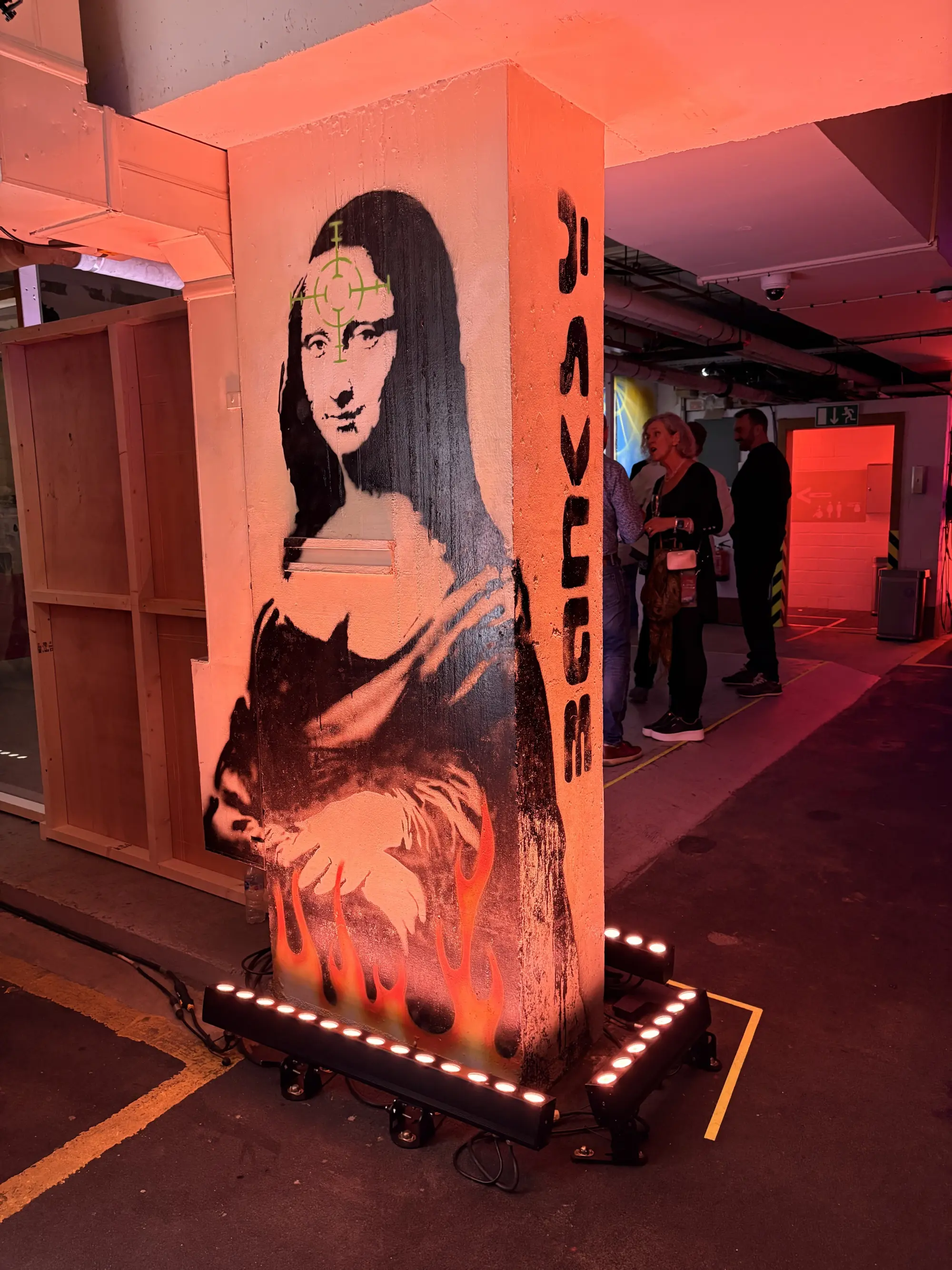
Banksy, Mona Lisa

Banksy, Mona Lisa

Where This Story Began

The story began in 2000, when Wolfgang Amadeus Brülhart, then Cultural Attaché at the Swiss Embassy, proposed an unconventional project. The Embassy’s underground garage would be opened to graffiti artists for seven nights, allowing them to create works within a space where they could work without the usual threat of being moved on or arrested.

The project culminated in a public event in January 2001.

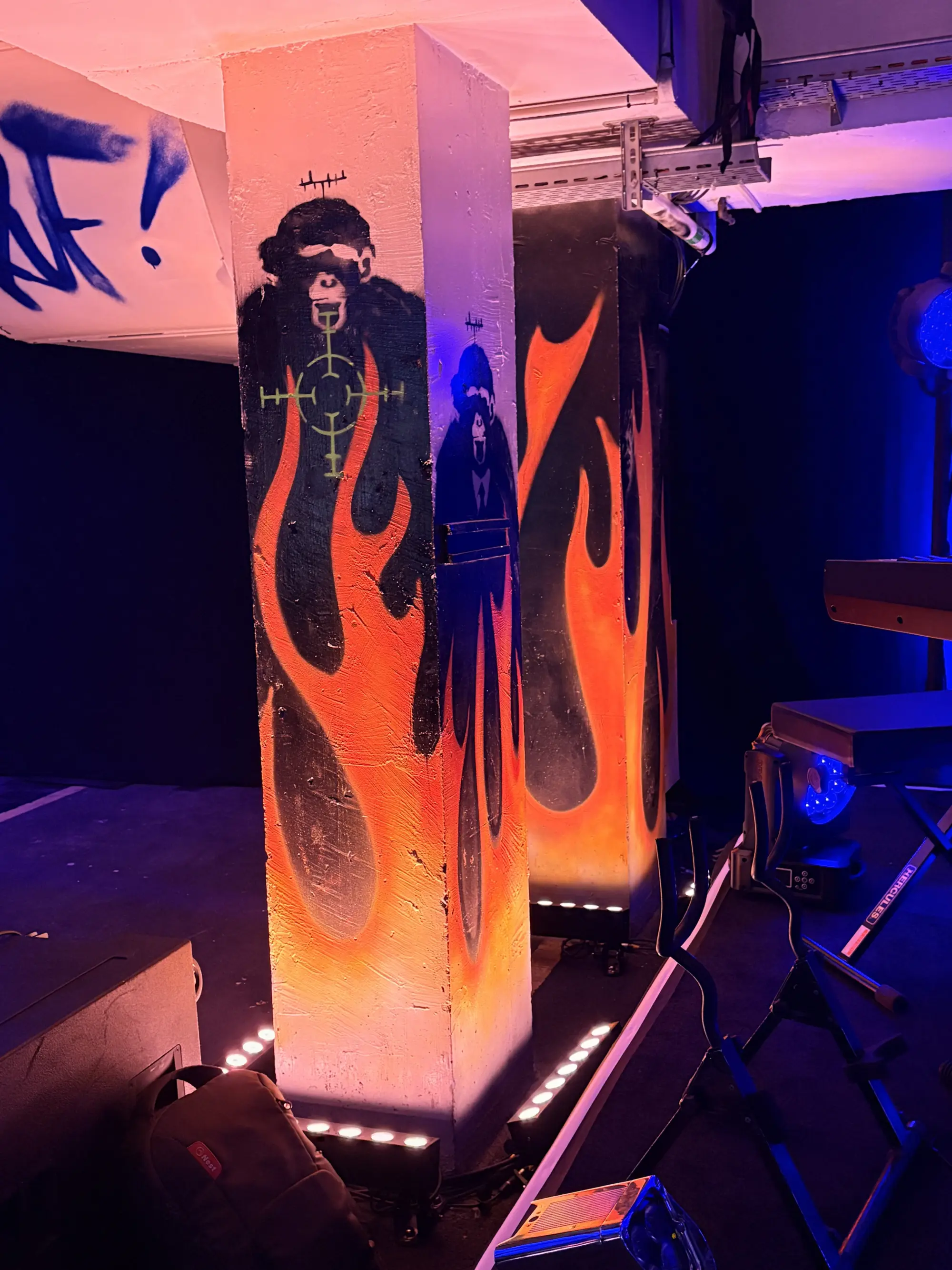
What began with Swiss graffiti writer TSA, now known as Gosb, soon grew to include Banksy, Riga, Chu, Snug and others. Working late into the night, the artists transformed a functioning garage of concrete, pipes and parked cars into an unlikely meeting place for individual styles, ideas and experimentation. There was no single masterplan: some works were carefully prepared, while others took shape spontaneously, with the garage gradually evolving through the contributions of many hands.

Among the artists who participated was Banksy, whose identity was still unknown to the wider public. Alongside other artists from London's emerging street-art scene, he transformed the underground garage into an extraordinary canvas.

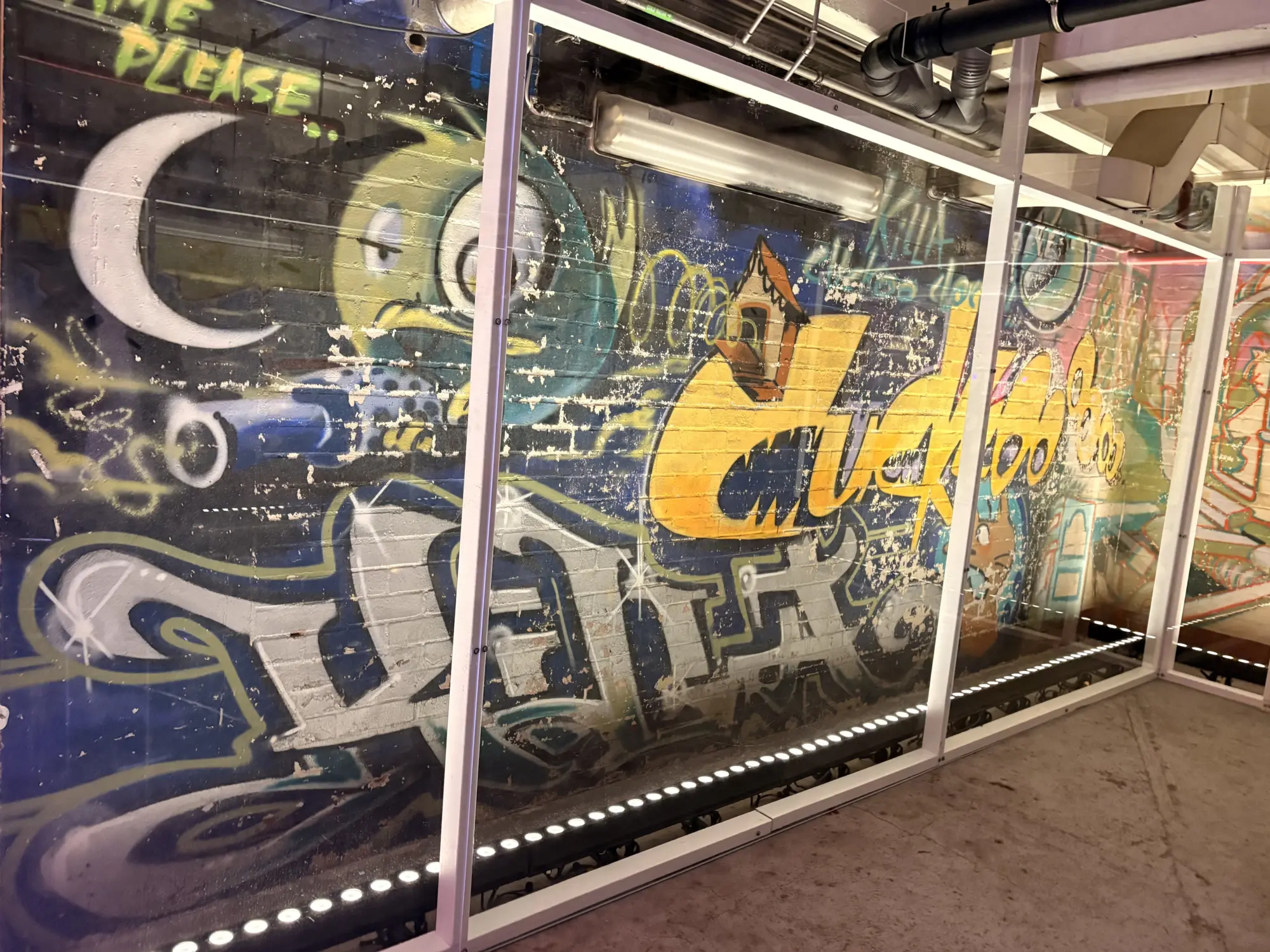
Twenty-five years later, around 50 works remain across the walls and pillars of the space, with approximately 16 attributed to Banksy. This includes Killa Cuckoo Clockin’, one of the last freehand Banksys. It is thought to be one of the last large freehand works Banksy painted and possibly the last surviving example from this period. The piece is now protected by a screen, as it sits in the car-wash bay of the Embassy’s working garage.

The location is particularly fitting. Rather than being displayed in a conventional gallery, the work remains integrated into its original environment, surrounded by the everyday infrastructure of the garage. Art and practical use continue to coexist, preserving the conditions in which these works were first created.

Twenty-five years ago, few could have anticipated the significance these works would eventually acquire, or that Banksy would become one of the most recognisable and commercially successful artists in the world.

Banksy, Killa Cuckoo Clockin

Banksy, Killa Cuckoo Clockin

Banksy Before Banksy Became Banksy

Perhaps the greatest importance of the collection lies in its timing.

The works date from a formative period in Banksy’s career, when the visual language that would ultimately make him one of the world's most recognisable artists was still developing.

Here, visitors can see early examples of the stencil technique, dark humour, political satire and typographical interventions that would become central to Banksy’s practice. Viewed together, these works provide an insight into the development of an artistic identity that would go on to achieve extraordinary international recognition.

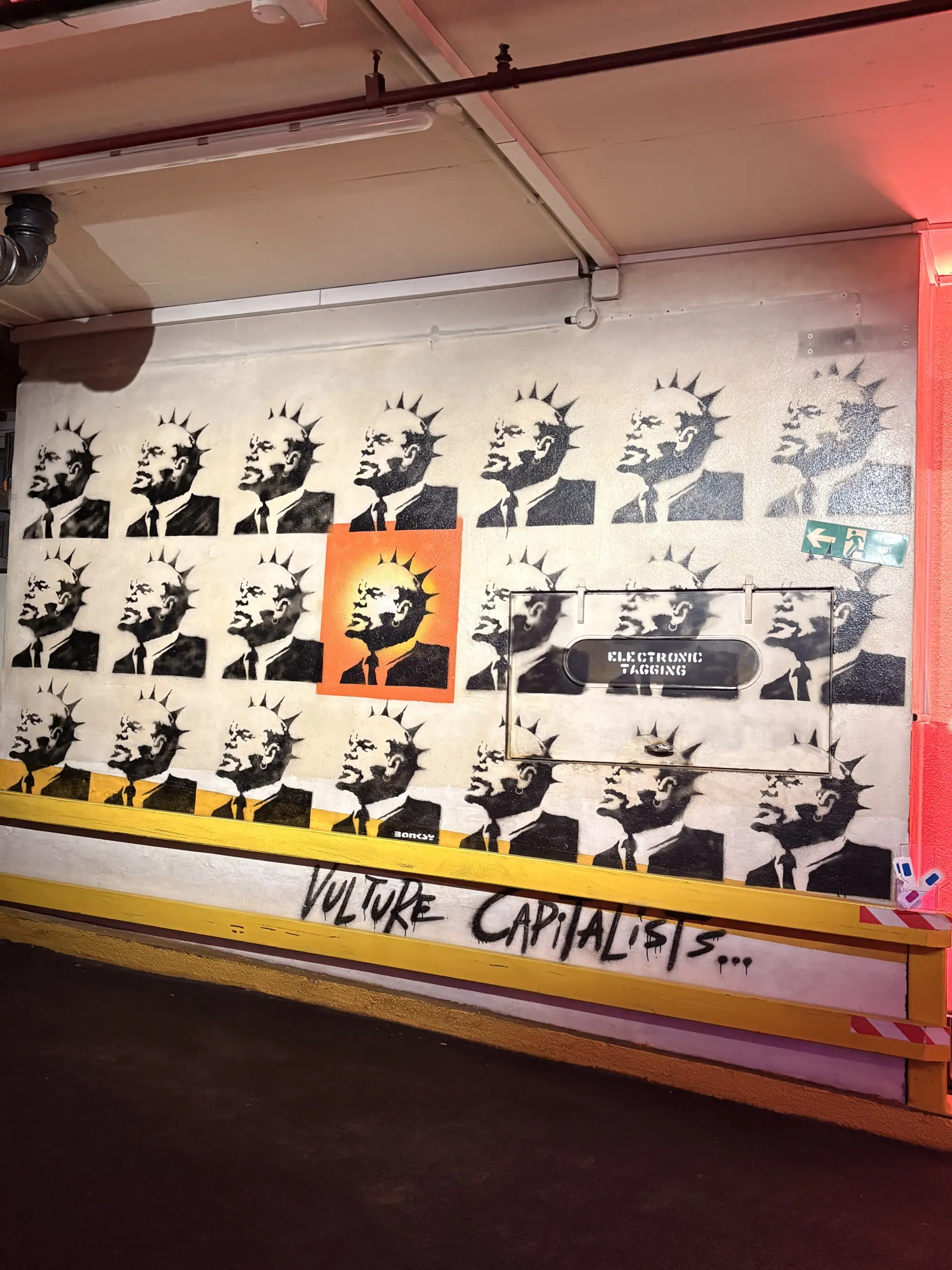
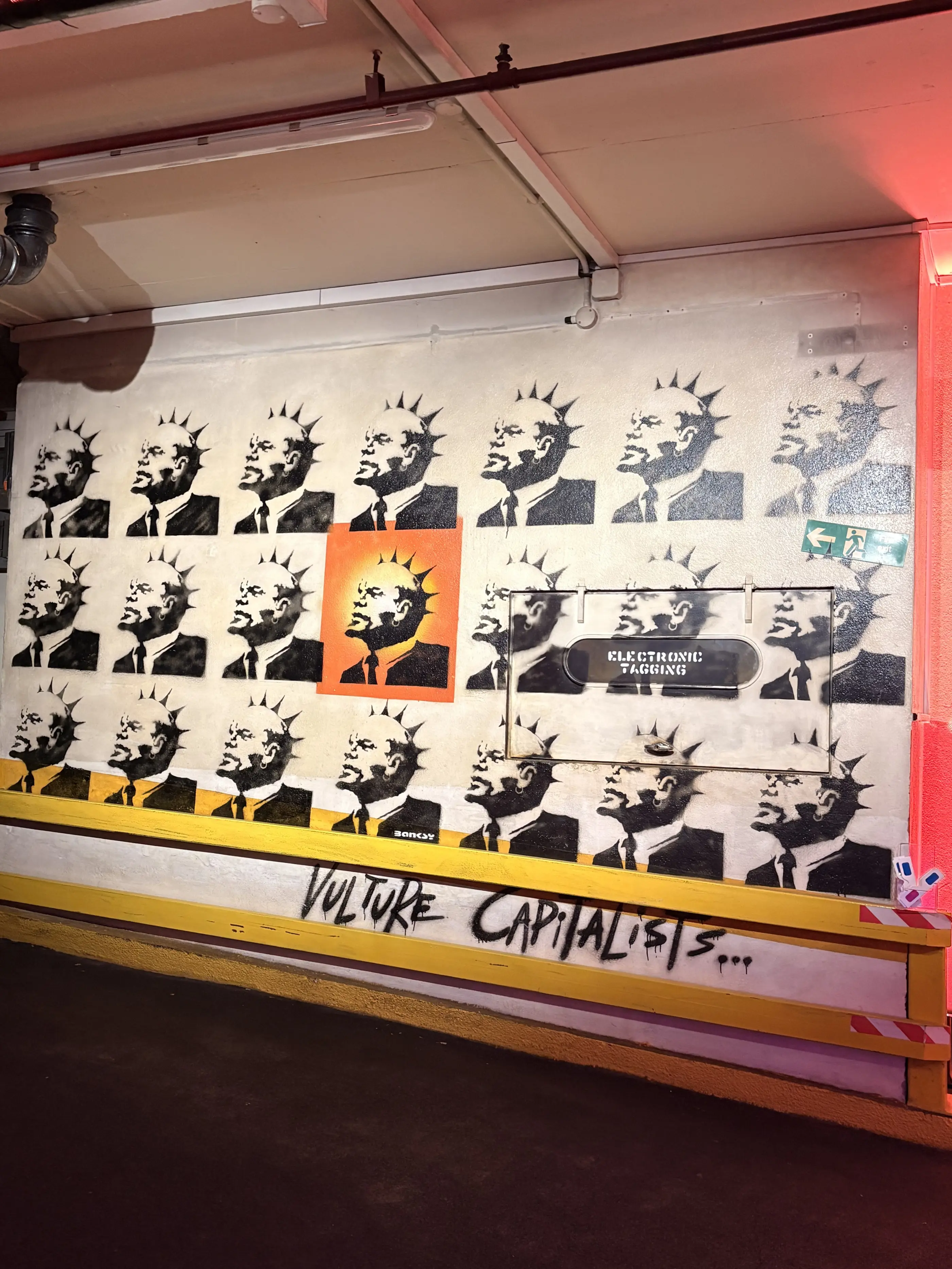
One of the most striking works is Vulture Capitalists, a large-scale mural featuring a series of Warhol-inspired portraits of Lenin dressed as punks. Its title transforms the familiar phrase “venture capitalists” into a pointed commentary on money, power and commerce. Indeed, due to the illegal nature of graffiti, it is extremely rare to see opportunities for Banksy to create works of this scale at this period in time.

Elsewhere, beneath a surveillance camera, Banksy has written This is not a photo opportunity. It is an understated intervention, but one that encapsulates his ability to turn an ordinary feature of the built environment into a joke, a political observation and a work of art simultaneously.

The collection also includes William Tell, a collaboration between Banksy and fellow artists Snug and CHU, highlighting the communal and collaborative nature of the graffiti scene from which Banksy emerged. The work is a reminder that Banksy’s early practice developed within a wider community of artists, each bringing their own style and ideas to a shared creative environment.

This collaborative spirit remains evident in the garage today. The anniversary celebrations brought the story full circle, with original participants returning to the space to create new works in response to the collection and its legacy.

Banksy, Vulture Capitalists

Banksy, Vulture Capitalists

The Garage Sessions: Celebrating 25 Years

We were invited to the Swiss Embassy to celebrate the collection’s 25th anniversary through the Garage Sessions, held from 8 to 10 October 2026. The event marked a significant milestone for the project, bringing together visual culture, music and cultural exchange in the very space where the original works were created.

Inspired by the creative spirit that first brought the artists together a quarter of a century ago, the programme looked both backwards and forwards, celebrating the garage’s history while recognising that its story is still being written.

To mark the anniversary, original participants Chu, Gosb and Snug returned alongside Byer to create new works responding to the space and its legacy. Their involvement established a direct connection between the original project and a new generation of creative possibilities, demonstrating that the garage remains a living artistic environment rather than simply a preserved historical site.

The new commissions also raise an interesting question: how do you preserve a historic artistic environment without preventing it from evolving? Unlike the original works, which were painted directly onto the building, the new additions were created on removable panels. They acknowledge the significance of the existing collection while allowing the garage to continue developing.

Importantly, the new works do not replace the originals. Instead, they begin the next conversation, extending the creative exchange that started in 2000.

The Garage Sessions were presented in partnership with the Montreux Jazz Artists Foundation, with the support of Pro Helvetia and the Swiss Cultural Fund UK. The programme reflected the Embassy’s wider commitment to cultural exchange and the continuing relationship between Swiss and British creative communities.

For us at Hang-Up Gallery, attending the anniversary event was an opportunity to appreciate the collection beyond its place in Banksy’s market history. Seeing the works in their original setting reinforces the importance of understanding the artist’s early practice within the wider street-art scene from which he emerged.

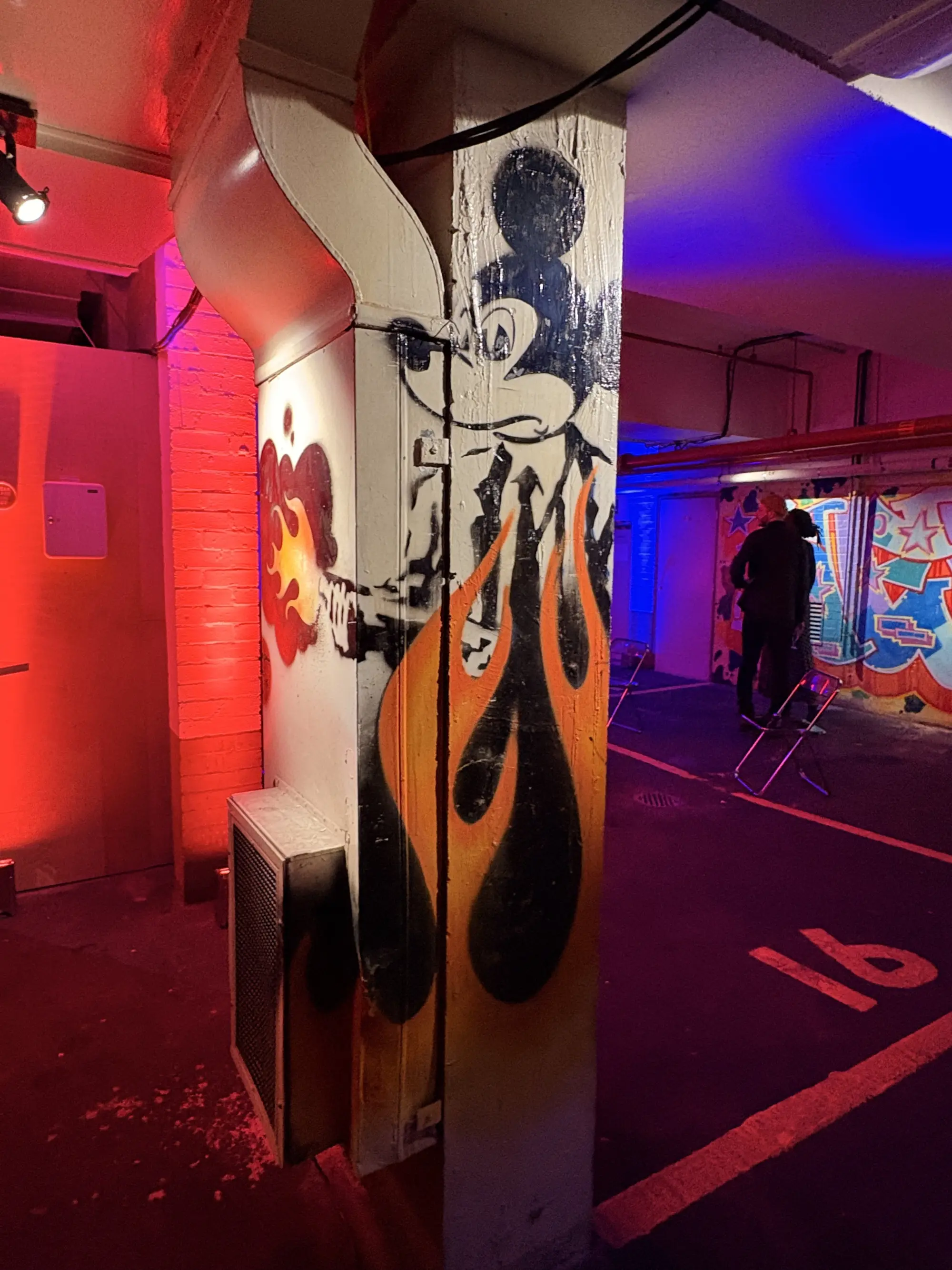
Banksy, Flame-Throwing Mickey Mouse

Banksy, Flame-Throwing Mickey Mouse

From Graffiti to Cultural History

When the works were created, graffiti was still predominantly associated with vandalism. Today, Banksy is one of the most important and commercially successful artists of his generation, with his works held in major private collections and institutions and achieving extraordinary prices at auction.

The Swiss Embassy garage therefore offers a remarkable physical record of that transformation.

The works have effectively remained frozen in time while the world around them has changed dramatically. What was once an underground garage covered in graffiti is now home to what has been described as one of the most concentrated groups of Banksy murals in a single location.

For collectors and art historians, that makes the collection particularly compelling. It is not simply a group of early Banksy works. It documents the moment at which a movement, an artist and a new visual language were beginning to take shape.

The garage also challenges the way we think about the relationship between graffiti and the art market. Banksy’s work now commands significant international attention, yet these murals were created at a time when street artists often had to work quickly and discreetly, with little certainty that their work would survive.

Here, the works remain in the environment for which they were intended, offering a different perspective from the prints, canvases and other works that circulate through galleries and auction houses.

From our perspective at Hang-Up Gallery, where Banksy’s work and its place within the contemporary art market remain an important area of interest, the collection is a valuable reminder that an artist’s significance cannot be measured by auction prices alone. The history, context and ideas behind the work are equally important.

The Embassy garage preserves precisely that context: a moment of experimentation, collaboration and creative freedom that helped shape the artist Banksy would become.

Banksy, Untitled

Banksy, Untitled

A Collection That Cannot be Separated From its Setting

Unlike a Banksy screenprint or canvas, the works in the Swiss Embassy cannot simply be removed from the walls and placed on the market.

Their meaning is inseparable from the space in which they were created.

The garage was never intended to be a white-cube gallery. It was, and remains, a working service space, where pipes become cables, structural features become part of the artworks and the technical infrastructure of the building is incorporated into the imagery. The surrounding environment is not incidental to the works; it is an essential part of their character.

That makes the forthcoming refurbishment particularly important. Rather than erasing the history of the building, the plans acknowledge the cultural significance of what happened there 25 years ago, with the original graffiti works set to be preserved and appropriately displayed.

There is something fitting about this approach. Banksy’s work has always challenged the distinction between public and private space, between vandalism and art, and between the temporary and the permanent.

The Swiss Embassy collection embodies all of these contradictions.

The diplomatic setting makes the works particularly striking. An institution associated with diplomacy, tradition and cultural heritage became the backdrop for art that questioned authority, challenged convention and embraced the irreverent spirit of graffiti. The result was not simply a clash between two worlds, but a conversation between them.

The anniversary event brought this relationship into focus. The garage remains a functioning part of the Embassy, yet it also preserves an extraordinary chapter of street-art history. Its continued existence demonstrates how an unconventional cultural initiative can acquire significance far beyond its original purpose.

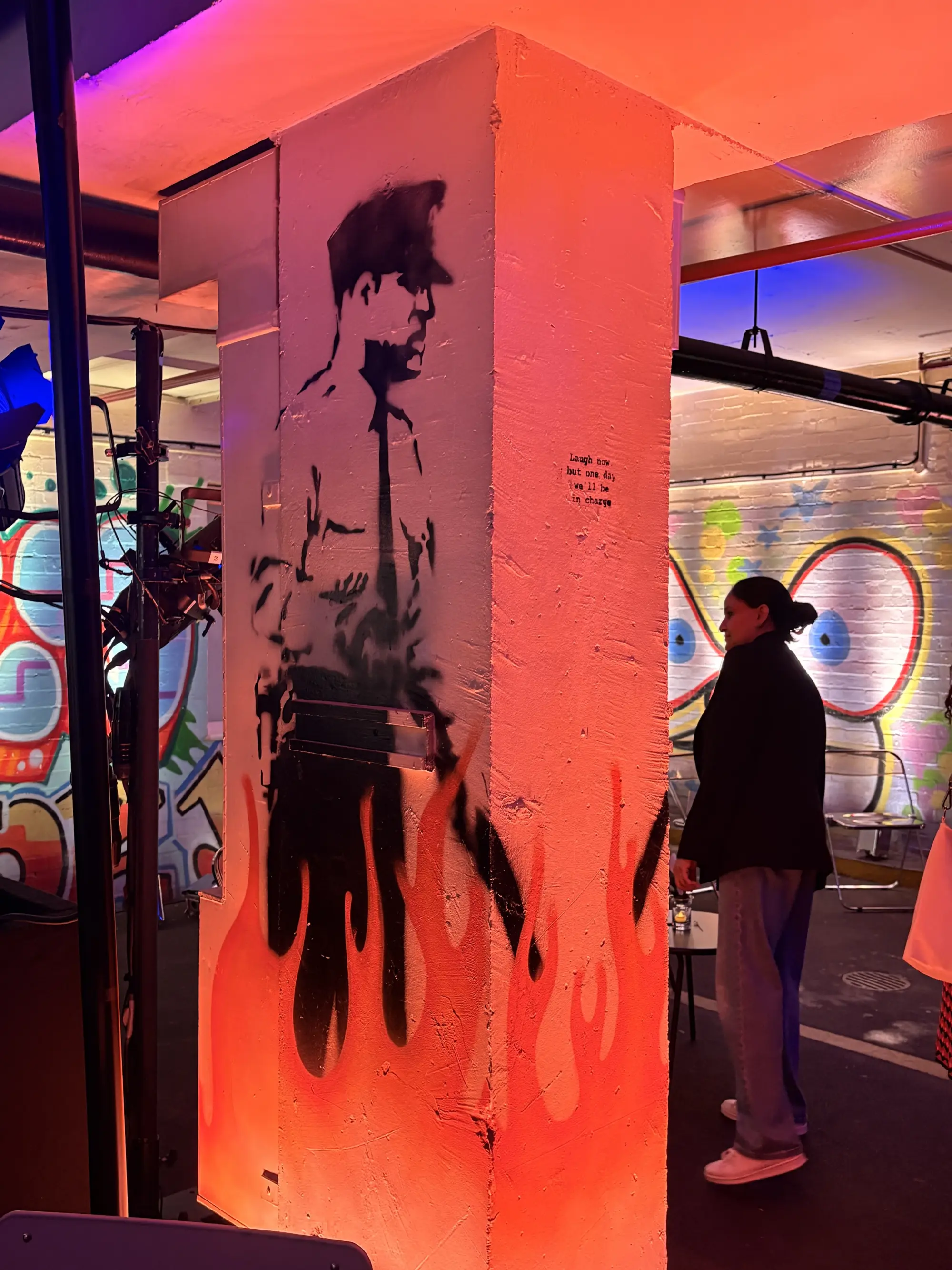
Banksy, Cop With Flame Thrower

Banksy, Cop With Flame Thrower

25 Years On

The anniversary provides an opportunity to look back at a moment when Banksy was still an elusive figure operating within London's underground art scene.

Twenty-five years later, his name is recognised around the world.

The contrast between the diplomatic surroundings of the Swiss Embassy and the irreverent street art hidden beneath it remains particularly striking. Above ground, the Embassy represents tradition, diplomacy and Swiss cultural heritage. Below, its garage preserves a snapshot of London's rebellious creative culture at the beginning of the 21st century.

And perhaps that is ultimately what makes the collection so important.

It captures Banksy before the global fame, before the auction records and before the extraordinary demand from collectors. It preserves the artist at the point where experimentation, anonymity and the energy of London's street-art scene were coming together.

It also preserves the contributions of the wider group of artists who helped shape the garage, reminding us that the early street-art scene was built on collaboration, shared ideas and individual expression. The return of Chu, Gosb and Snug, alongside Byer, for the 25th-anniversary Garage Sessions demonstrates that this creative spirit has not disappeared. Instead, it continues to evolve, finding new ways to respond to the history of the space.

As the Swiss Embassy prepares for its next chapter, these works will continue to tell the story of its most unconventional artistic experiment. The planned refurbishment offers an opportunity to ensure that this unique collection remains preserved and appropriately displayed, while respecting the original setting in which it was created.

For us at Hang-Up Gallery, being invited to take part in the 25th-anniversary celebrations was a reminder of why Banksy’s early work continues to fascinate collectors, art historians and the wider public. Beyond the recognisable imagery and extraordinary market demand, these murals preserve a moment when an artist and a movement were still finding their feet.

Twenty-five years after the garage was opened to graffiti artists, what was once temporary has become history.

Contributors

Madeleine White

More about Banksy

More from Banksy