
14 Oct 2026 4 min read
Meet Louis Fratino
Some artists invite us to look at the world differently; others remind us to look more closely. Louis Fratino does both. Through vivid colours, expressive figures and intimate domestic scenes, the American painter transforms everyday experiences into something deeply personal yet widely relatable. As we welcome him to our roster, here are five things worth knowing about the artist and the world behind his work.
Born in 1993, Louis Fratino grew up in Deale, a rural community in Maryland. After studying painting at the Maryland Institute College of Art in Baltimore, Fratino spent a year in Berlin before moving to New York in 2016, where he settled and continued to develop his practice.
Fratino's work is a reminder that the places and people we grow up around can stay with us long after we leave them behind.
Despite these geographical shifts, Fratino’s early experiences, his connection to his hometown, and the people he grew up with remain constant in his work: family, relationships, domestic interiors, and the intimate details of everyday life. Rather than leaving his origins behind, he seems to carry them with him, transforming personal memories and experiences into paintings that feel both deeply individual and universally recognisable.
His teenage dream was becoming an illustrator
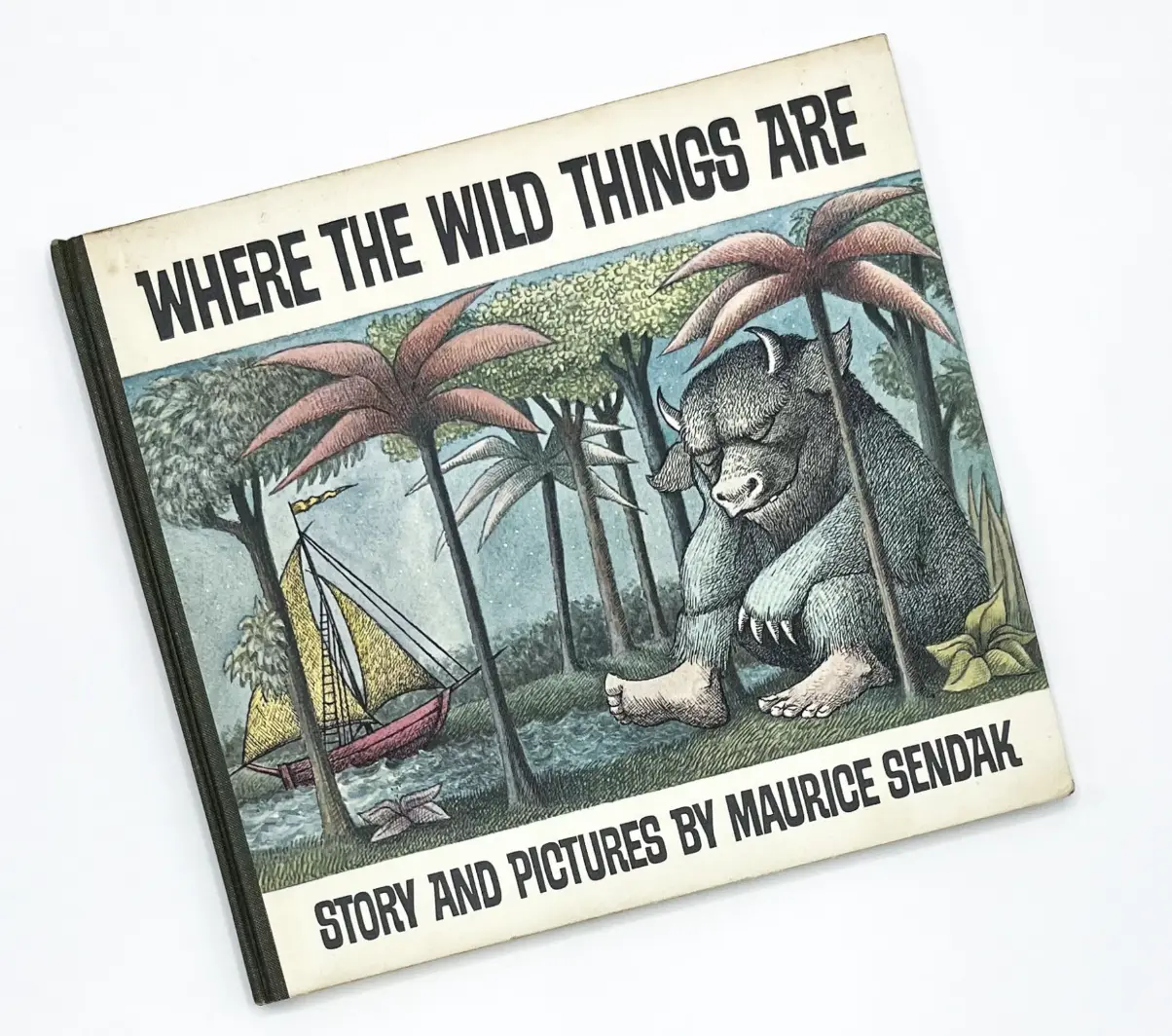
Before formal art training, Fratino was already drawing and filling sketchbooks with observations from his life. As a teenager, he was captivated by children’s book illustration, particularly the imaginative worlds created by artists such as Maurice Sendak, best known for Where the Wild Things Are, and Lane Smith.
That early fascination left a lasting mark on his approach to image-making. Illustration showed him how shape, colour and composition could tell a story without needing to reproduce reality exactly. Those early influences continue to inform his work, giving his paintings a distinctive balance between observation and imagination.
Making queer intimacy part of the everyday
Fratino’s paintings often portray men in moments of closeness: embracing, resting or sharing a home. These scenes sit alongside the familiar details of everyday life, creating a world in which tenderness, desire and ordinary routines exist side by side. Rooted in his experience as a queer man, his work gives space to forms of intimacy that have too often been overlooked, while exploring feelings that extend beyond any single identity.
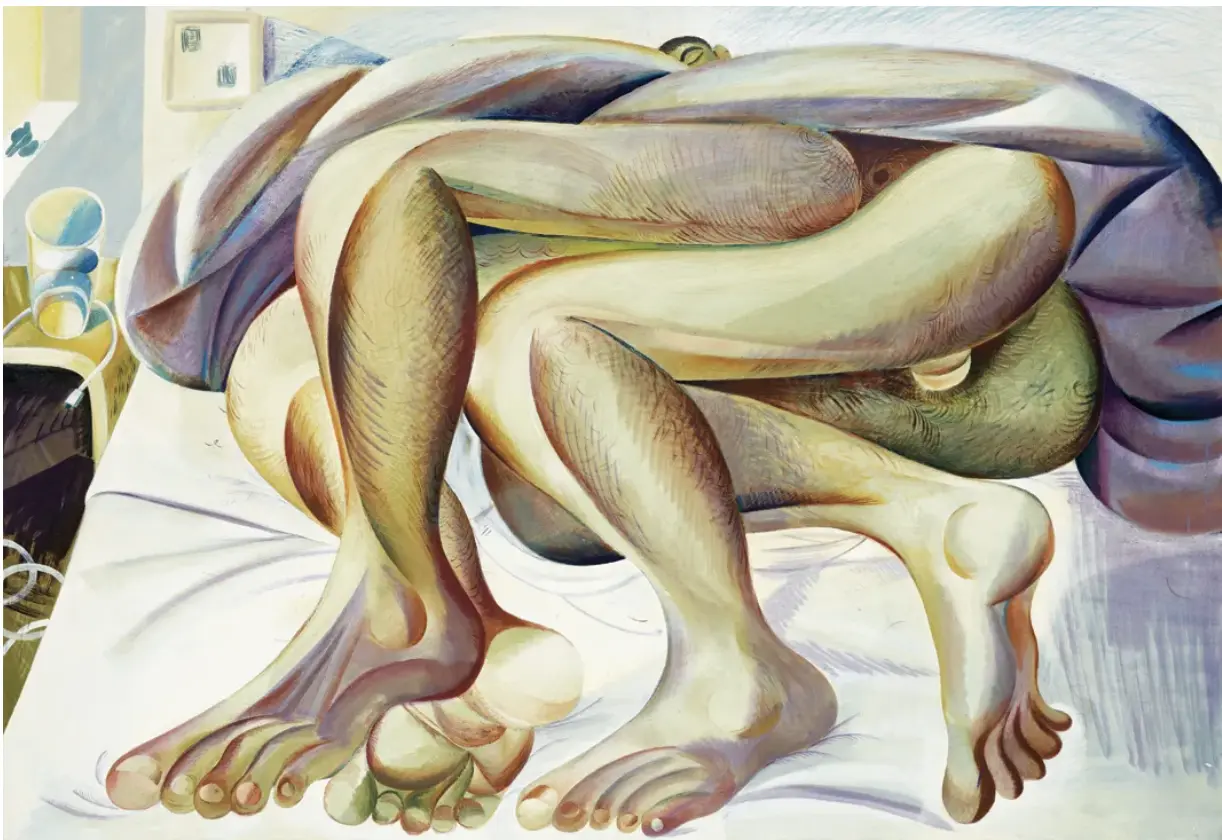
Louis Fratino, The Sleepers, 2020
In Fratino’s paintings, intimacy is not limited to the explicitly erotic. It can be found in the posture of a sleeping figure, the familiarity of a shared space or the traces someone leaves behind. Through these small, recognisable moments, he reveals how much tenderness and meaning can be found in the ordinary rhythms of life.
His work also connects with a longer history of queer art, drawing attention to artists whose contributions have too often been overlooked. By bringing this history into the present alongside his own experiences, Fratino makes room for stories that deserve to be seen, remembered and shared.
Memory is one of his most important artistic tools
For Fratino, memory is more than a way of preserving the past; it is an active part of the painting process. Rather than reproducing scenes from photographs, he draws on remembered experiences and familiar spaces, allowing the feeling of a moment to come through in the painting.
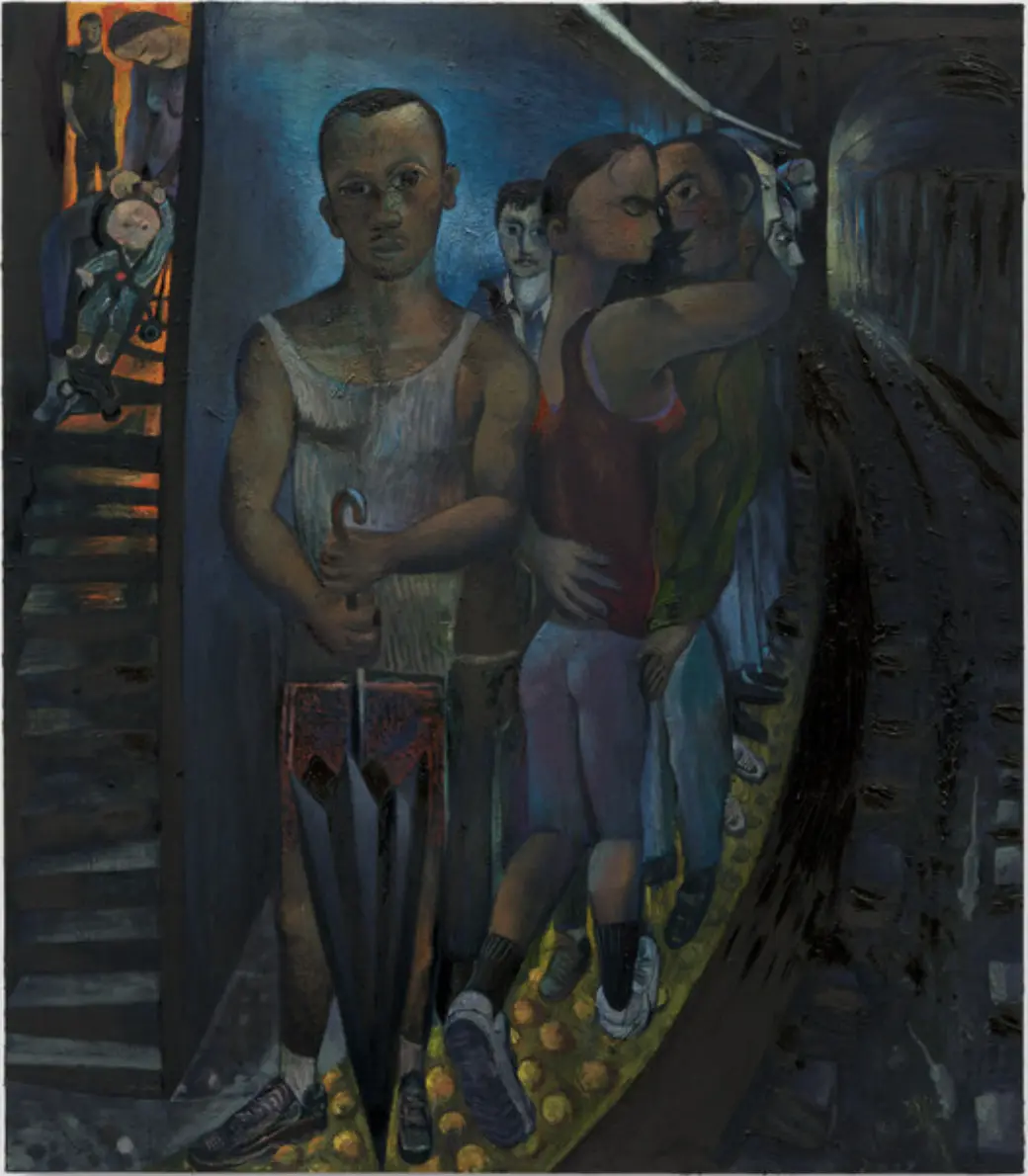
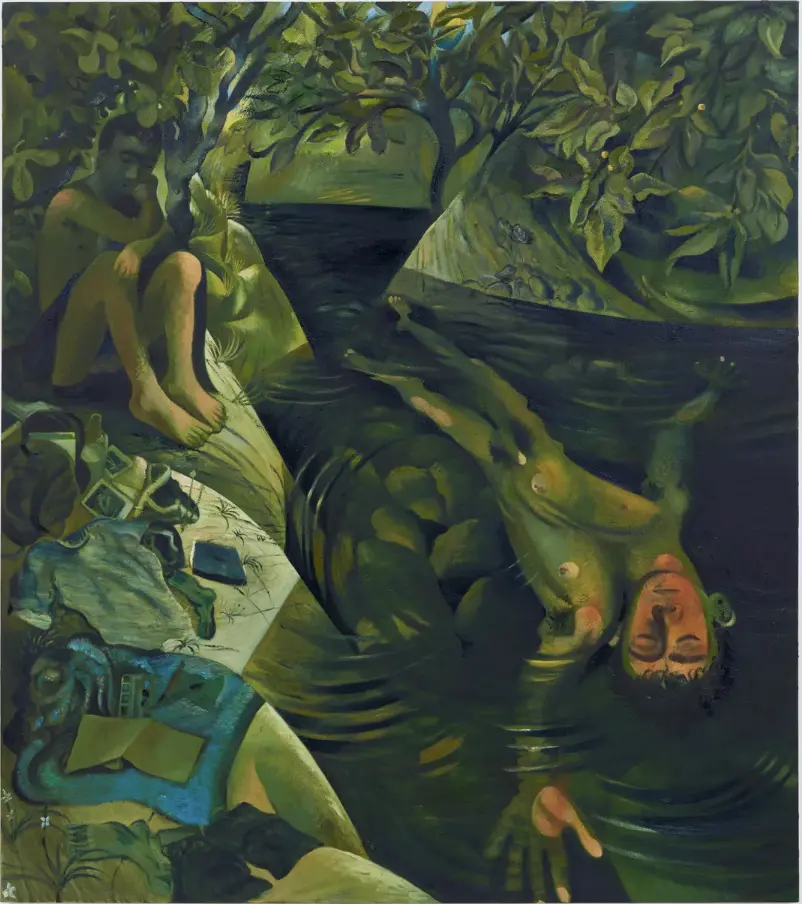
Louis Fratino, Summer in the city, 2026 & The beautiful summer, 2023
Working from memory gives him the freedom to intensify colour and exaggerate forms, blurring the line between what is real and what is imagined. Like a memory itself, his paintings are not always precise, yet they can feel deeply true, capturing the atmosphere of an experience rather than simply how it looked.
There is something personal, almost diaristic, about this approach. As Fratino returns to people, places and relationships that have shaped him, his paintings become more than records of the past. They explore how certain moments stay with us, changing shape over time while continuing to influence how we see ourselves and the world around us.
A practice that extends beyond painting
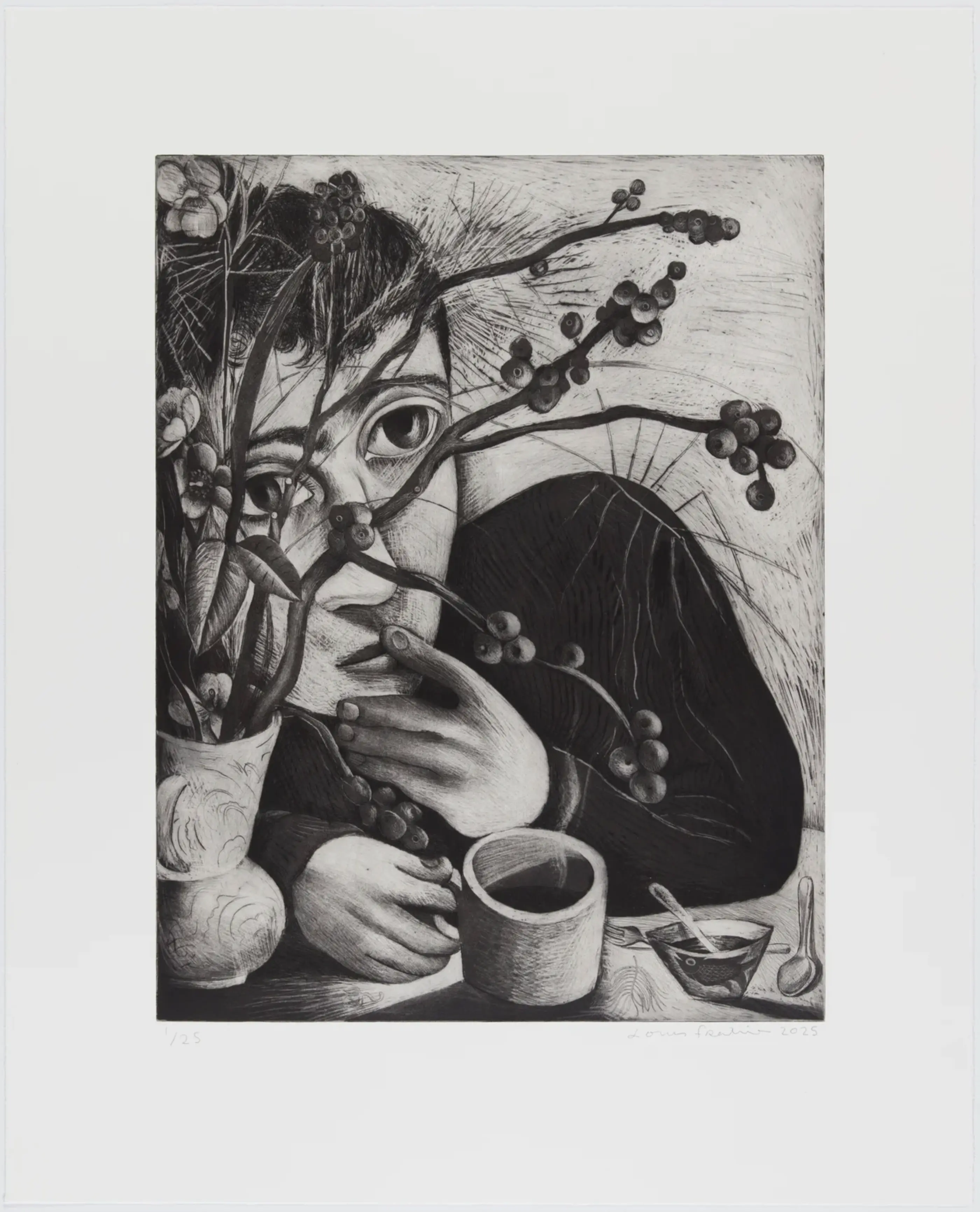
Although painting remains at the heart of Fratino's practice, his creative world extends into drawing, printmaking and sculpture, offering a broader view of his interests and the different ways he approaches the human figure and the domestic environment.
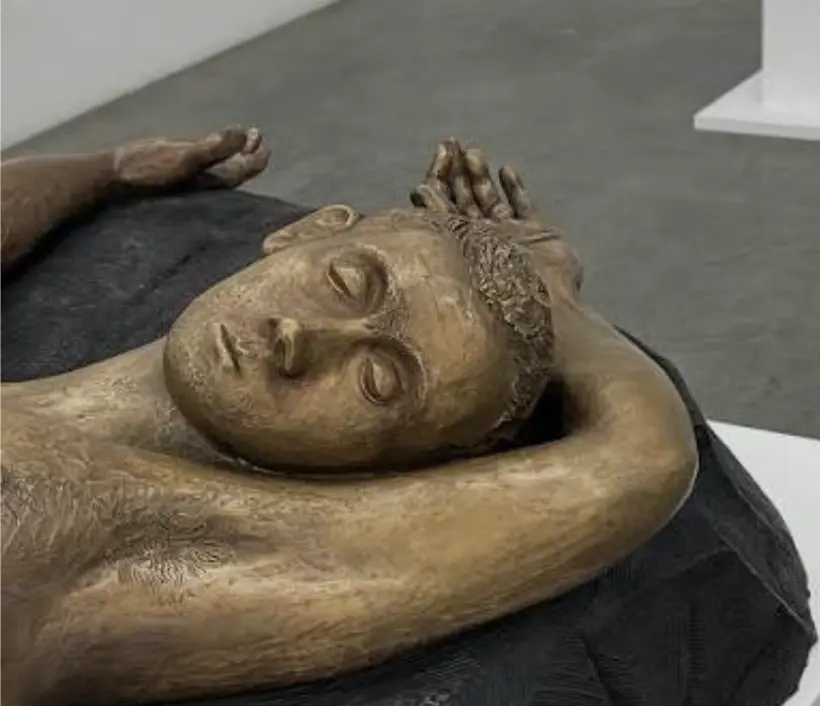
Detail of La Scorza by Louis Fratino
Drawing is particularly important to his process. It allows him to work quickly and intuitively, following an idea before it becomes too fixed or resolved. Sculpture, meanwhile, introduces a different relationship with the body: form becomes something physical in space, rather than an image contained within the boundaries of a canvas.
Across these mediums, certain interests remain consistent: the body, domestic life, personal relationships, colour and the history of figurative art. What changes is the way these subjects are experienced. A painted figure, a drawing and a sculpted form can each reveal a different aspect of the same fascination.
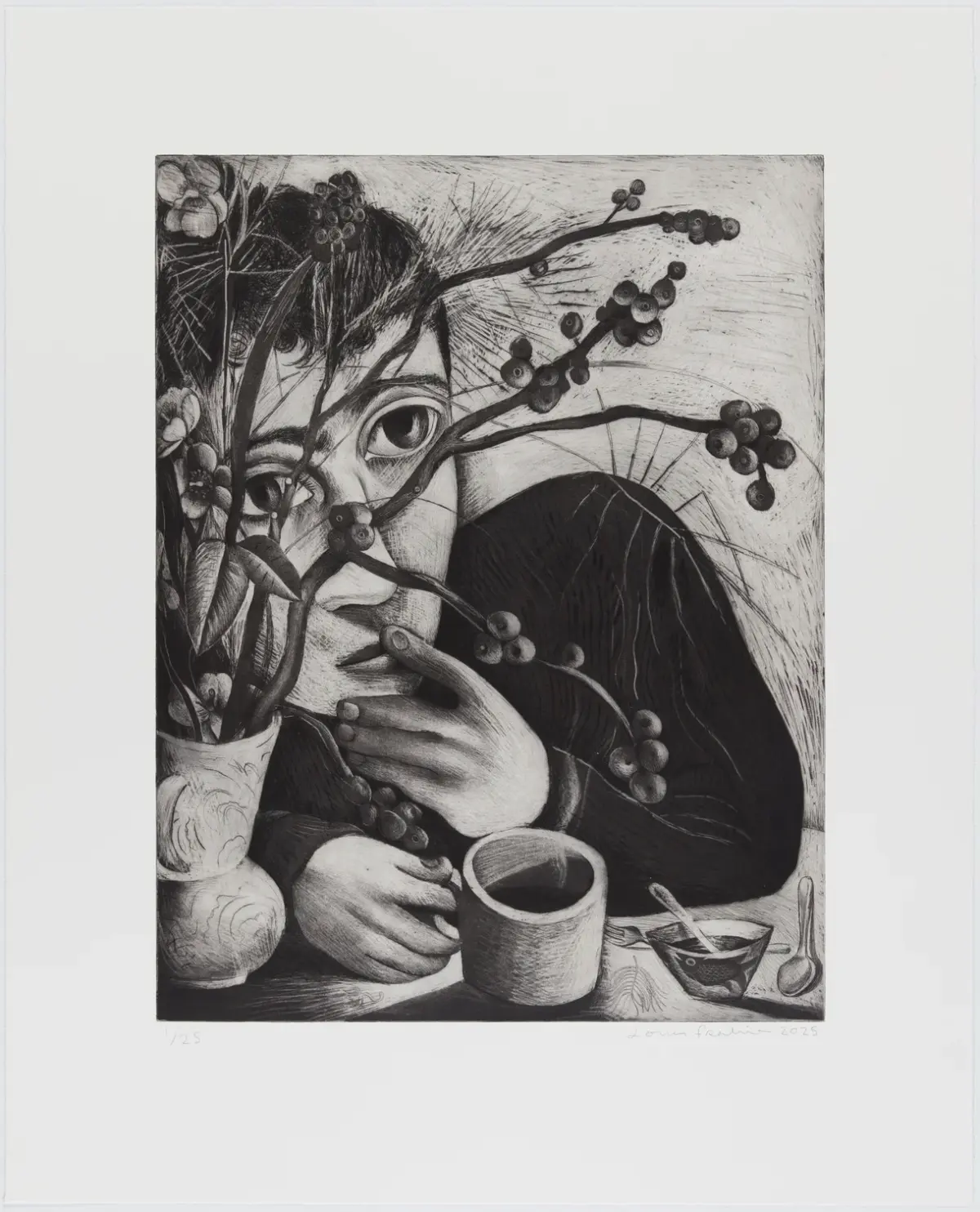
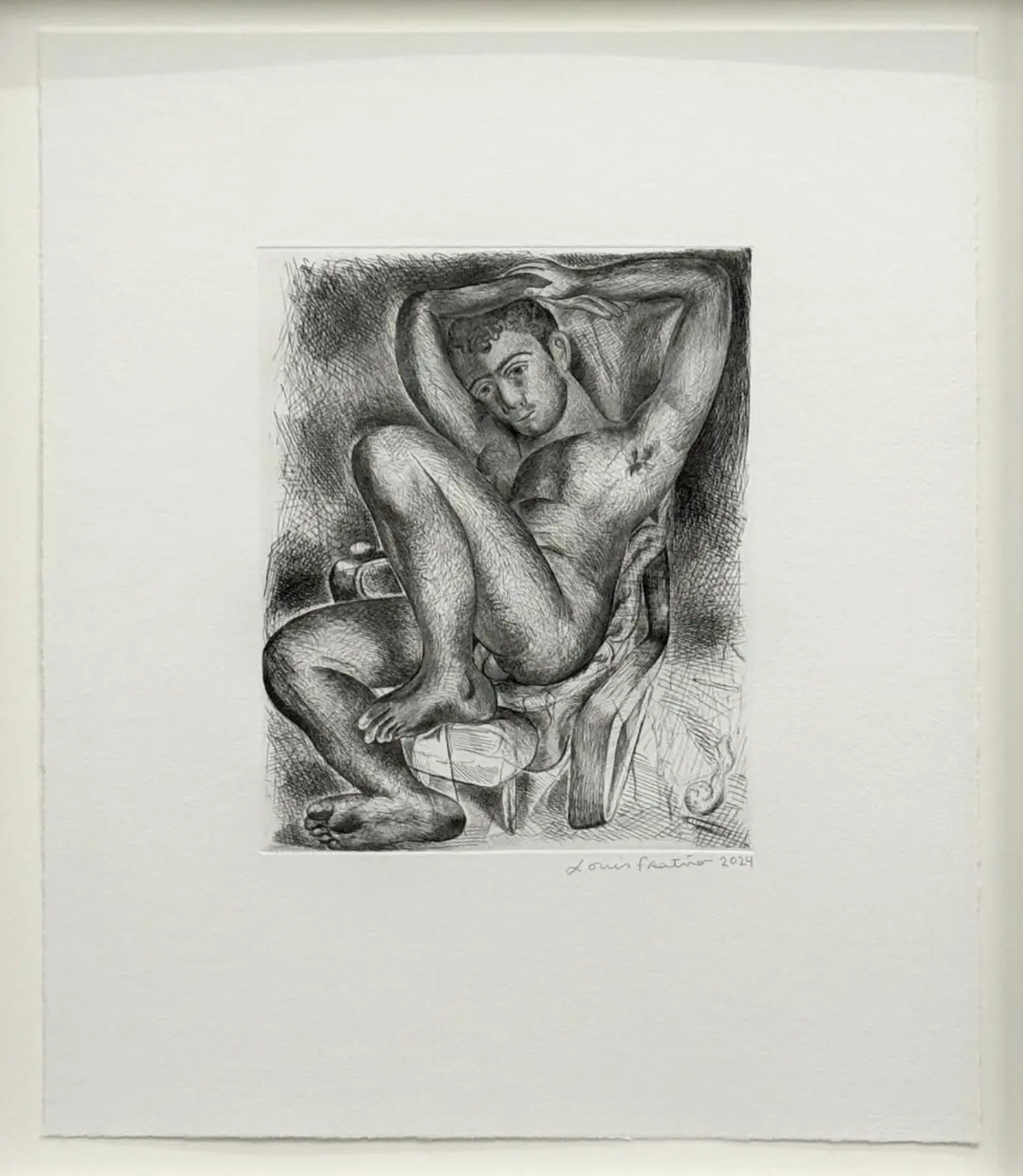
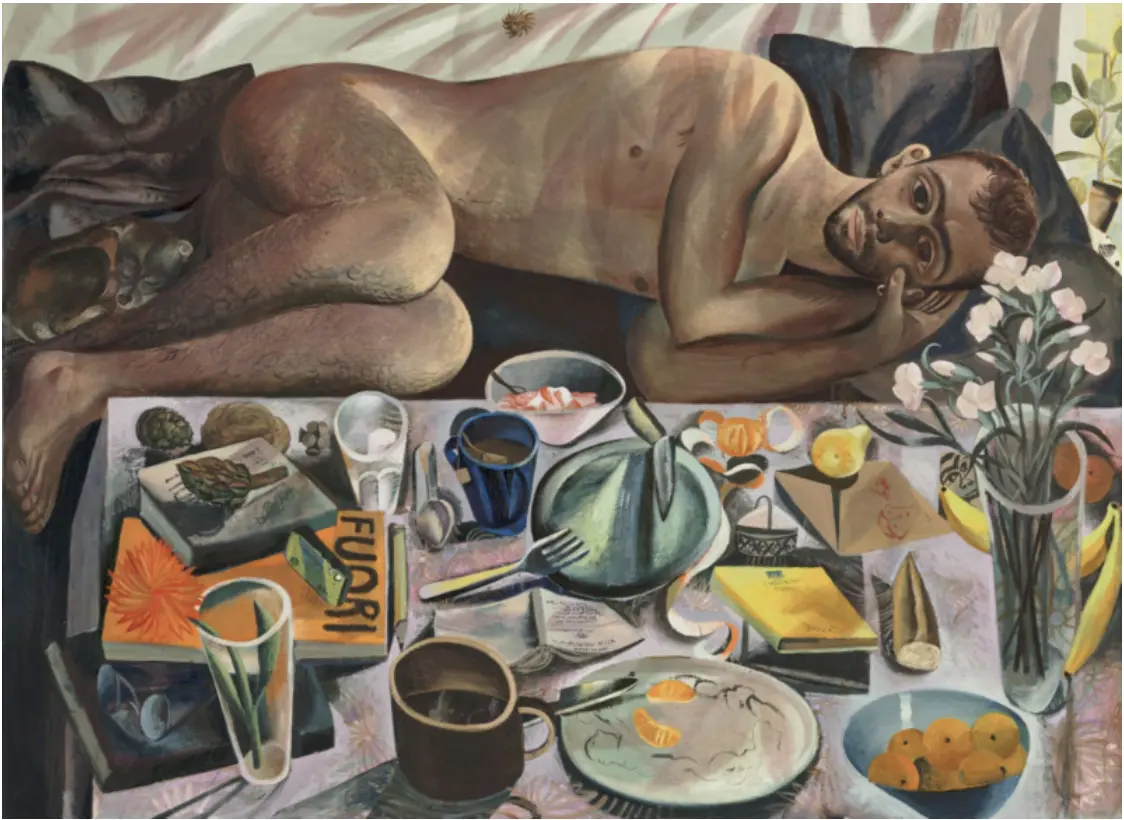
Louis Fratino, You and Your Things, 2022
What makes Louis Fratino's work compelling is the way it brings together the personal and the universal. His paintings are grounded in particular memories, relationships and experiences, yet they leave room for viewers to bring their own histories to what they see.
Whether through the intimacy of a domestic scene, the expressive possibilities of the human body or the unexpected emotional weight of an everyday object, Fratino reminds us that there is often more to discover in the familiar than we first imagine.
Contributors
Laura Rivas-Lopez
More from Artists
-
04 Nov 2026
The Anatomy of Damien Hirst: 5 + 1 Key Influences to Understand His Practice
Behind the formaldehyde tanks and diamond skulls sits a genuine obsession with art history, clinical science, and old-school traditions of...
-
26 Oct 2026
David Hockney in Numbers
£67.4 million paintings, 90-metre friezes, and a stockpile of 2,000 emergency cigarettes. Step inside the monumental life of David Hockney...
-
06 Oct 2026 4 min read
Warhol Without Limits: Rare Works Revealed
Think you know Warhol? Look again. Behind the celebrity portraits lies a wealth of drawings and rare prints that reveal...
-
05 Oct 2026 4 min read
Banksy, Self-destruction and the Art of the Spectacle
Eight years ago, one of the most talked-about moments in contemporary art unfolded in the middle of a Sotheby’s auction...
-

29 Sept 2026 3 min read
Why Raymond Pettibon Keeps Returning to the Wave
For more than 40 years, across works on canvas, paper, and prints, the wave has been a leitmotif in his...
-
29 Sept 2026 4 min read
From Vasarely to Egypt: 5+1 Influences to Unpack Bridget Riley’s Practice
If you’ve ever stood in front of a Bridget Riley painting, you know that looking at her work is a...
-
25 Aug 2026 5 min read
Andy Warhol’s Flowers: How the Humble Hibiscus Became a Pop Icon
From delicate hand-drawn roses to electric hibiscus blooms, flowers were a recurring motif throughout Andy Warhol's career. At once beautiful...
-
25 Aug 2026 5 min read
Keith Haring: Drawing the Dolphin
At first glance, Keith Haring’s "Man On Dolphin" appears playful and uncomplicated. Look a little closer, however, and the scene...
-
20 Jul 2026 3 min read
Collector's Guide: Damien Hirst | Spots
Once you become synonymous with an image, have you hit the big time? There are 3 main subjects that Damien...
-

13 Jul 2026 3 min read
Collector's Guide: Bridget Riley | Lozenges Series
Take a deep dive into one of Bridget Riley's most acclaimed series: Lozenges.
-
05 Jul 2026
David Hockney - A Life of Looking
David Hockney has died aged 88. He was artist who will be remembered for an illustrious career that spanned many...
-
22 Jun 2026
A Life Size example of Banksy’s Love Is In The Air Headlined Sotheby’s Evening Sale
One of Banksy’s most enduring images headlined Sotheby’s Modern & Contemporary Evening Auction in London this week, as Love Is...