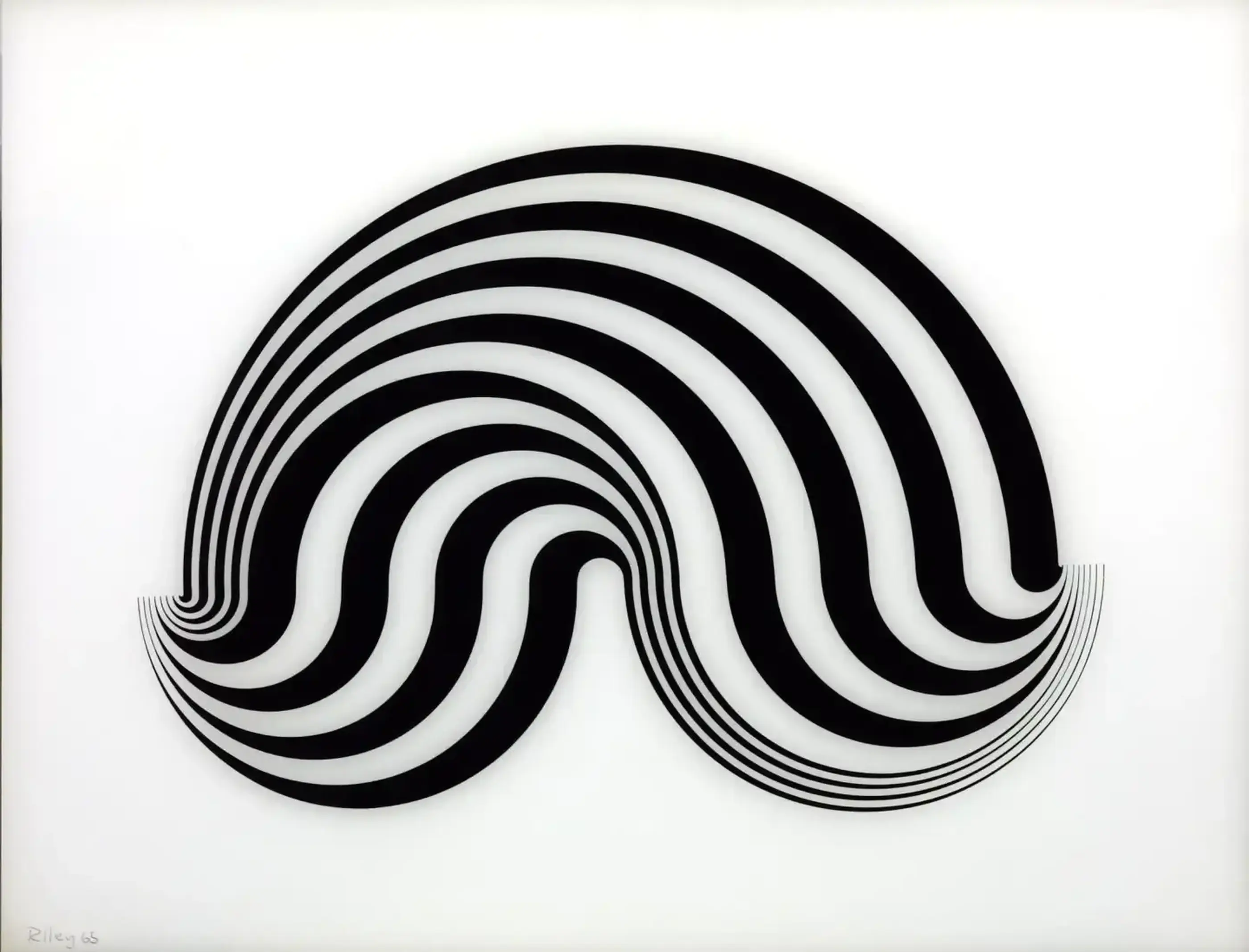
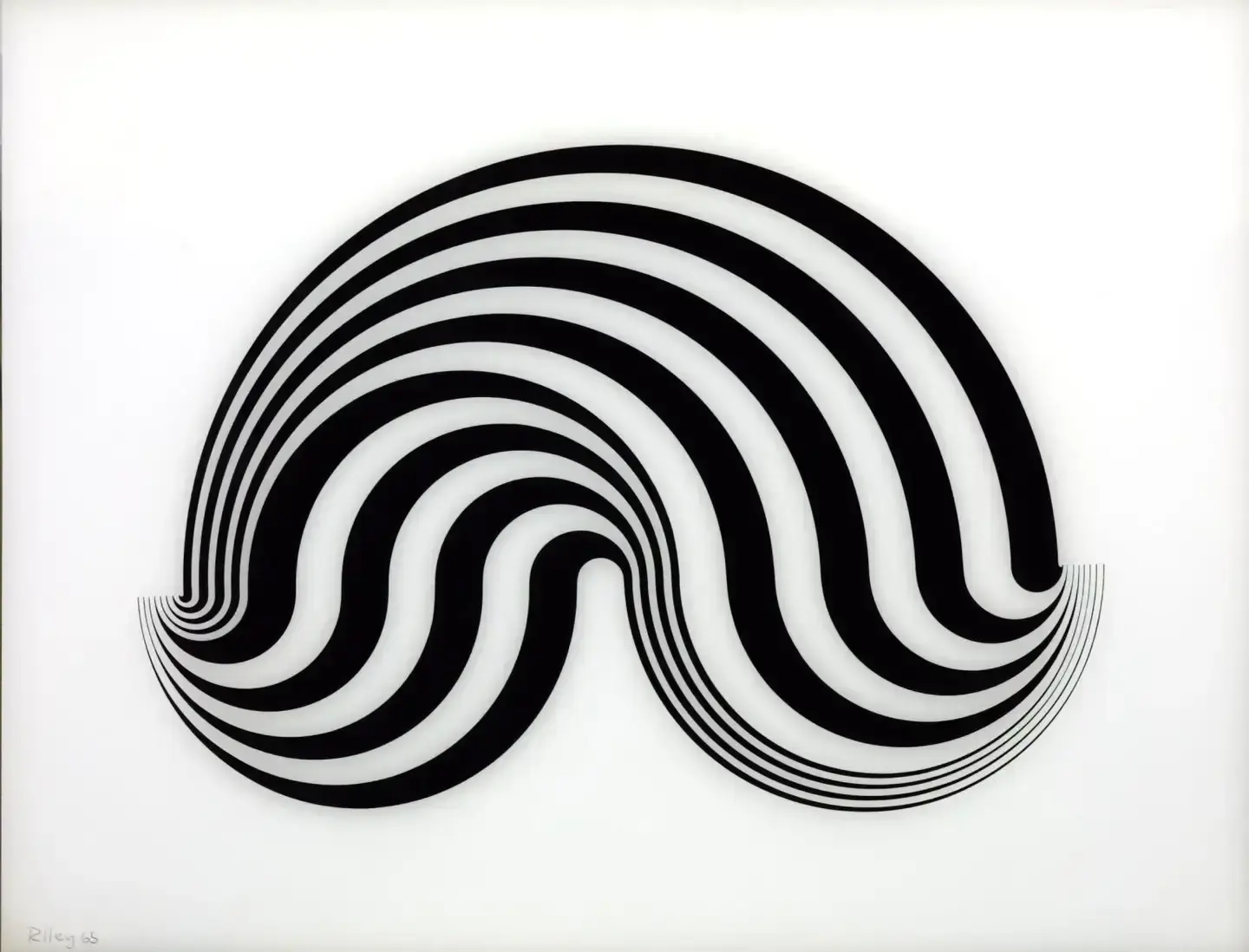
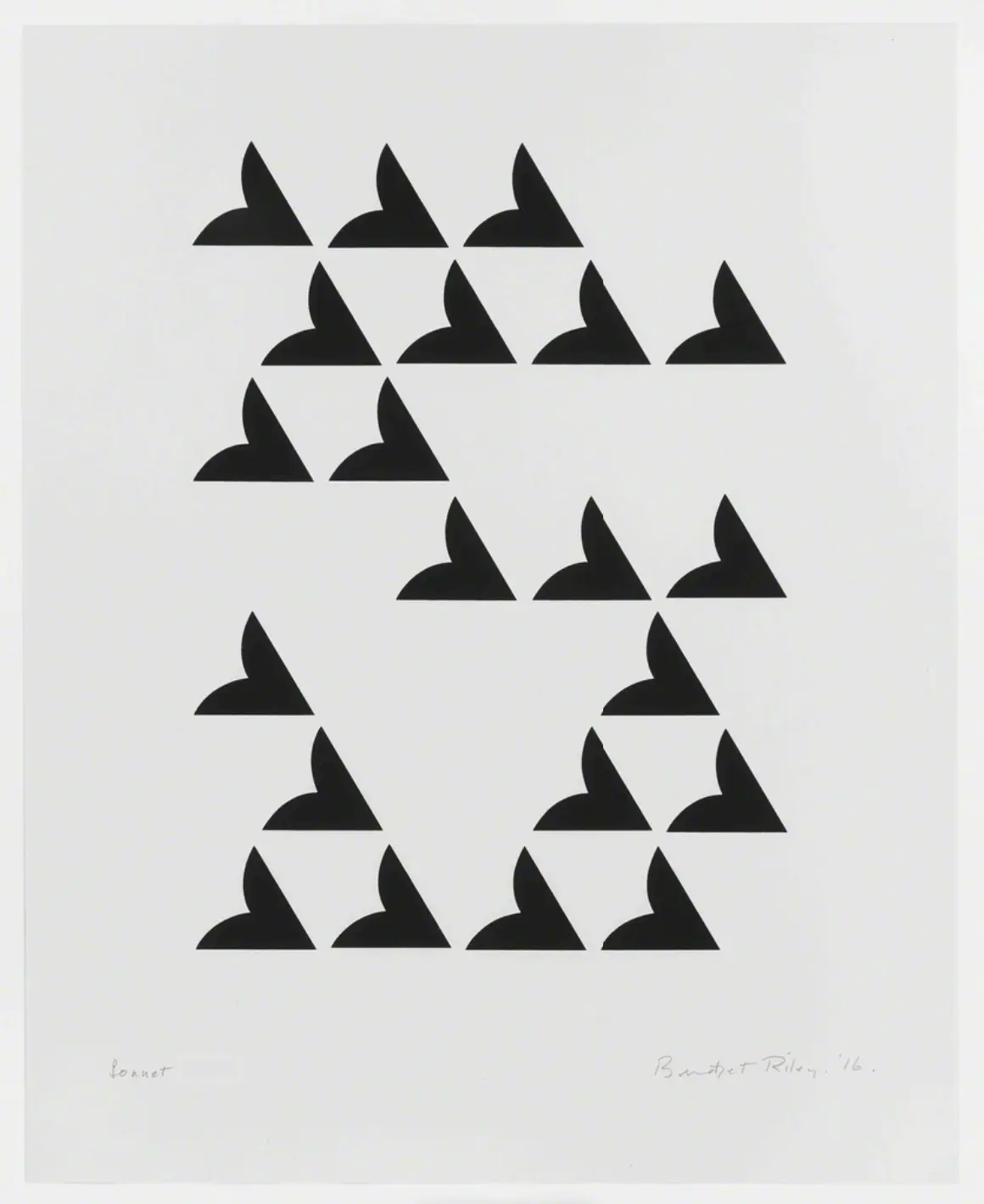
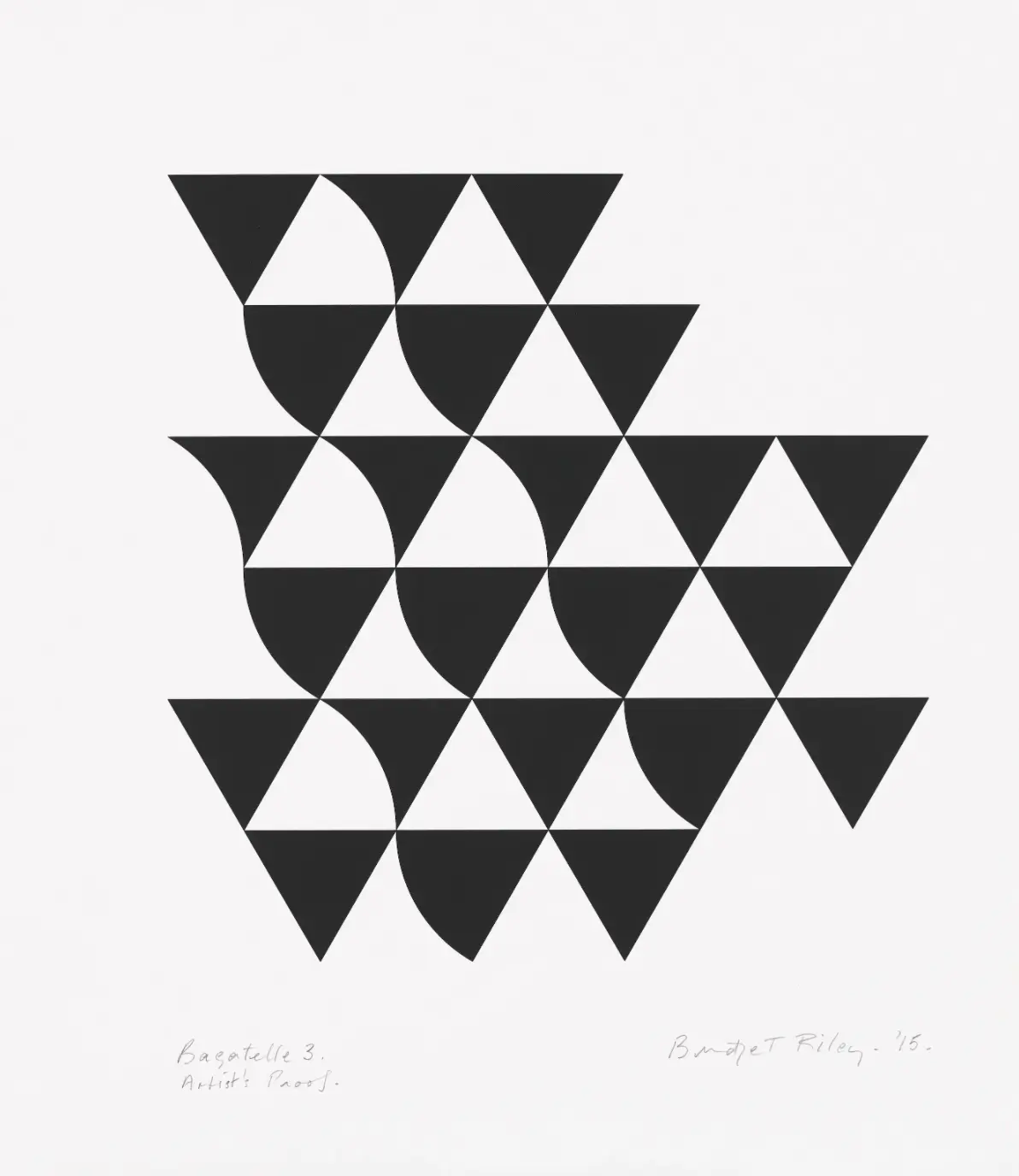
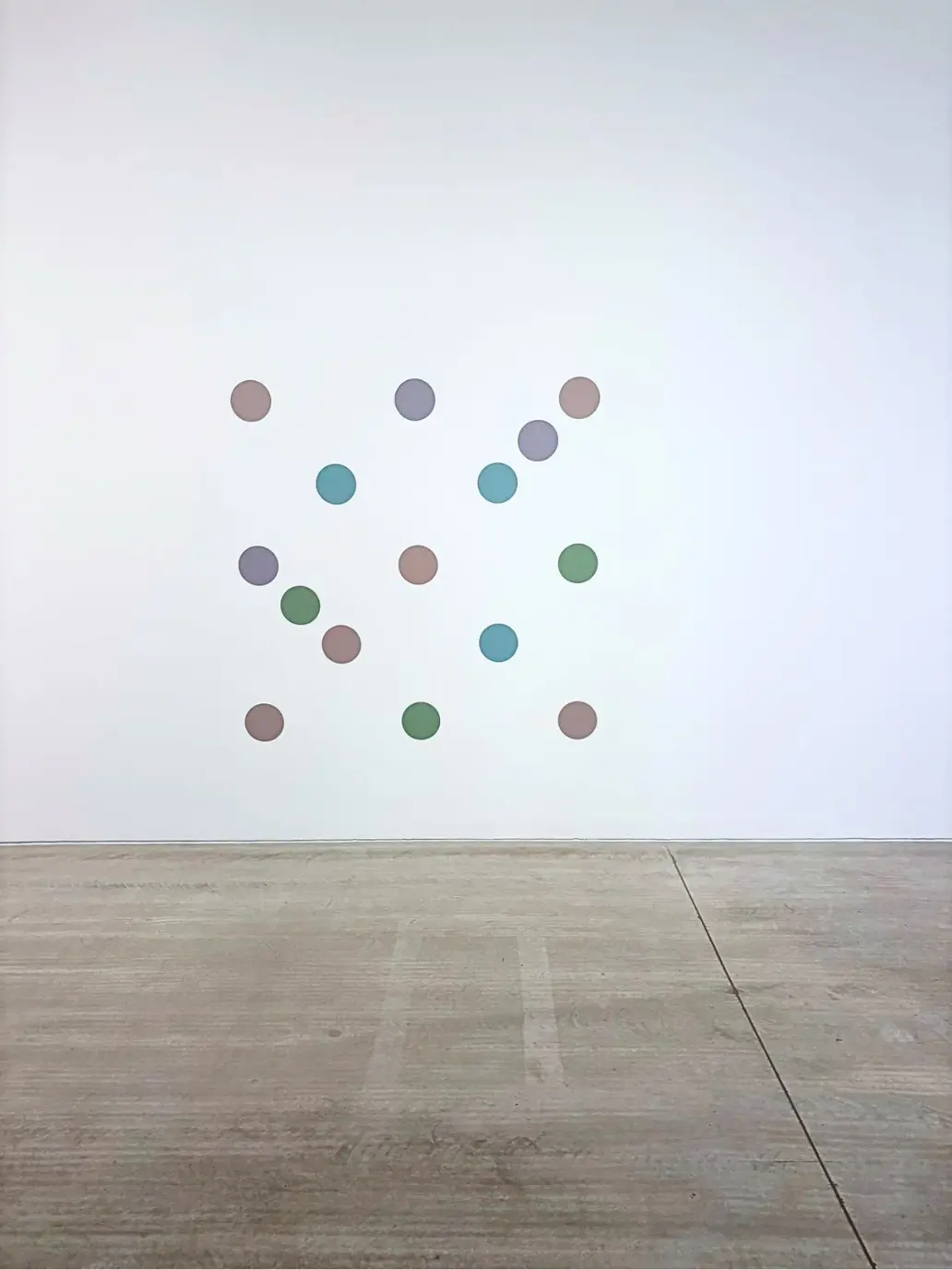
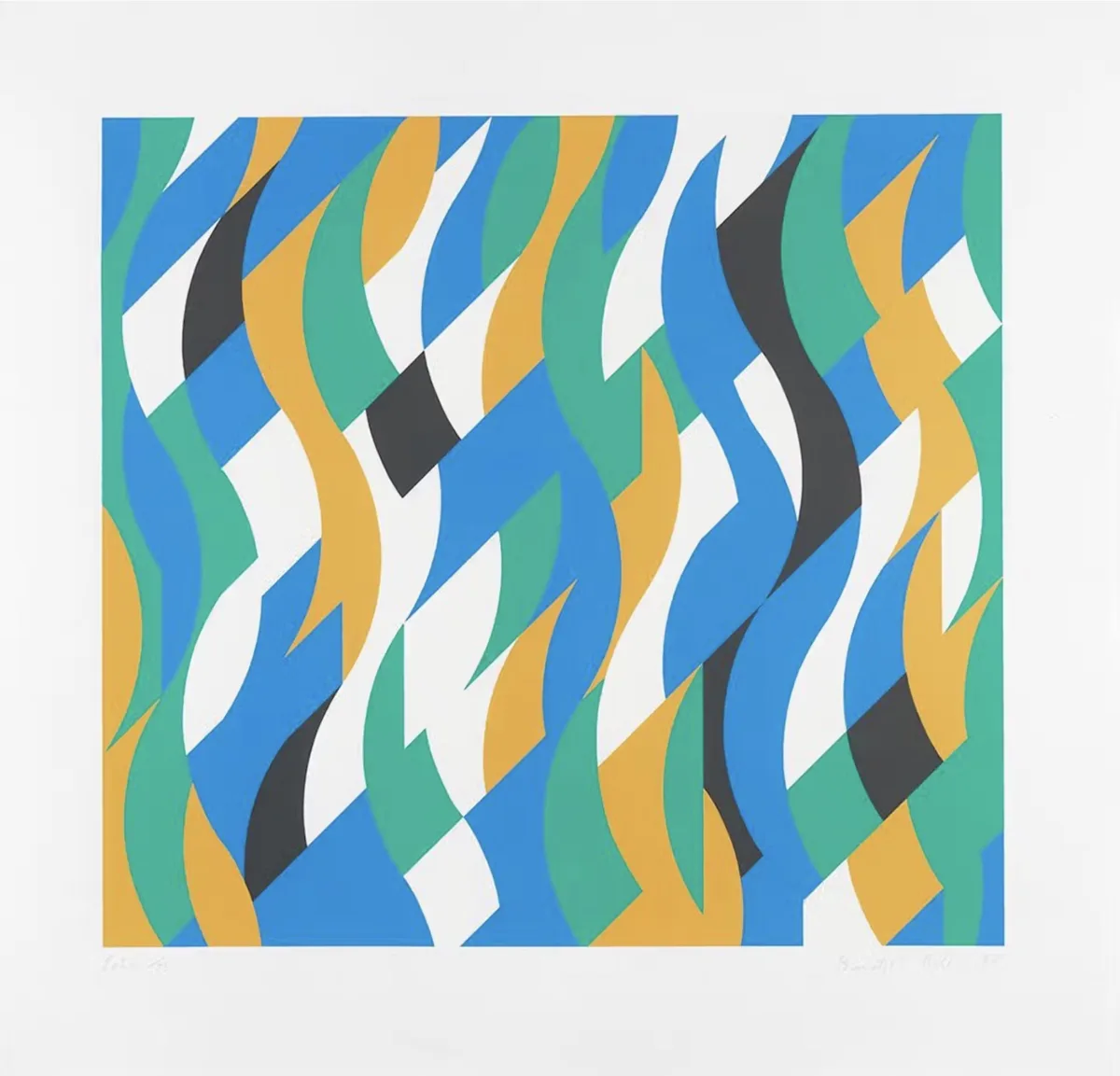
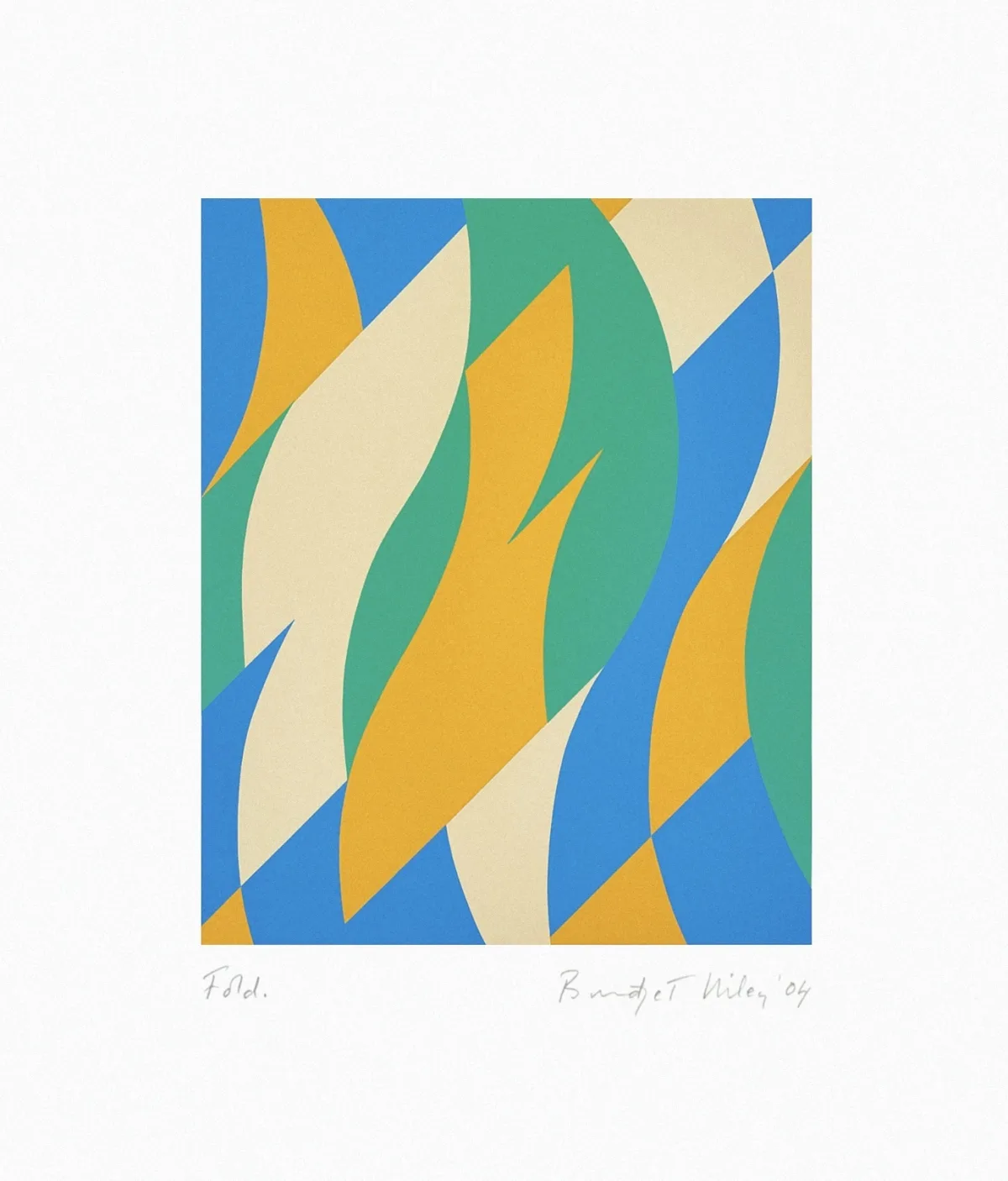
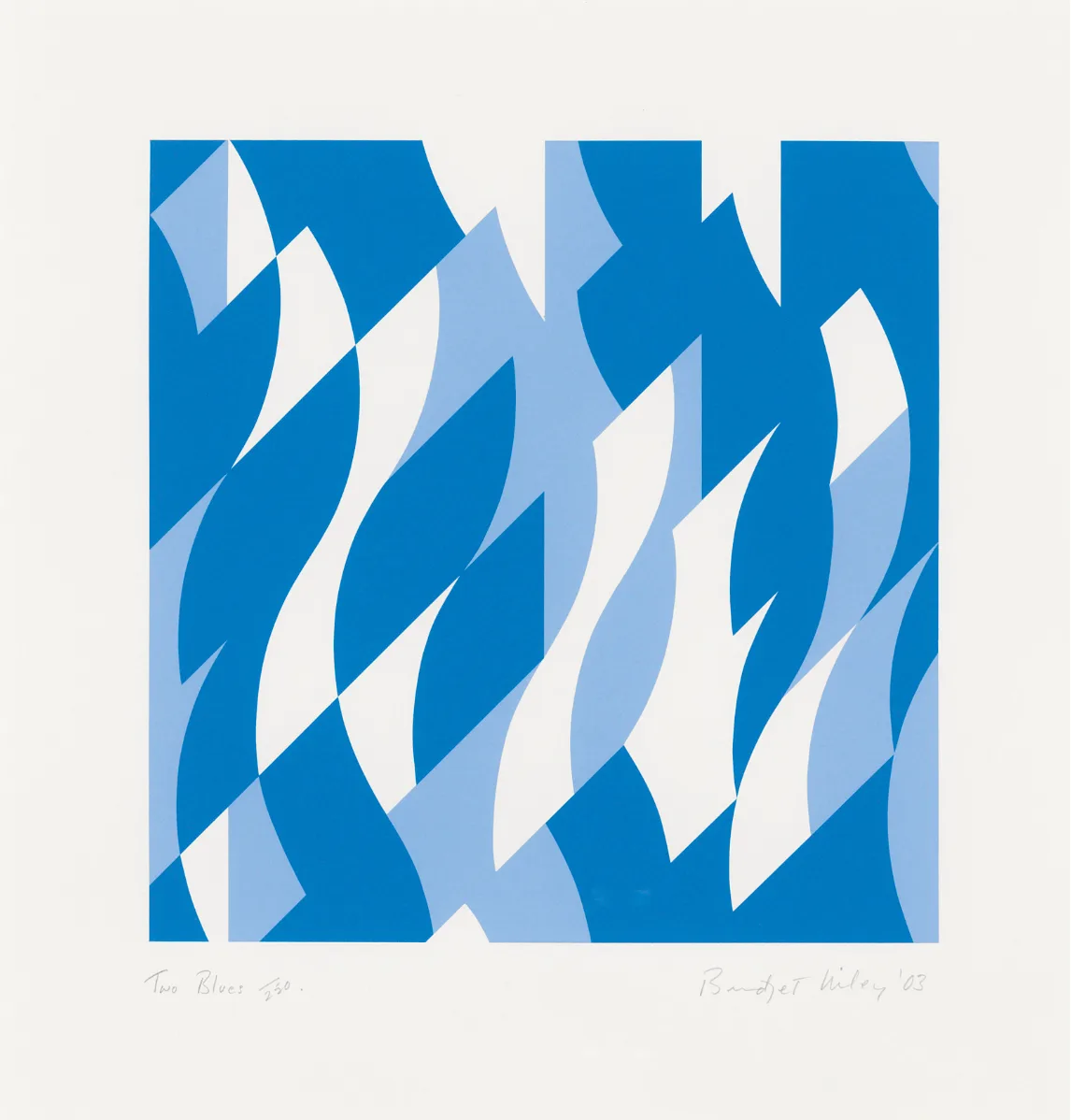
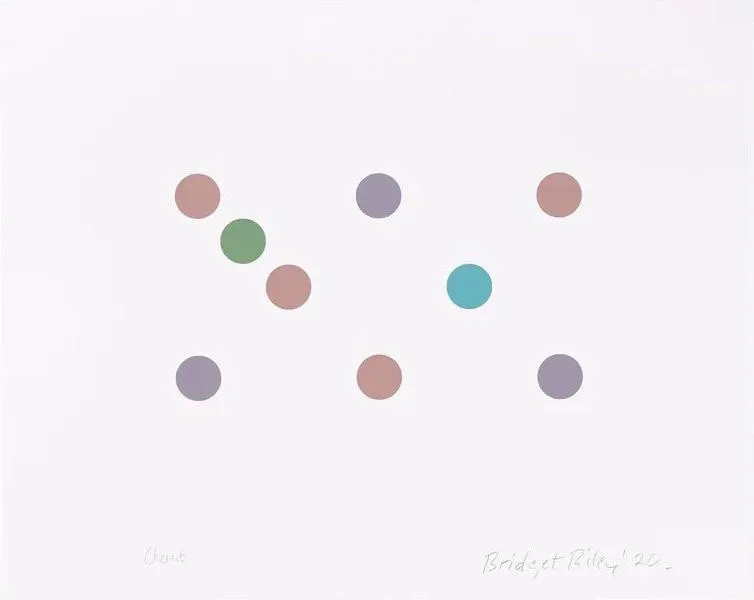
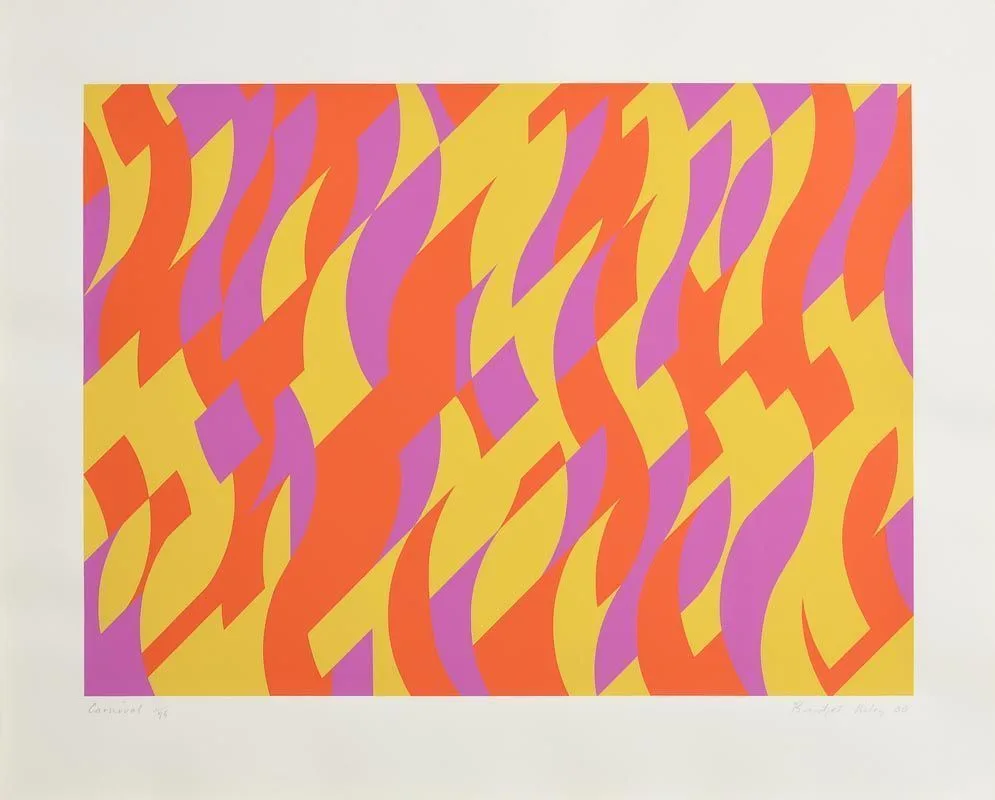
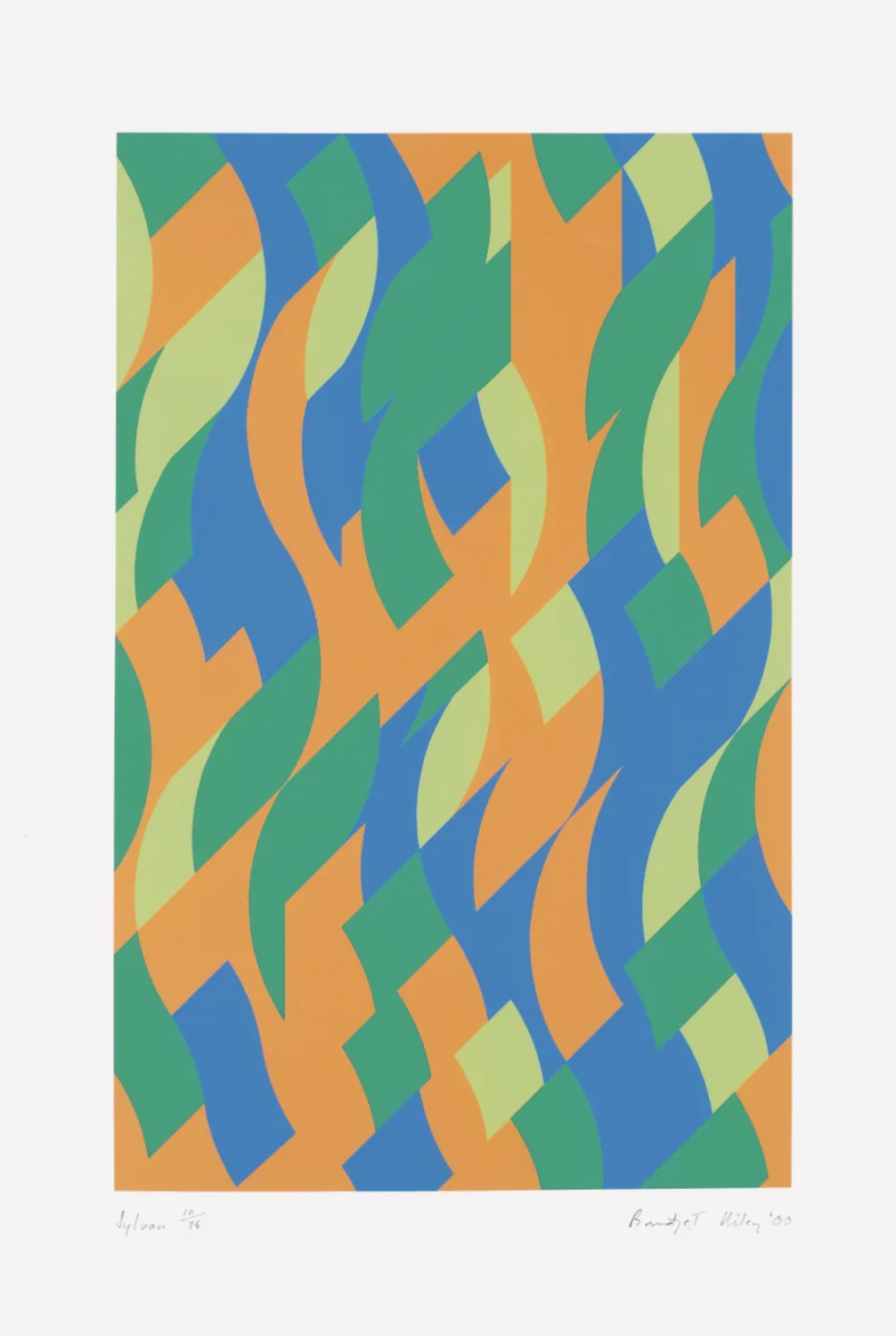
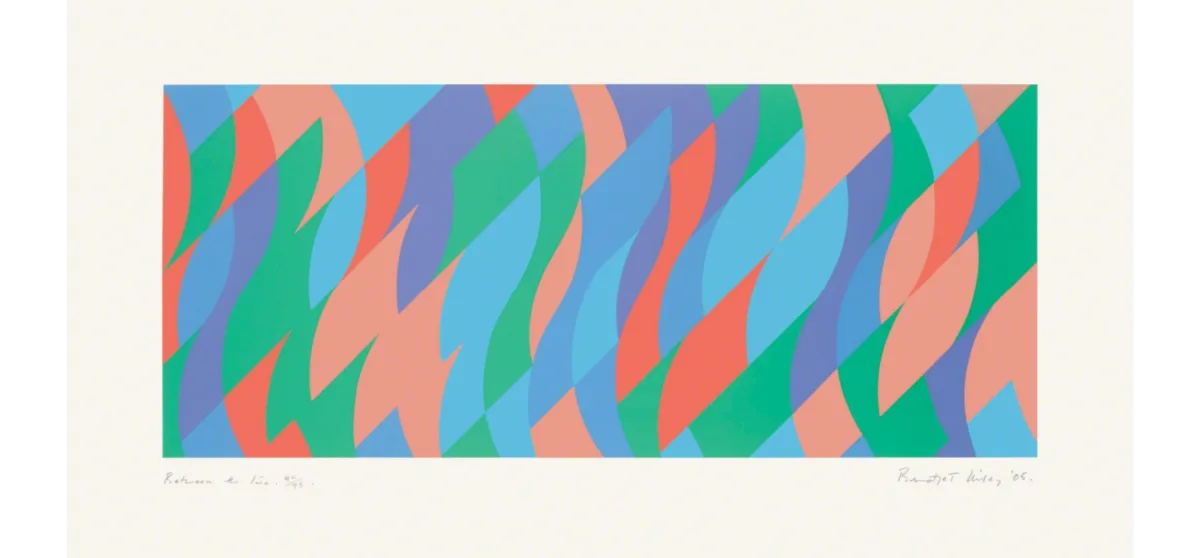
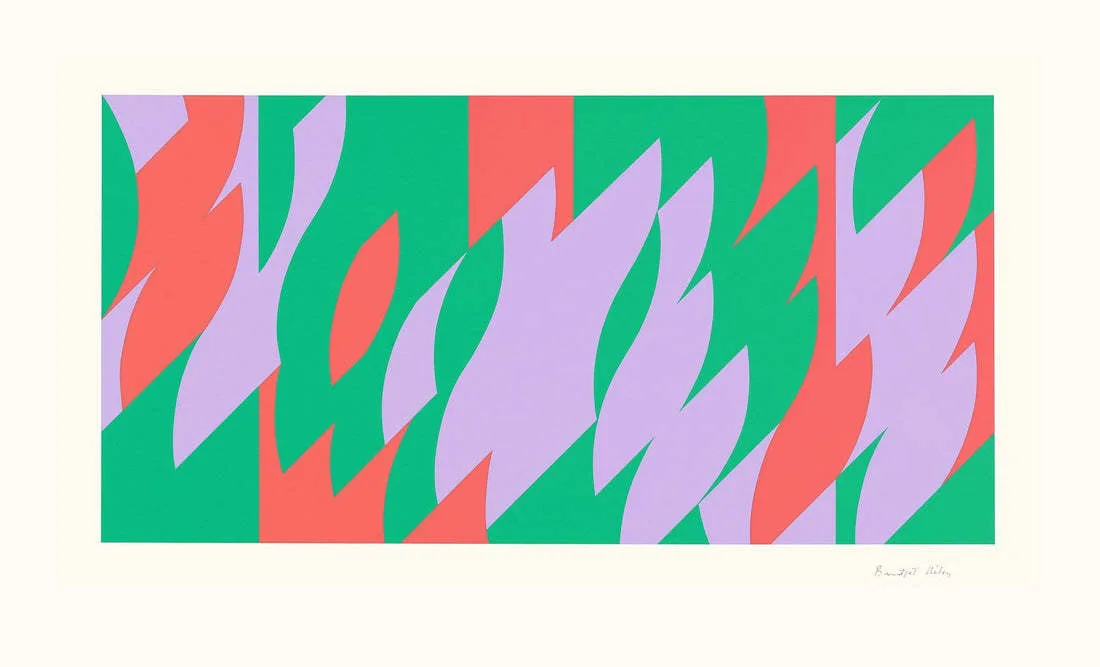
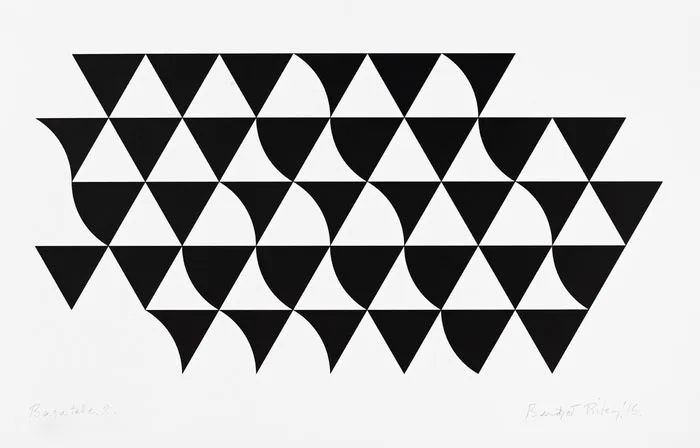
Because her patterns are so precise, it’s easy to look at her work and assume it is purely mathematical. But Riley’s practice is rooted in a rich historical dialogue shaped by Seurat’s pointillism, Vasarely’s geometric experiments, and the light of the Cornwall coast.
We take a closer look at the key influences behind the British Op Art legend.
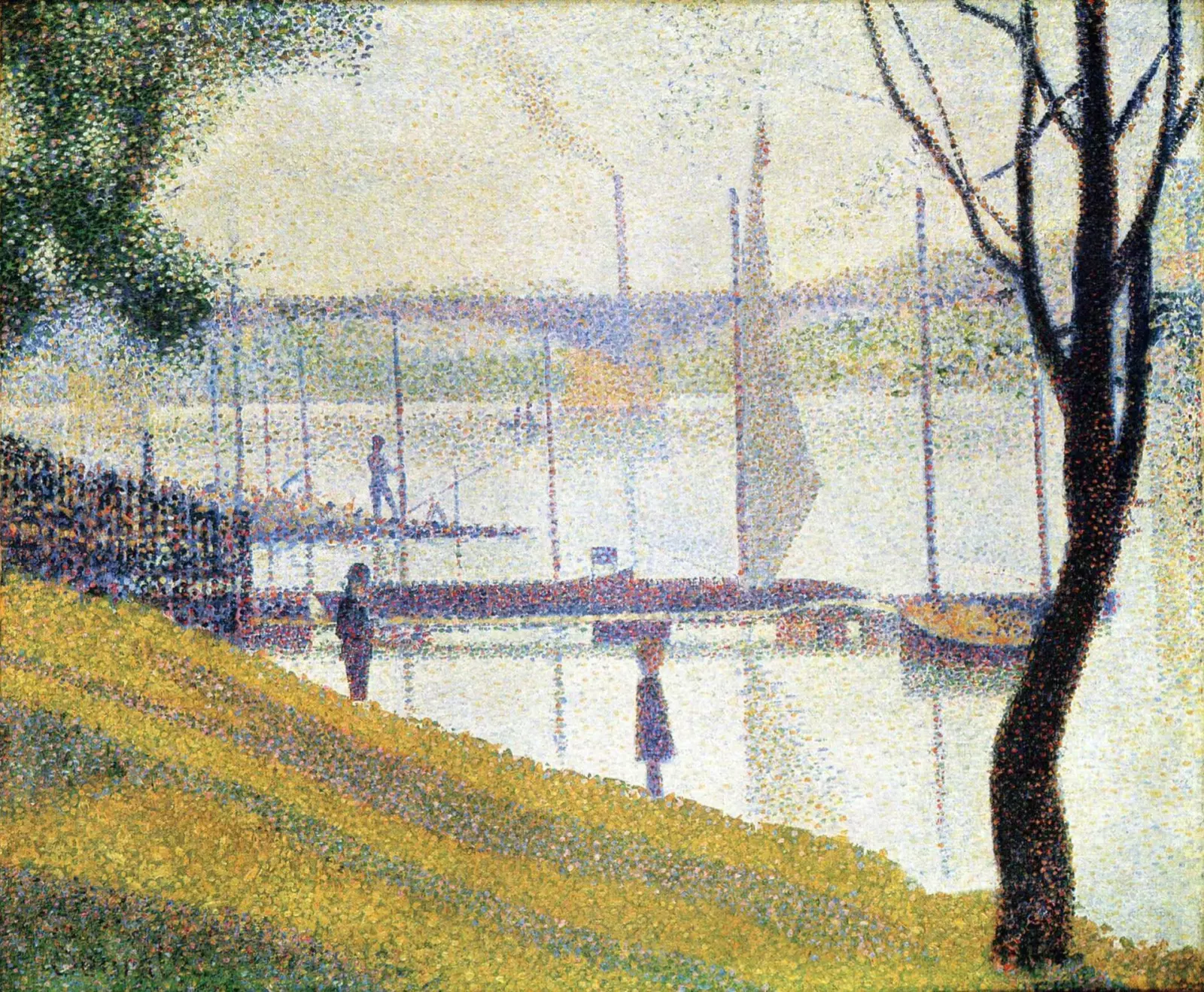
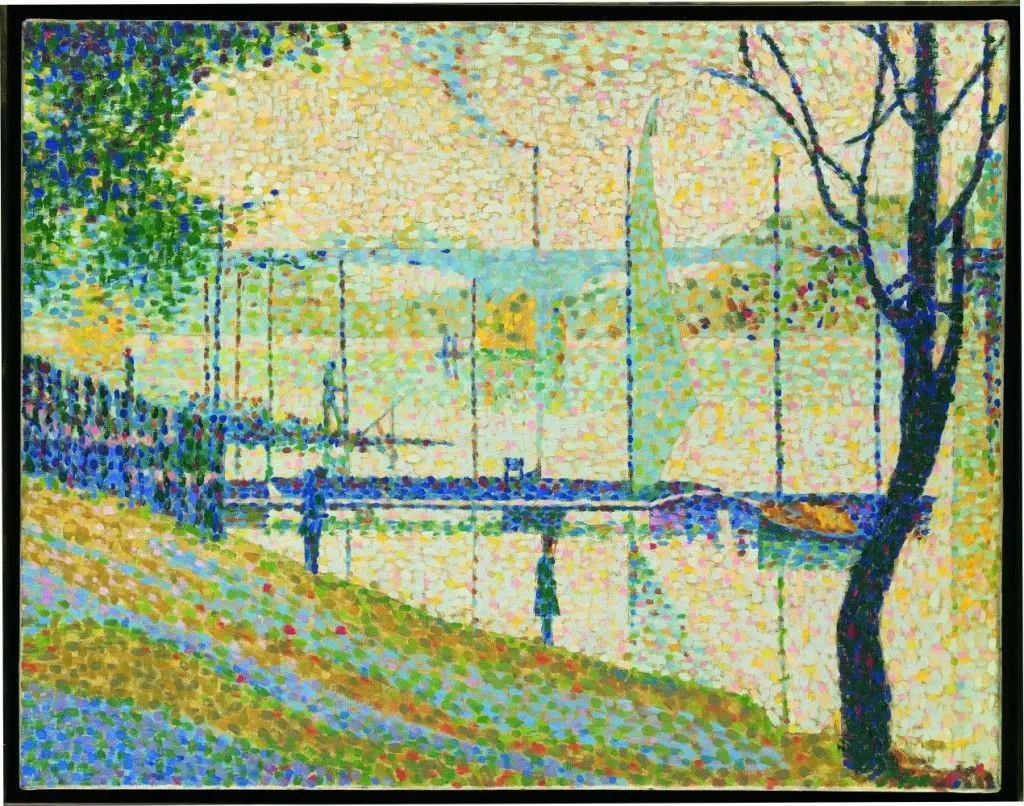
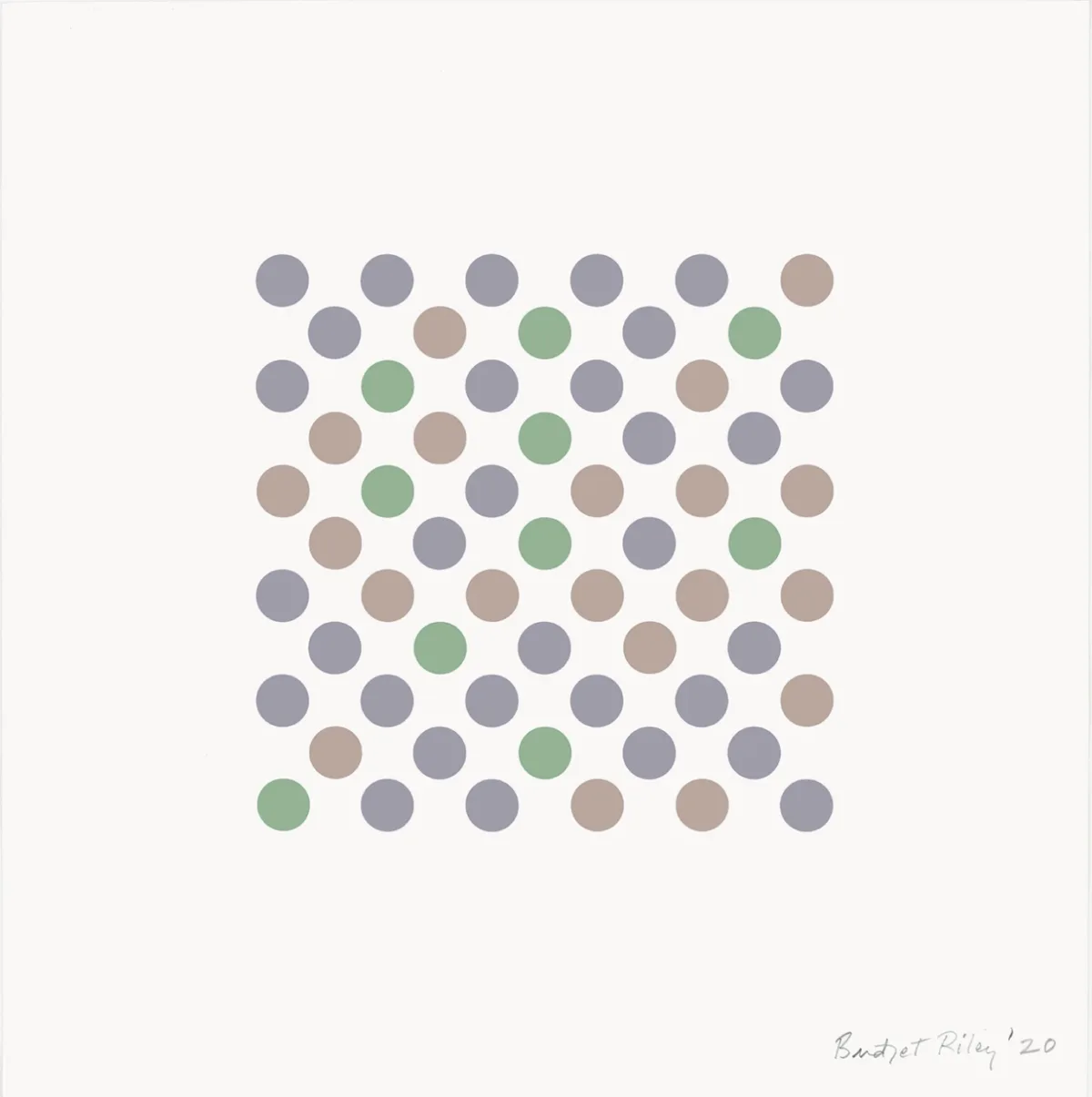
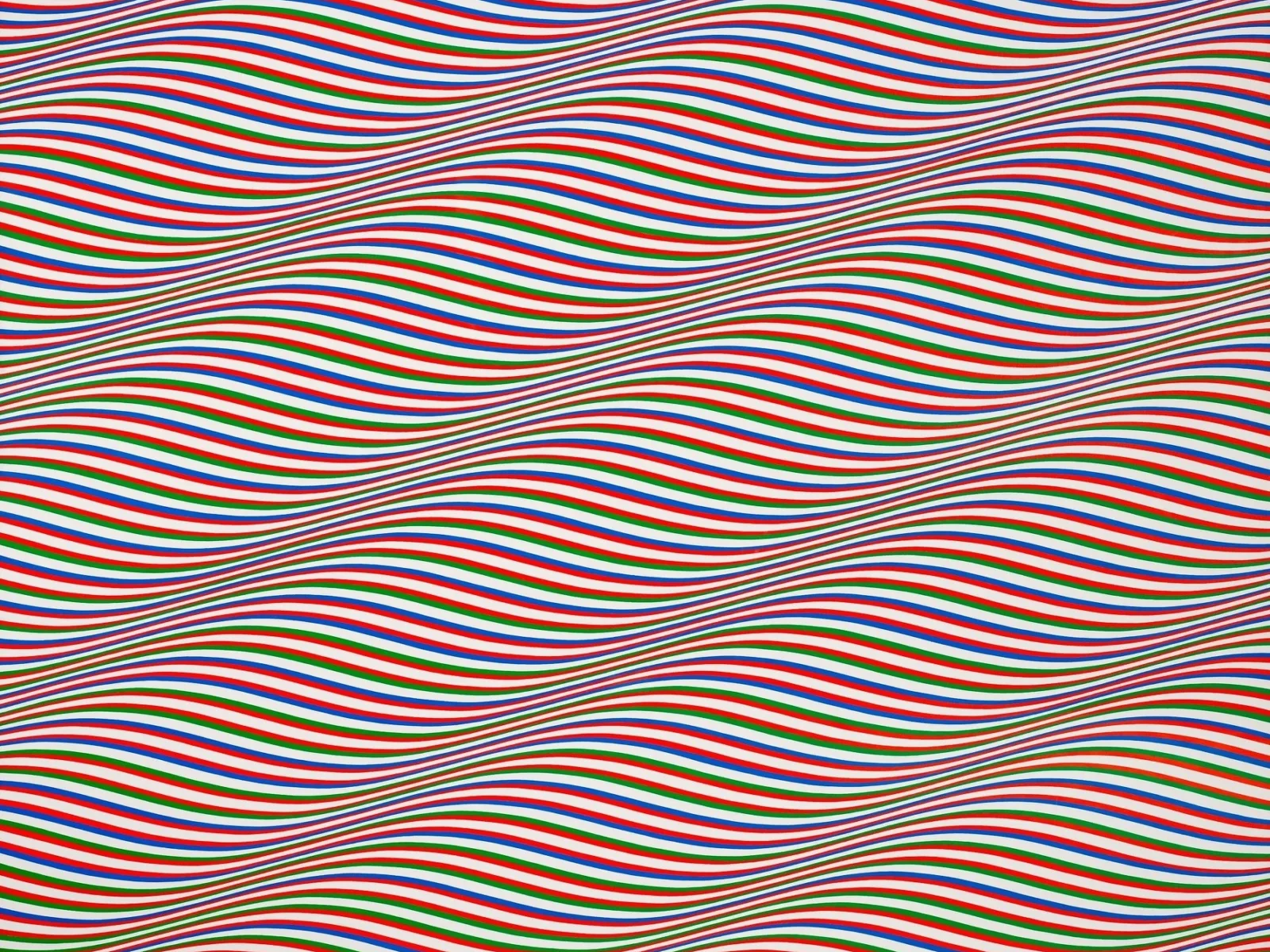
For Riley, the journey into optical effects began with Georges Seurat and his mastery of pointillism. From Seurat, Riley learned a fundamental principle that would shape her career: placing pure, unmixed colours side by side allows them to react optically in the viewer’s eye. The mixing happens in your brain.
To explore this technique, Riley copied Seurat’s Le Pont de Courbevoie dot by dot in 1959. The exercise taught her to focus on the mechanics of perception, leading her to see the viewer’s role as an essential part of the painting. It also gave her the confidence to abandon figurative painting and set off in a completely new direction.
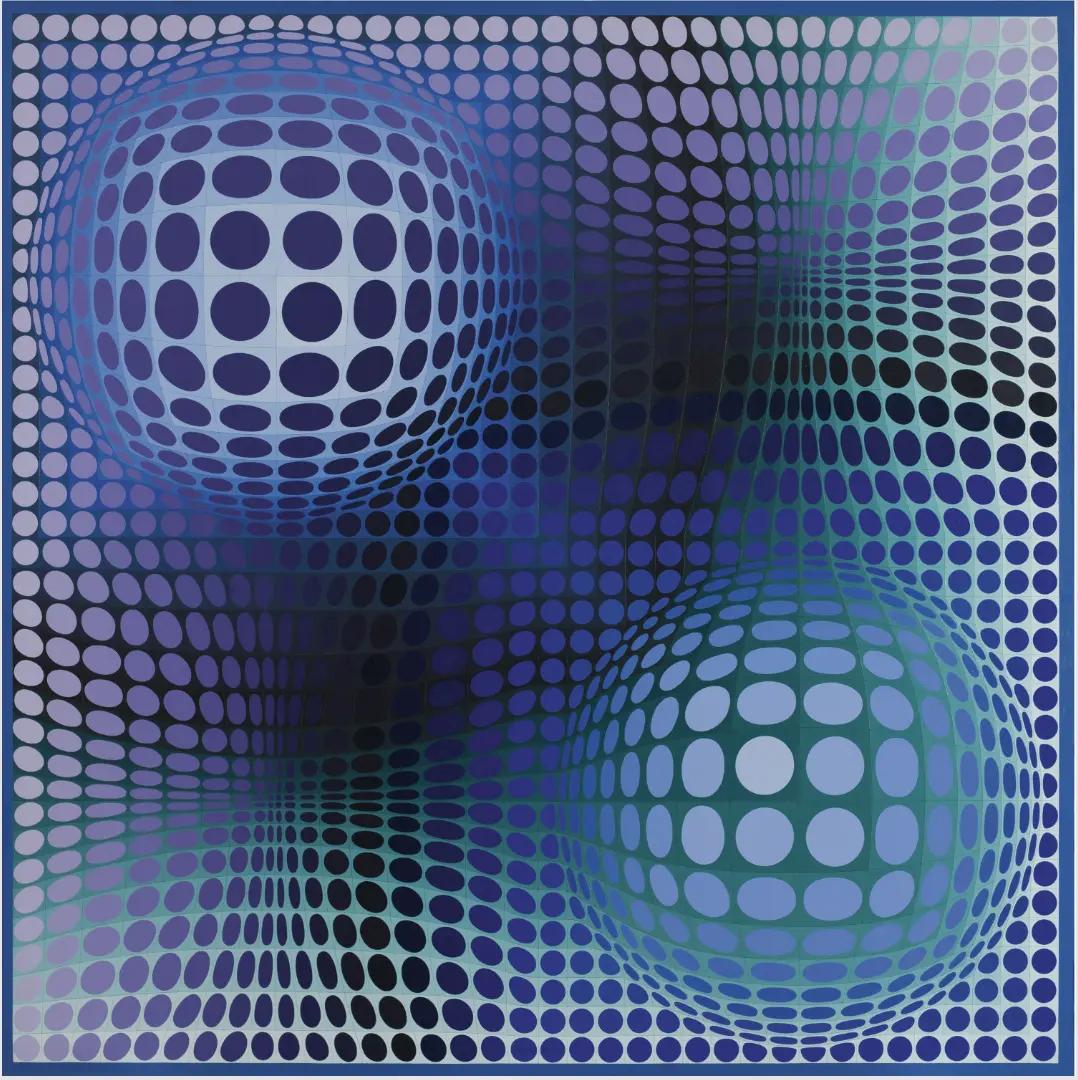
You can’t talk about Op Art without mentioning Vasarely. As a pioneer of the movement, he showed us how geometric compositions could play with human perception and create three-dimensional illusions.
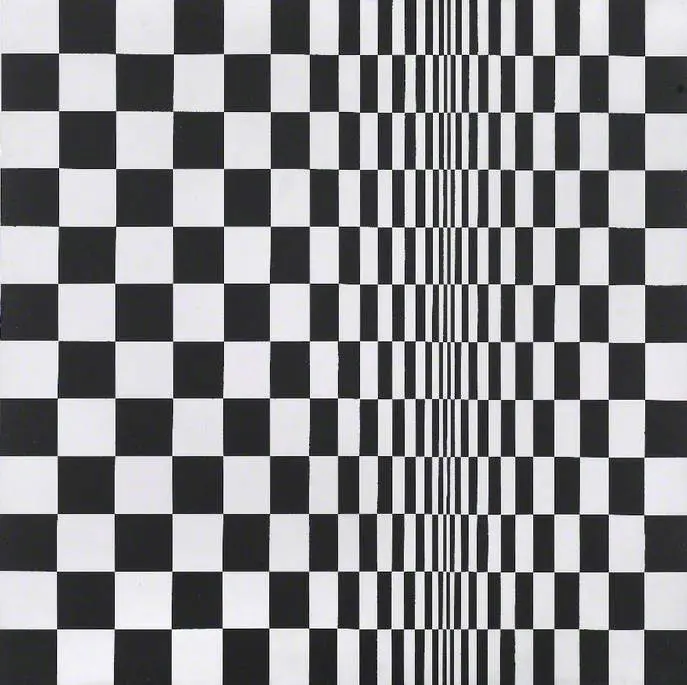
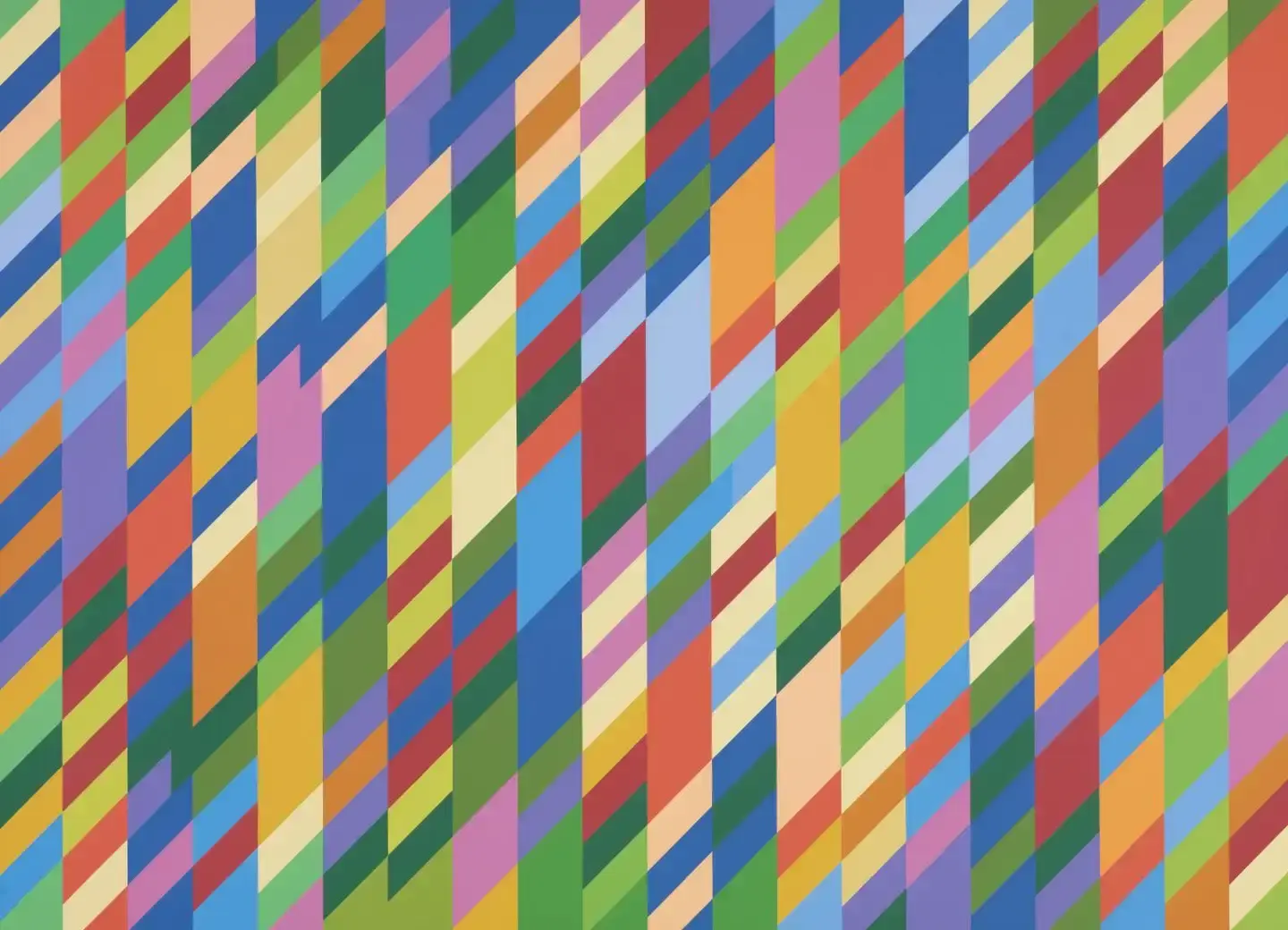
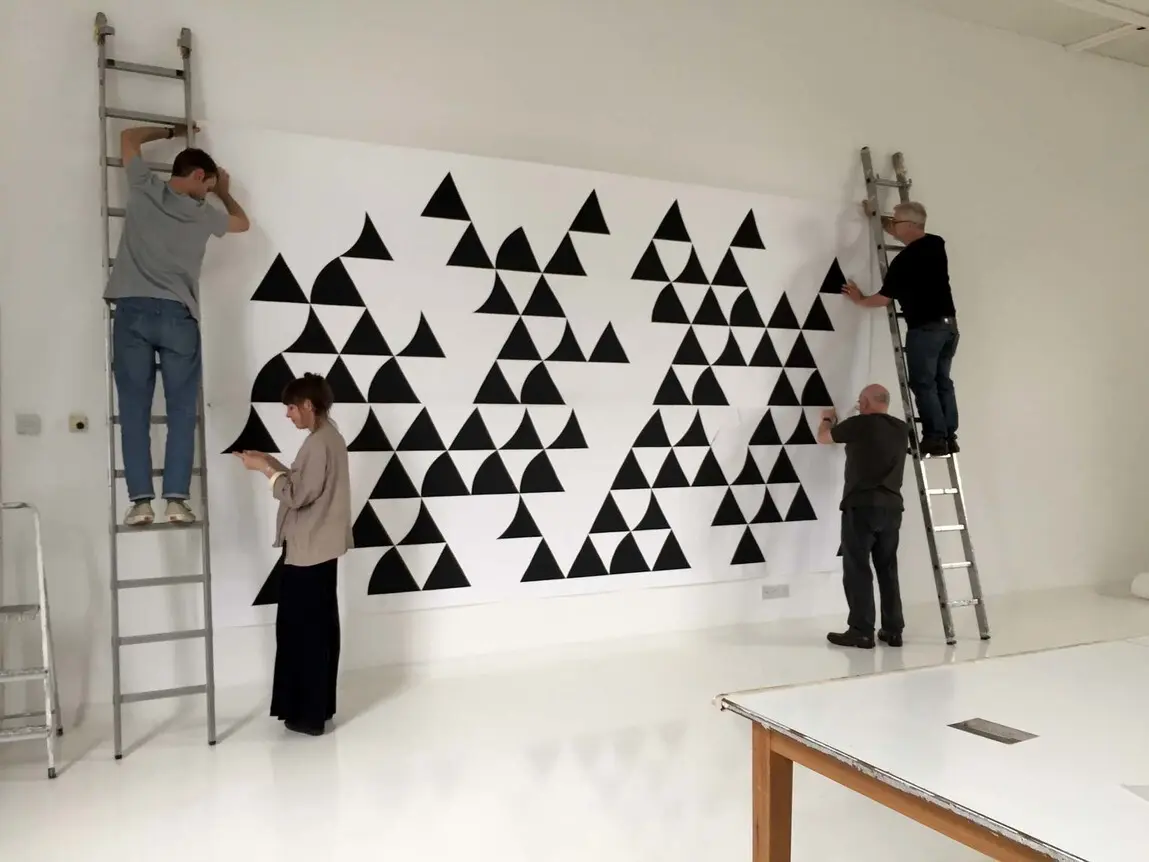
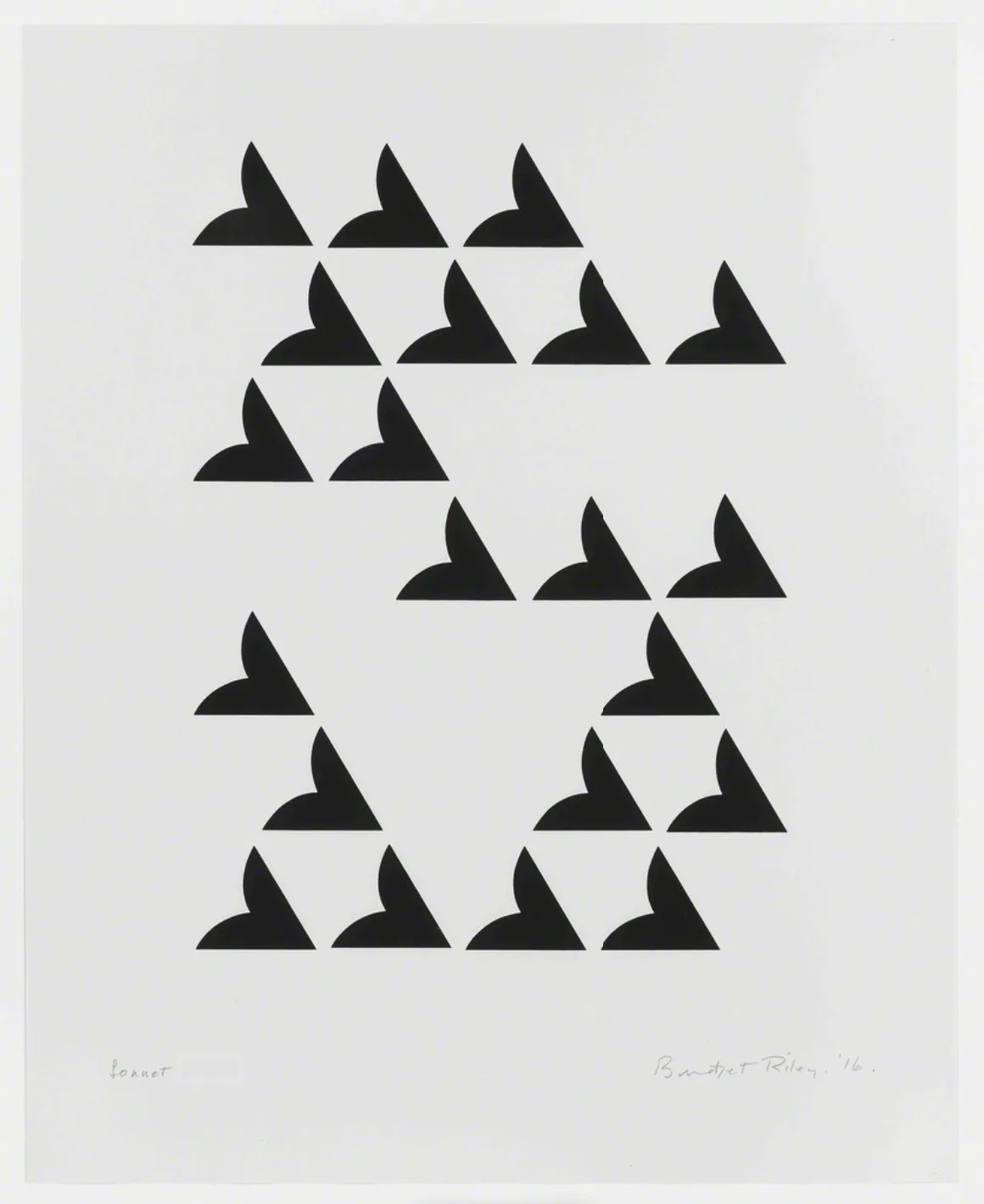
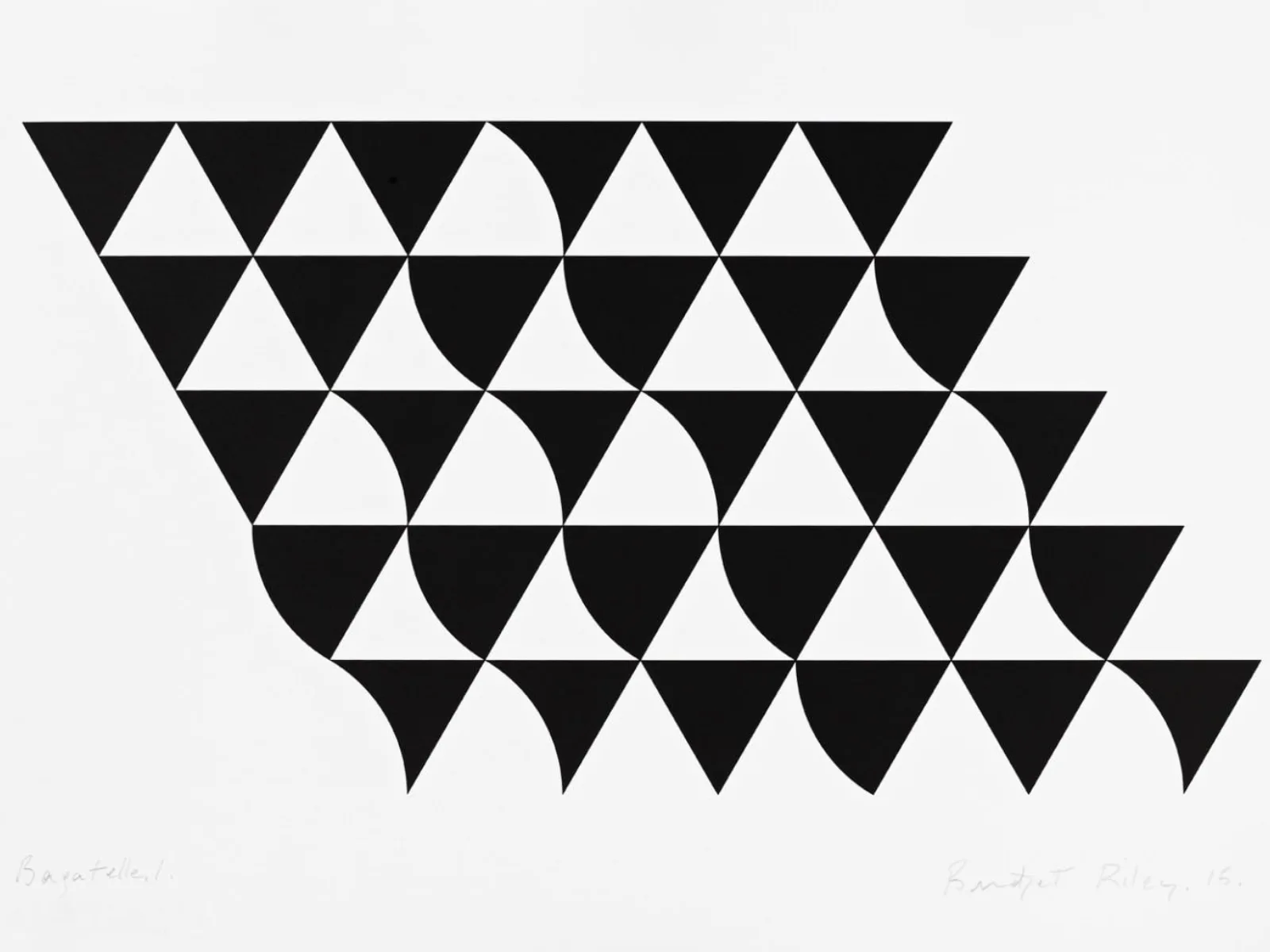
Riley drew inspiration from his early studies and techniques for creating the illusion of movement, but she took these ideas in her own direction leaving behind Vasarely’s graphic and sometimes decorative style . By stripping her compositions down to their essential forms, she could focus on the relationships between lines, shapes, and colours, and create paintings that make us physically aware of the act of seeing itself.
Growing up near the sea in Cornwall during the Second World War, Bridget Riley spent her formative years observing the sunlight shimmering on the water, the shifting shadows across jagged cliffs, and the light breaking through coastal mist.
These ever-changing patterns of light and movement left a lasting impression on her. They offered a way of seeing the world that went beyond simply looking at objects and landscapes, focusing instead on how light, colour, and movement affect our perception.
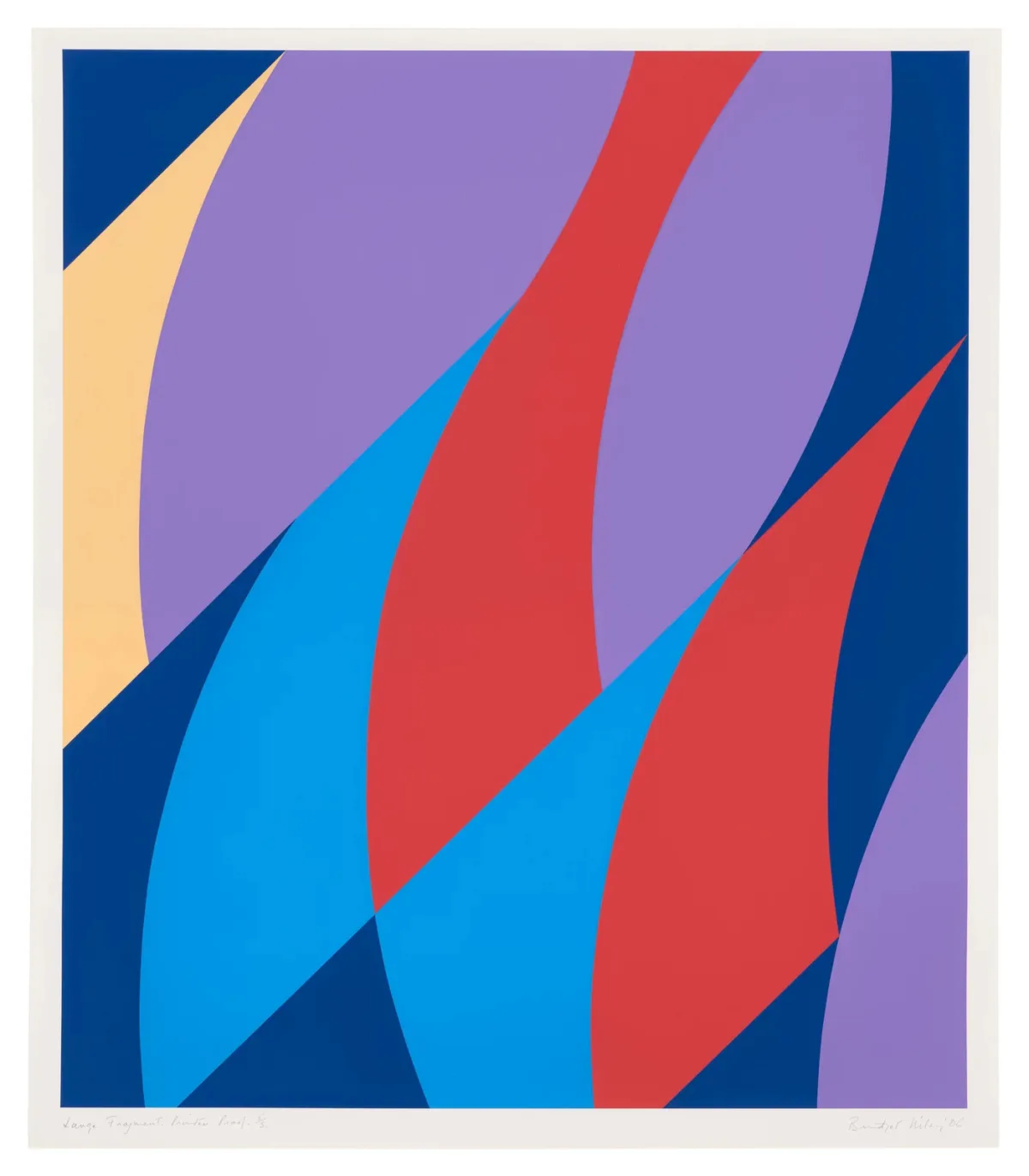
Riley's goal as an artist has never been to paint the scenery itself. Instead, she aims to capture the visceral sensation of looking at changing light and weather, translating the energy of the Cornish landscape into pure abstraction.
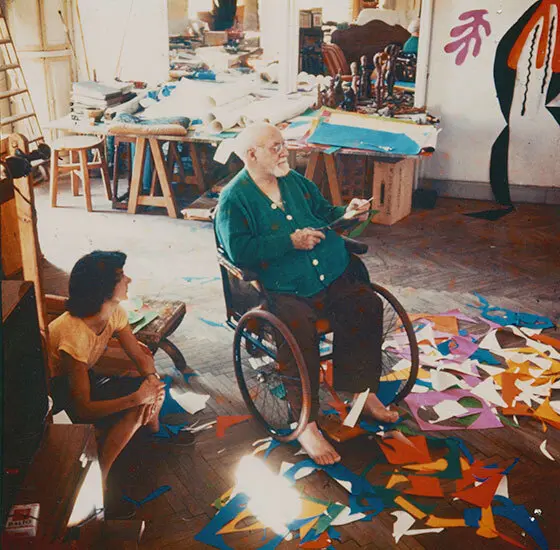
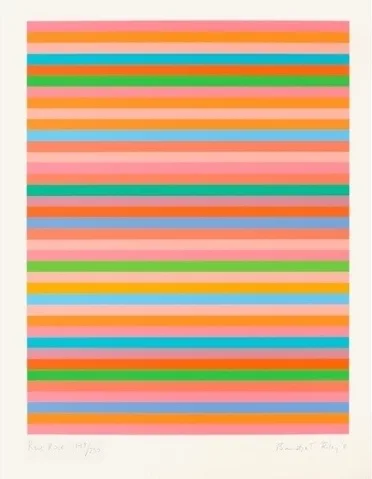
When Riley started the transition from black-and-white to colour pieces in 1967, she looked to Henri Matisse and his famous paper cut-outs.
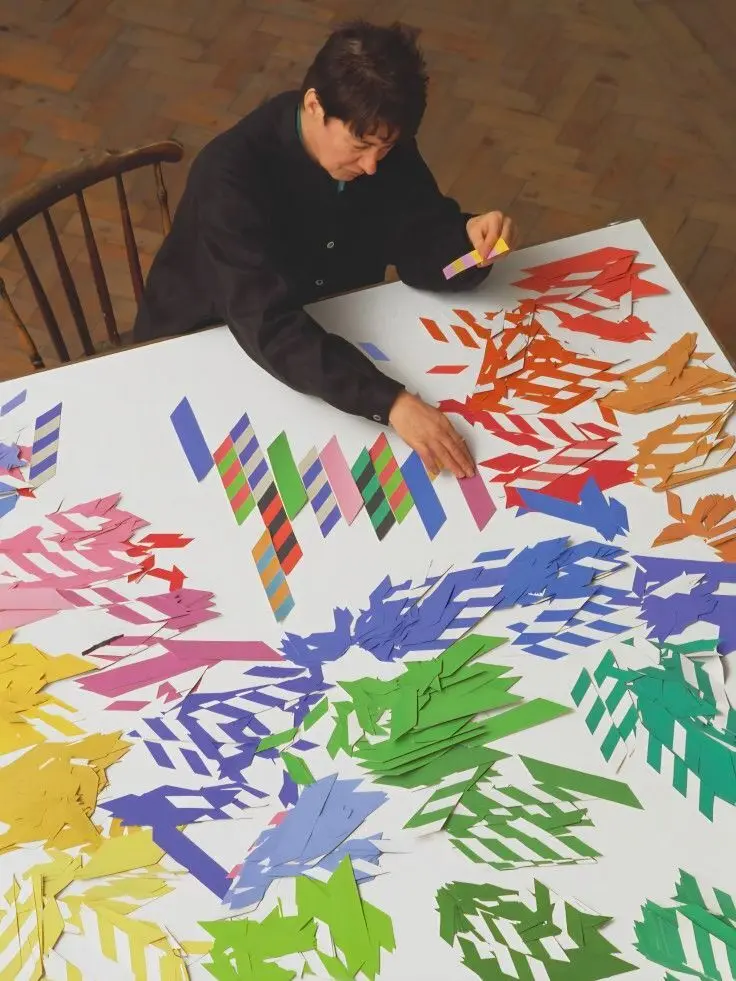
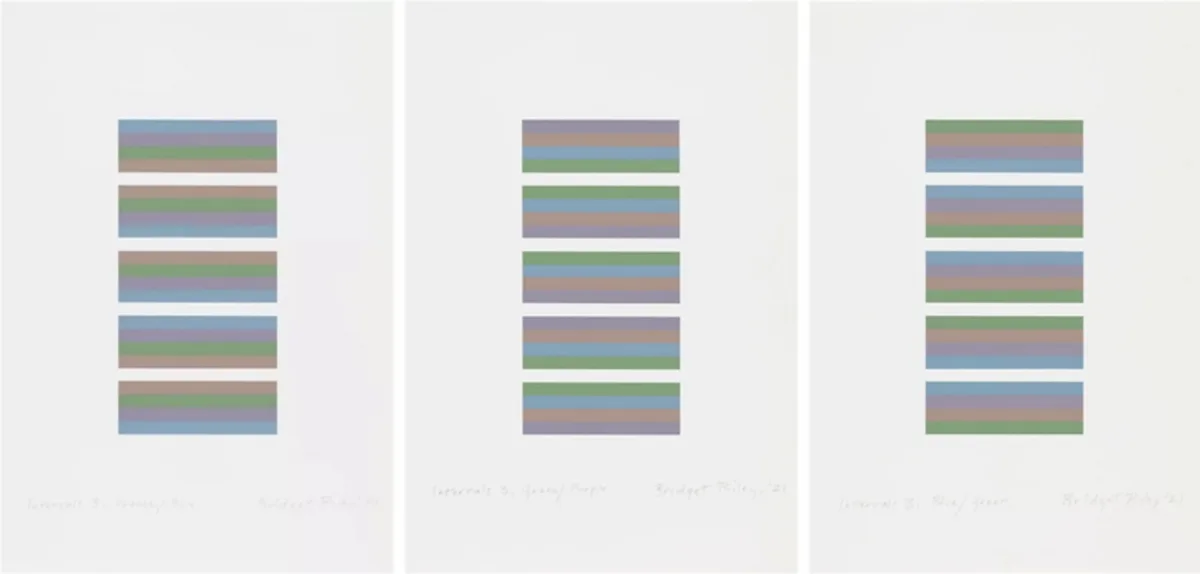
Riley closely studied Matisse’s cut-outs and how he used hard edges to juxtapose pure, unmixed colours and create spatial rhythm. Adopting his techniques, she began using paper collages and paper stripes to see how different hues vibrated against one another.
This hands-on method of testing colours before committing them to canvas helped her to master the optical tension that would come to define her colour work.
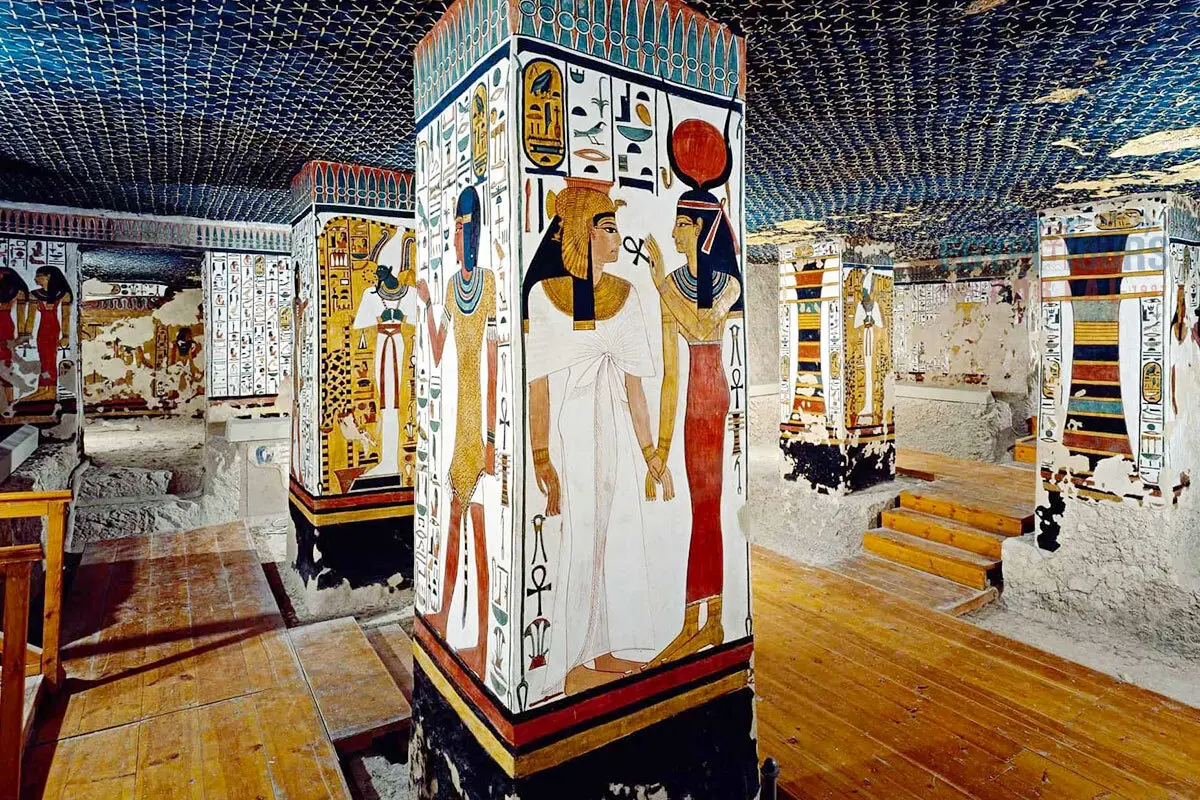
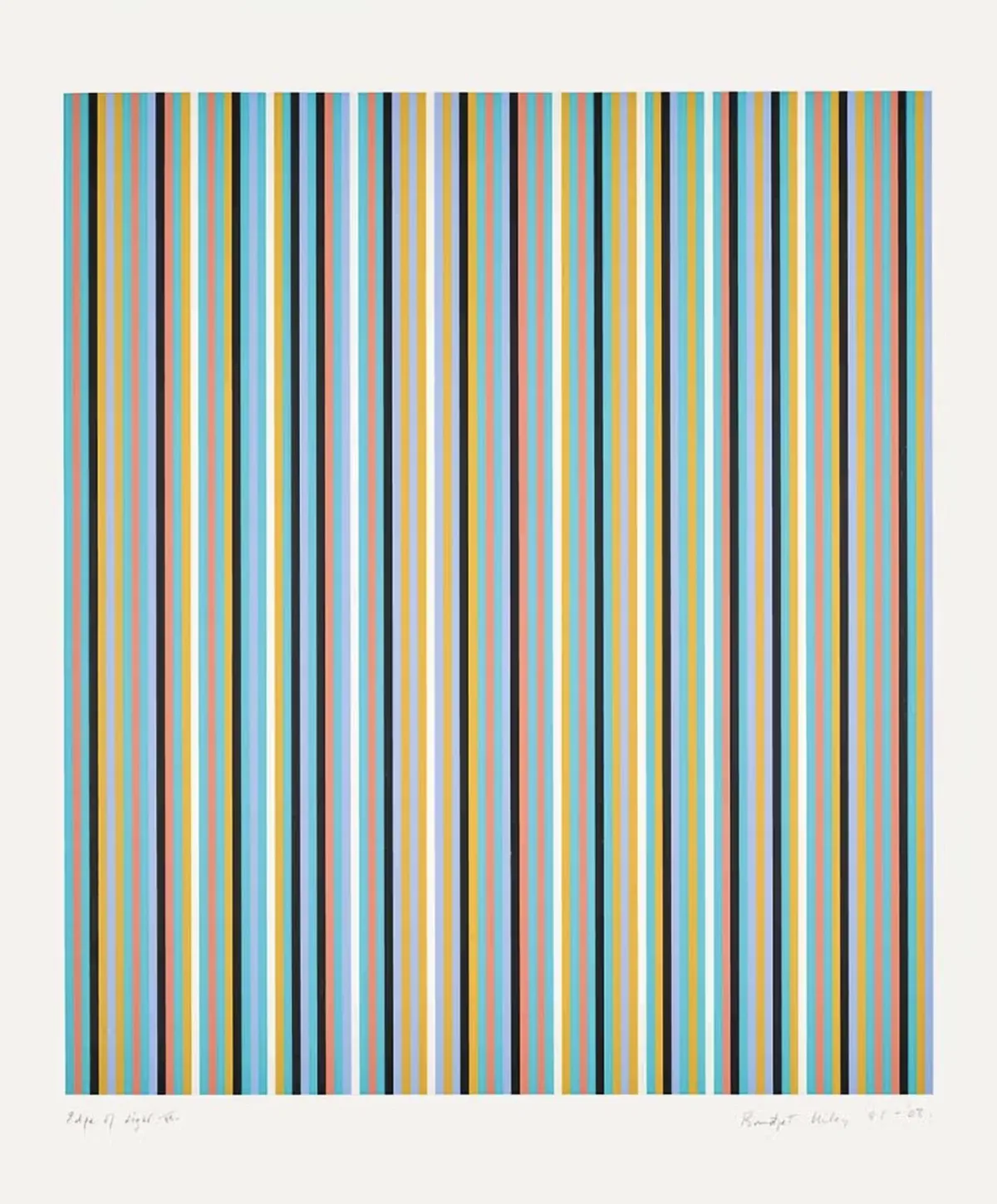
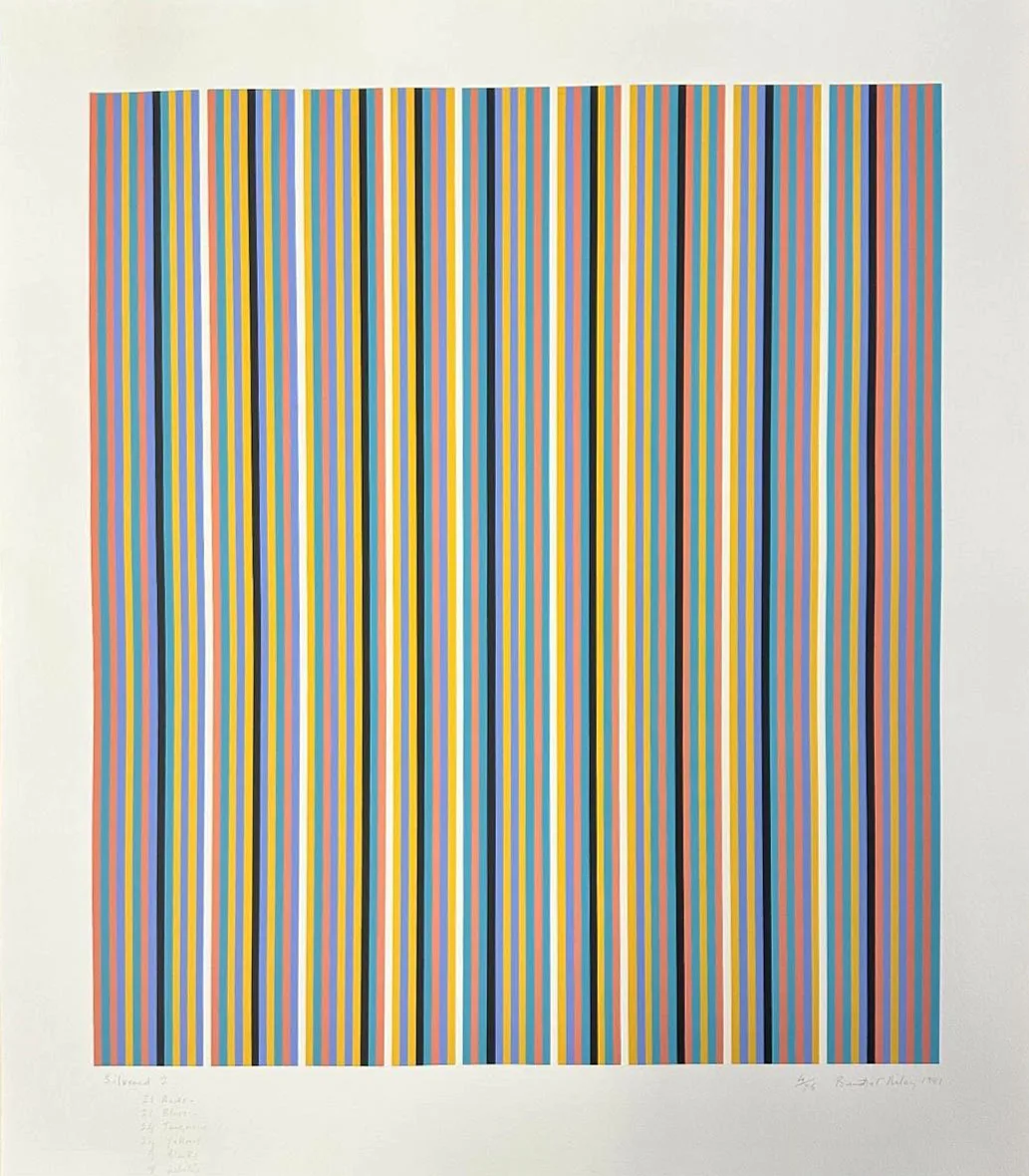
Sometimes, a single trip can alter an artist's trajectory. For Riley, that trip was to the Valley of the Kings in 1979. Descending into the Luxor tombs, she was mesmerised by how artisans from thousands of years ago used a restricted palette and striking contrasts (yellow, turquoise, blue, and red) to make their murals seem to glow in the pitch-black interiors.
Returning to her studio, she left behind her neutral, earthy tones and began painting with those same brilliant colours. The result was her celebrated "Egyptian Palette" series, a collection of works that translated a 3,000-year-old technique into modern Op Art.
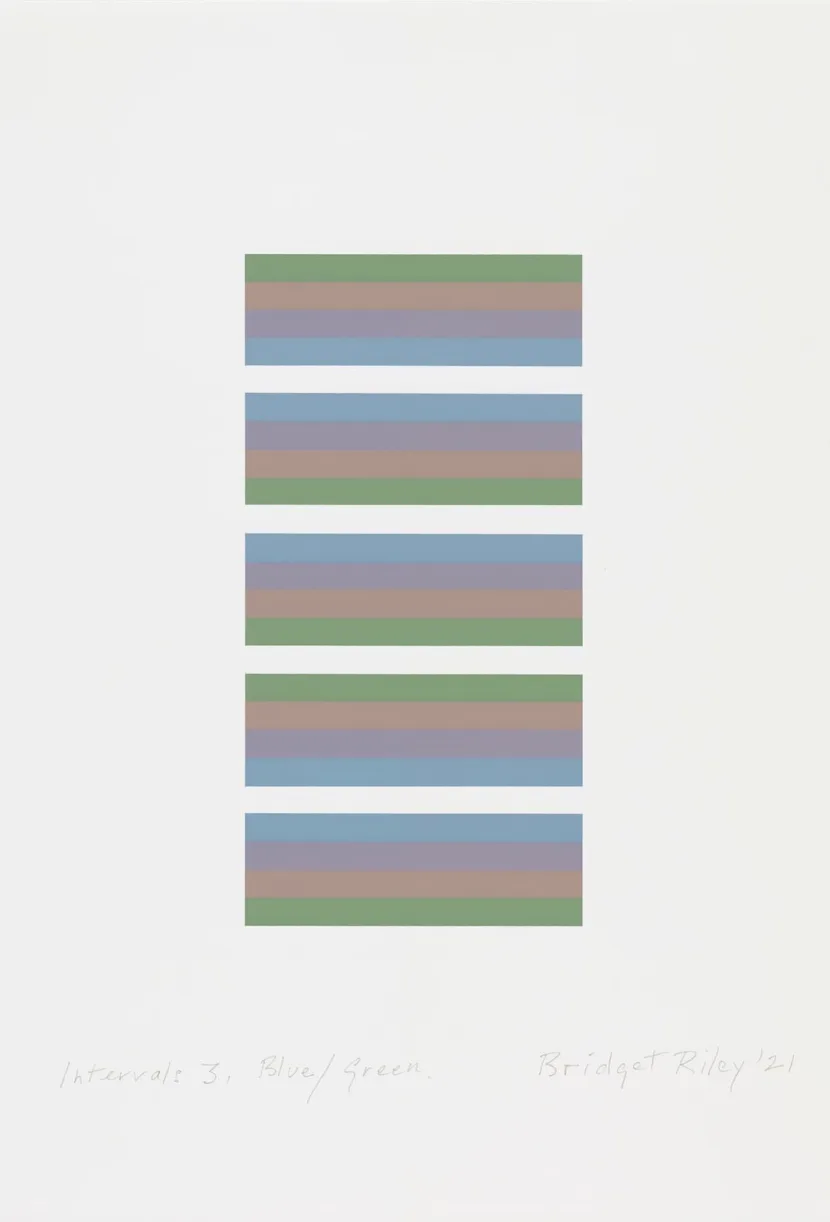
Raised in a home filled with classical music, Riley developed an early fascination with musical structure, later coming to see music as one of the purest forms of abstraction, as it can communicate emotion through rhythm, repetition, and structure without needing to depict real-world objects.
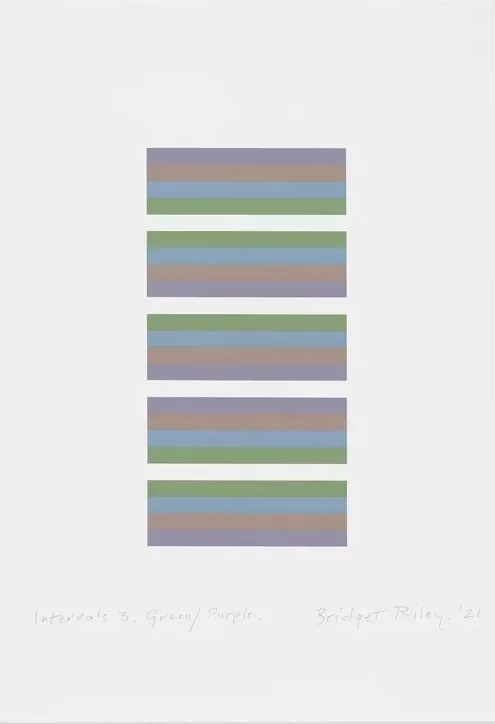
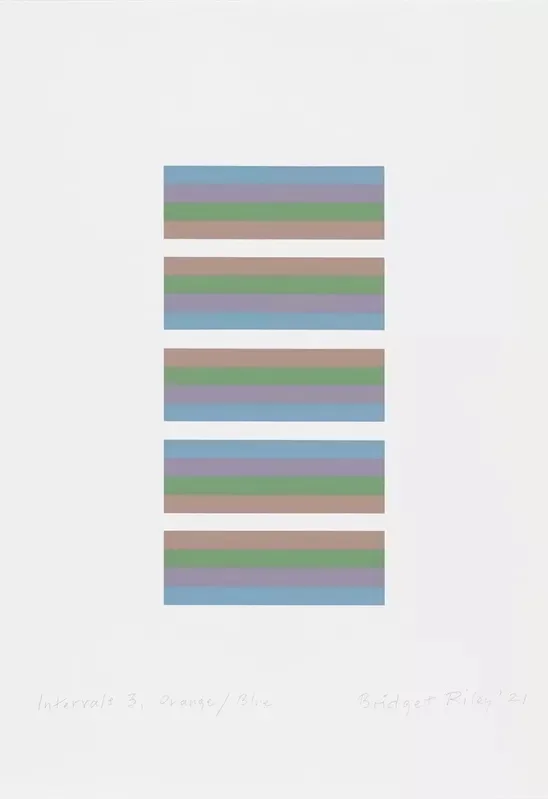
Drawing inspiration from composers like Bach and Stravinsky, Riley uses principles such as tempo, interval, repetition, and counterpoint to organise her lines and shapes.
Just as a piece of music builds through changes in rhythm and pace, her paintings guide the eye through patterns that seem to accelerate, slow down, or pulse across the canvas much like sound waves.
By transforming a lifetime of diverse influences into visual movement, Bridget Riley has expanded the possibilities of modern abstraction and Pop Art. Ultimately, her work is less about strict geometry and more about the vivid, physical thrill of seeing. Each canvas is like an invitation to slow down, look closely and let your eyes complete the art.