
15 Sept 2026 4 min read
The £111 Million Power Play: How Damien Hirst Took on the Art Market
As the autumn auction season kicks off, we look back at a day that changed the art market forever. Exactly eighteen years ago today, on September 15, 2008, Damien Hirst bypassed the gallery route to sell his work directly at Sotheby's. Here’s how one of the most audacious moves in contemporary art history unfolded.
September 15, 2008, is a date permanently burned into the memory of the global financial sector. It was the exact day Lehman Brothers filed for bankruptcy, triggering a catastrophic global financial crisis.
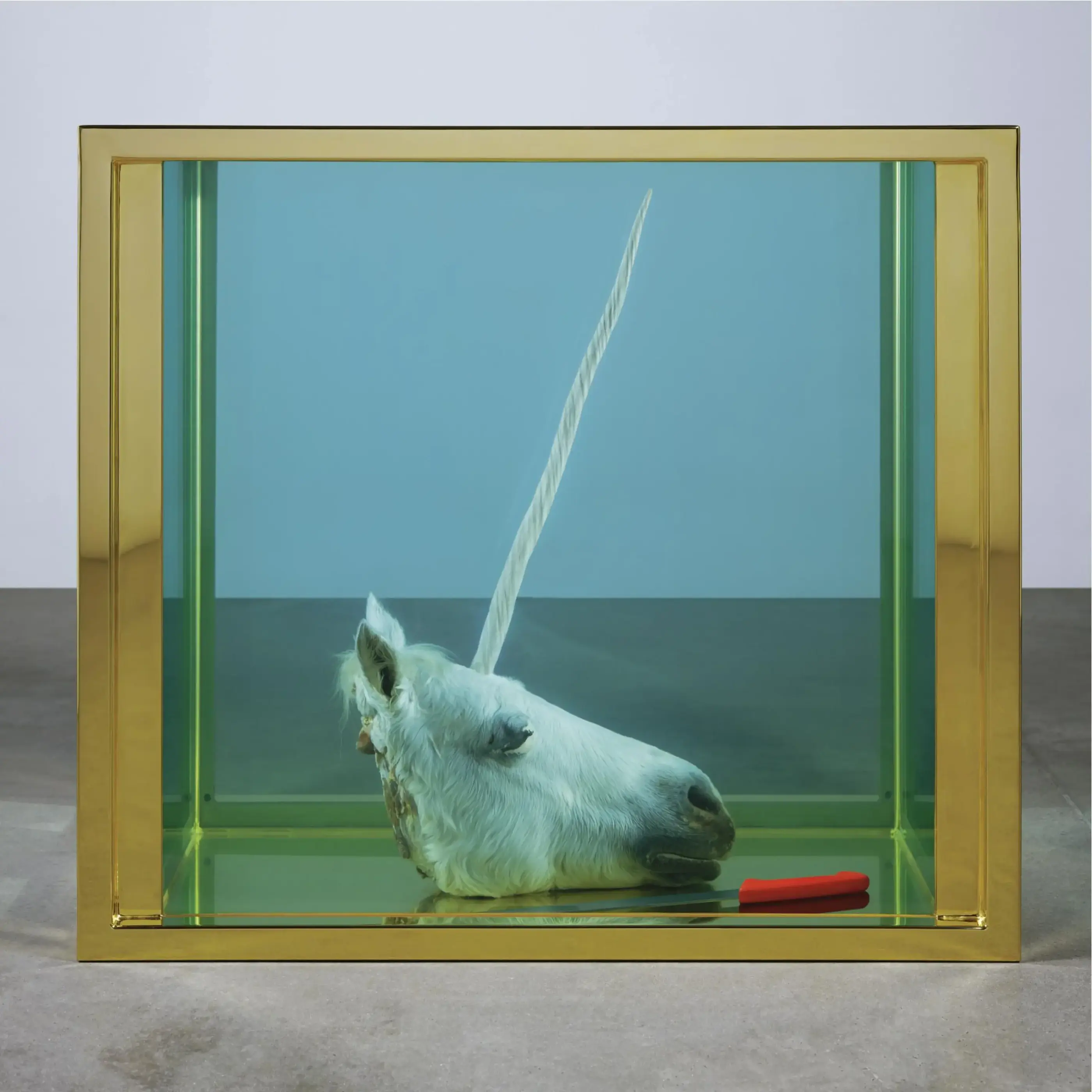
That same day, in London, inside the rooms of Sotheby’s on New Bond Street, a completely different kind of history was being made, as Damien Hirst, the undisputed provocateur of the YBAs, was getting ready for his Beautiful Inside My Head Forever auction. It would be one of the most jaw-dropping power plays the contemporary art world had ever seen.
Against the backdrop of the worst financial meltdown in decades, the art establishment held its breath, waiting for a spectacular failure. Instead, it became a roaring triumph.
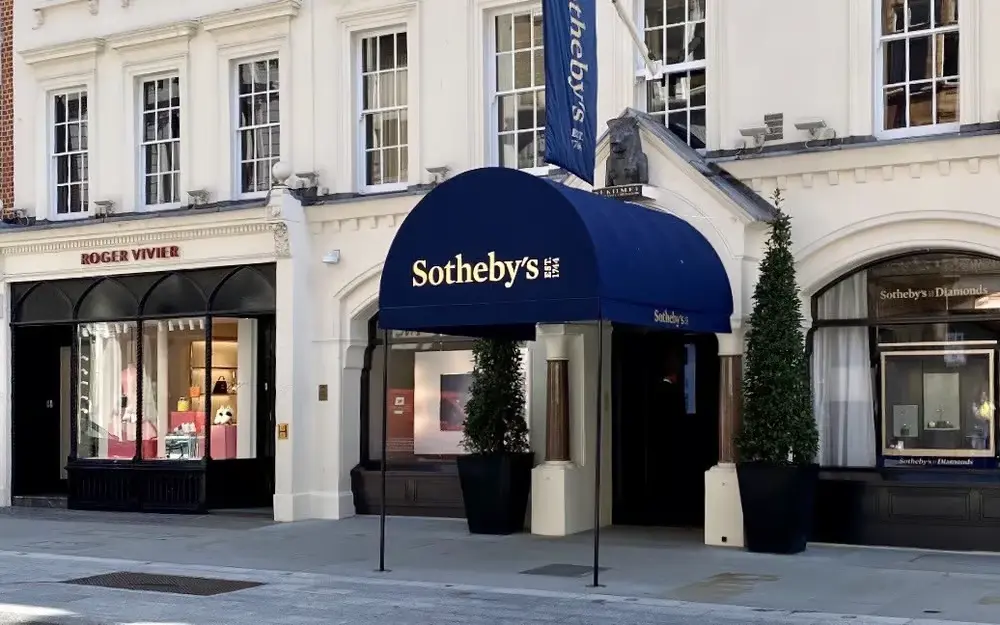
Sotheby's London
" I remember the day after the Damien Hirst sale very clearly. My first thought was, ‘Wow, he’s just sold £111 million worth of art.’ My second was, ‘Fuck. Have I just launched an art business as the entire market is collapsing? "
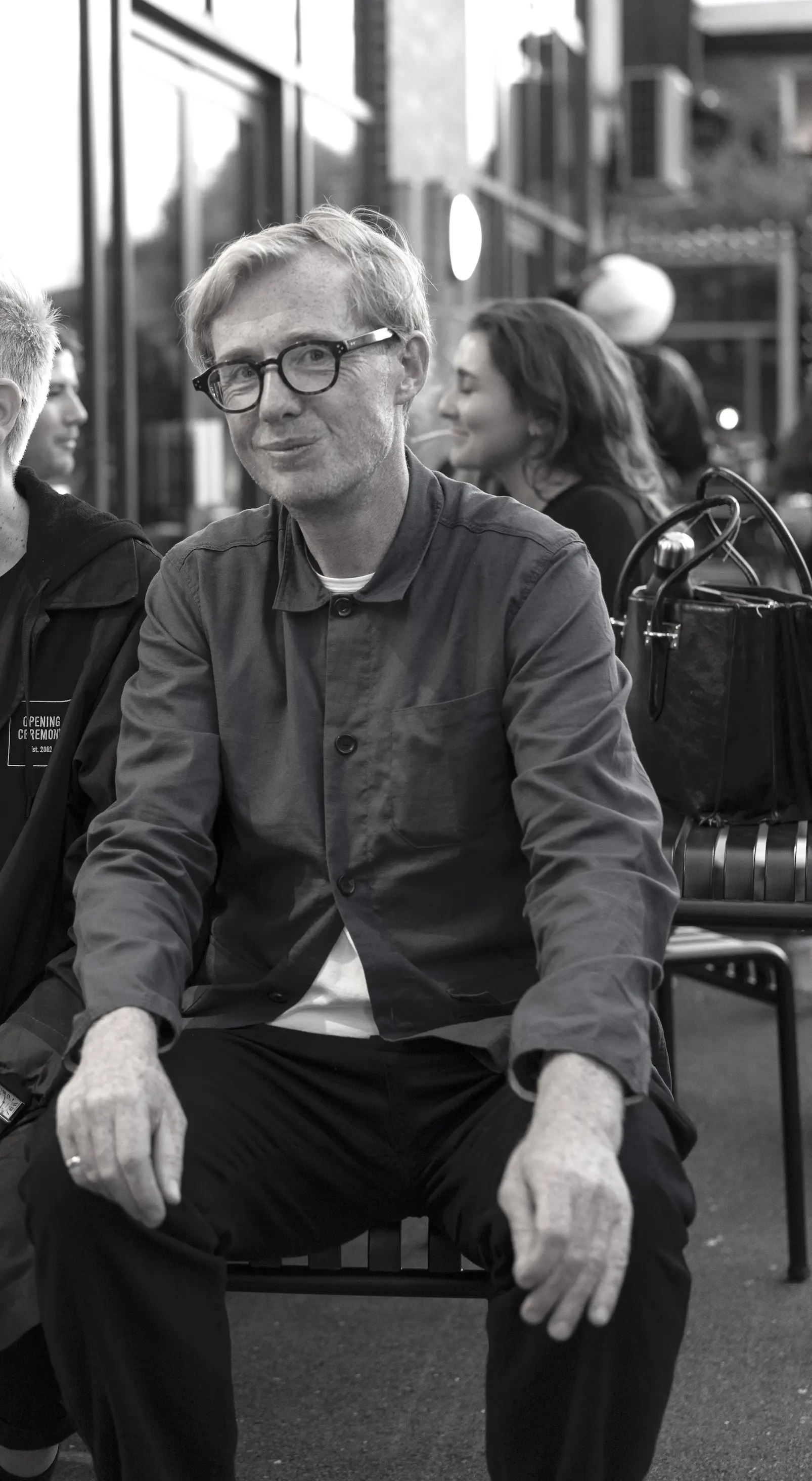
Ben Cotton, Founder & Director at Hang-Up Gallery
Launching in the Eye of the Storm
"I’d spent a good year wrestling with whether to leave my job at Wallpaper* magazine and take the leap to starting my own business. Launching an online gallery in 2008, a time when they barely existed, felt like a huge risk. I’d invested significantly in the website, stock and getting the business off the ground, only for the financial crisis to hit. Oddly, though, the timing proved advantageous. It taught me from the outset to run a lean business and avoid unnecessary excess. Many galleries that were overexposed folded; we kept things tight and, with a fair amount of luck, managed to ride it out, and we’re still here to talk about it today.”
Ben Cotton
Cutting Out the Gatekeepers
To understand just how outrageous this was, you need to understand the rules Hirst was breaking. Historically, the relationship between an artist and a gallery is sacred but tightly controlled. Galleries meticulously curate waiting lists to ensure works go to prestigious museums or established collectors, typically taking a fifty per cent cut in the process. Auction houses, conversely, were strictly the secondary market's domain.
Taking the work directly to Sotheby’s was a profound breach of etiquette, to say it lightly. By bypassing his heavyweight dealers, most notably Jay Jopling of White Cube and Larry Gagosian, Hirst avoided the gallery commission and retained the total share of the profits. In fact, Sotheby’s even waived its seller's fees to secure the historic event.
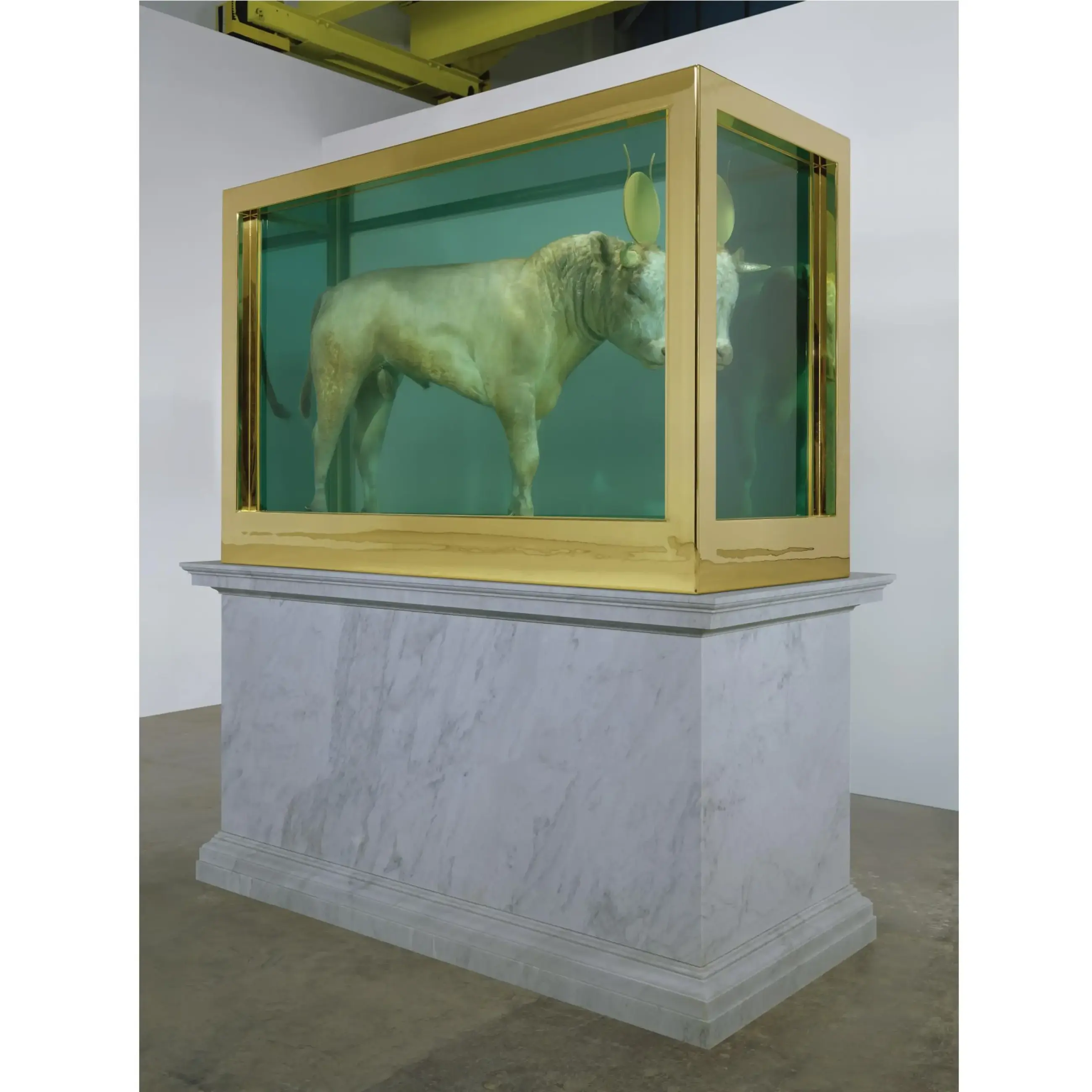
Damien Hirst - The Golden Calf, 2008
The Golden Calf and the Power of Spectacle
Of course, the rebellion would have fallen flat if the art hadn't delivered a massive visual and emotional punch. The auction floor was transformed into a macabre and glittering spectacle that felt more like a blockbuster film premiere than a traditional fine art sale.
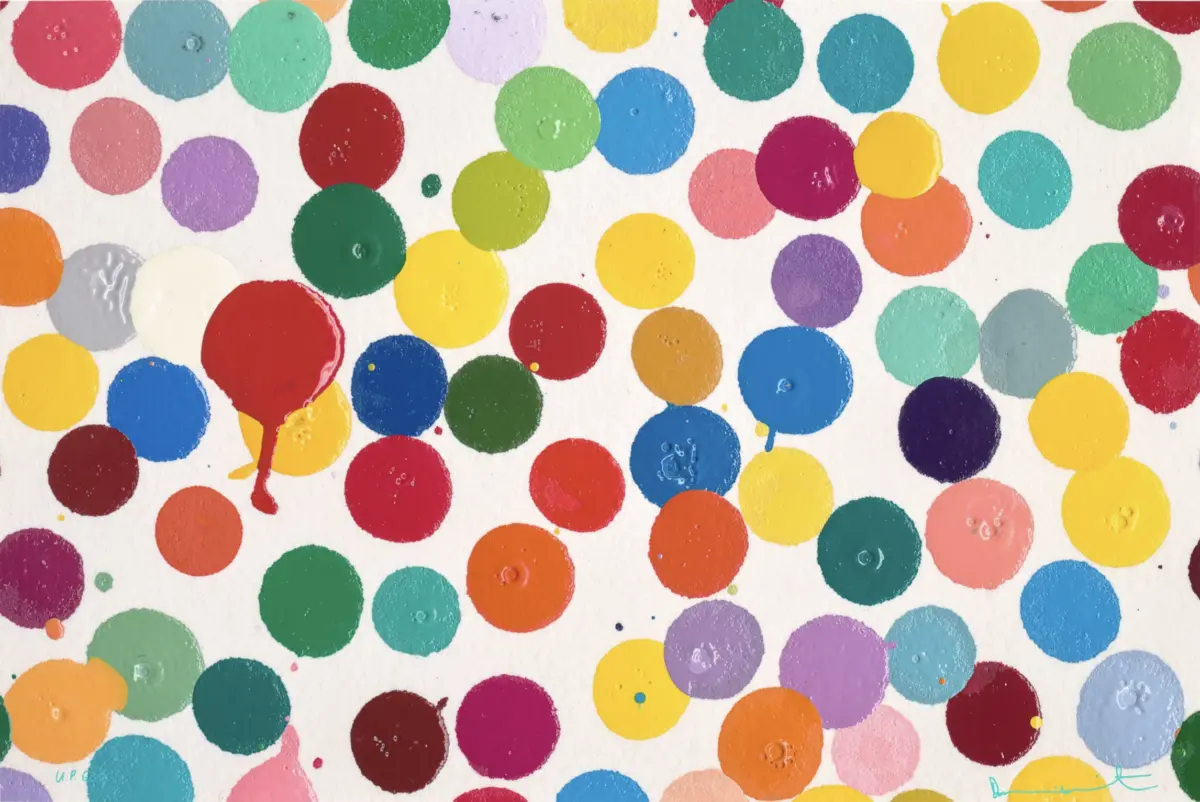
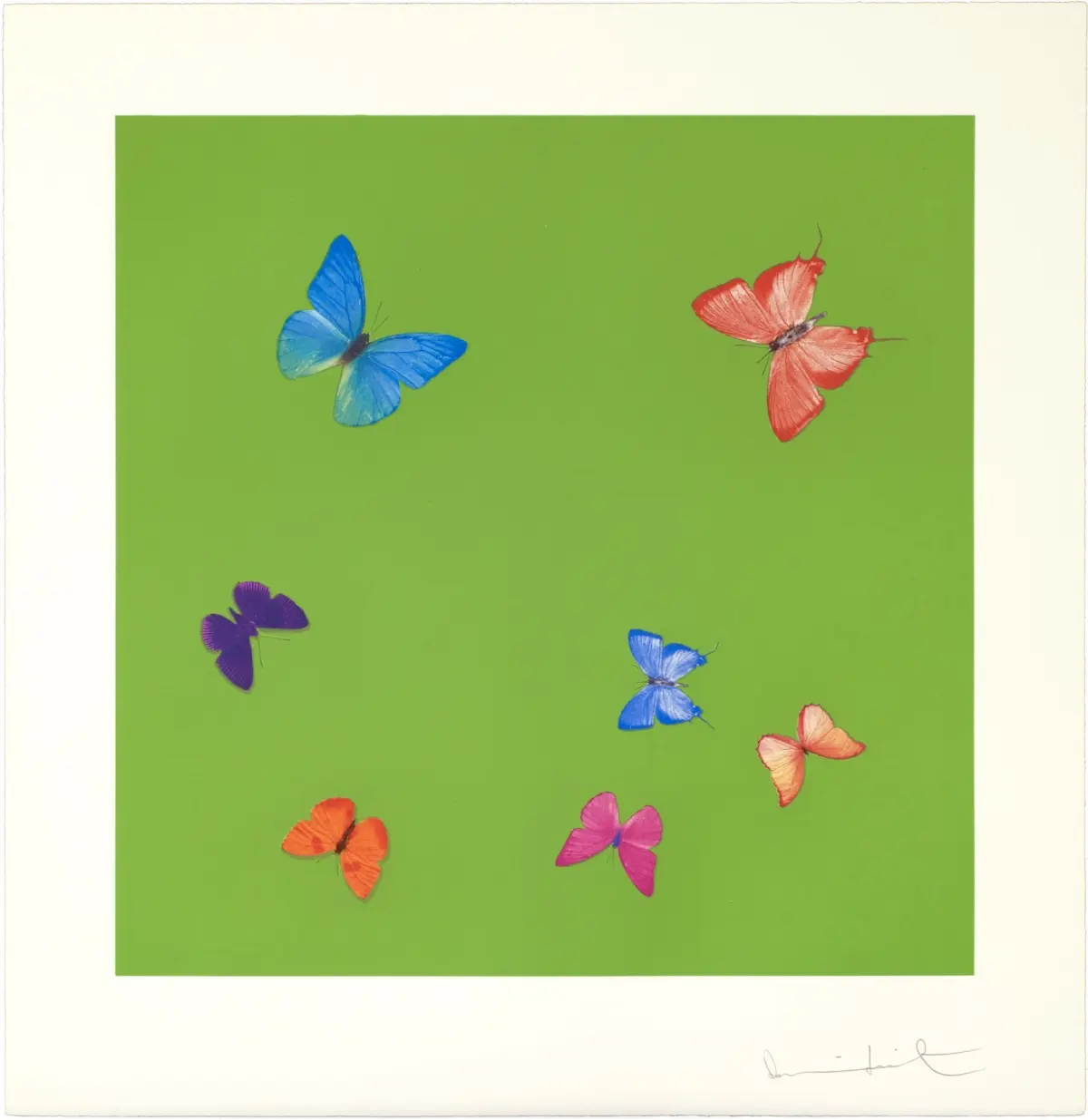
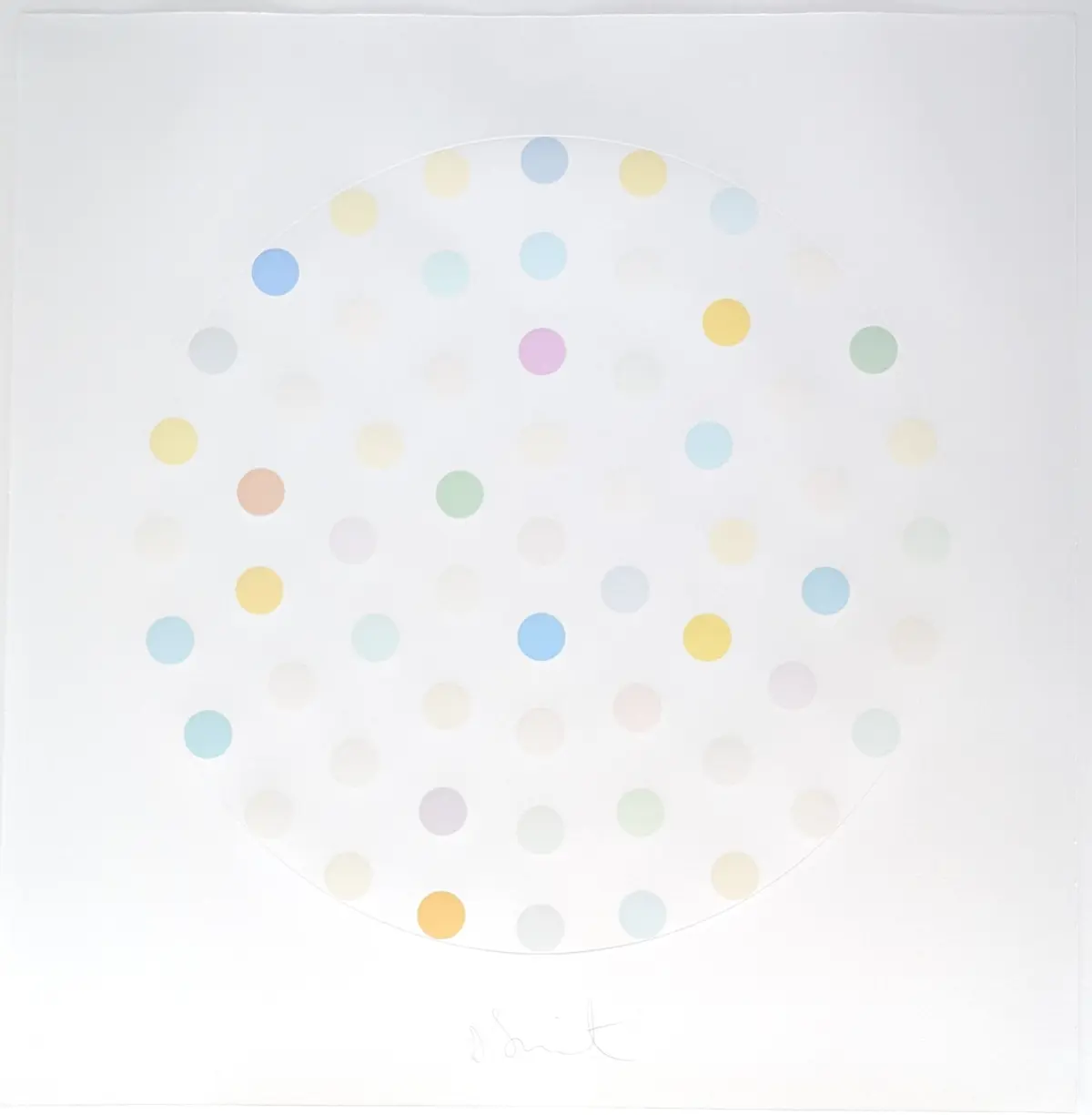
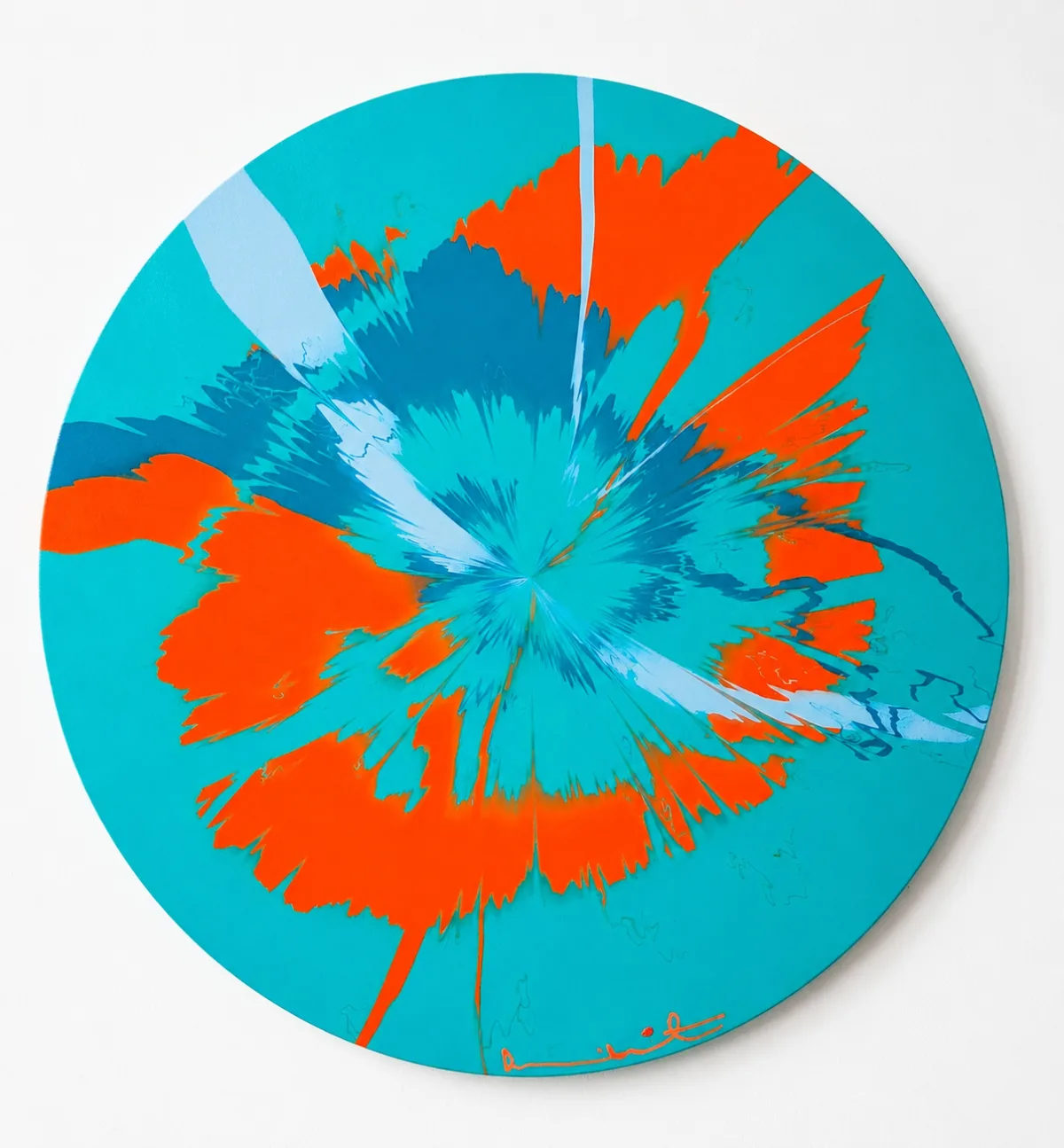
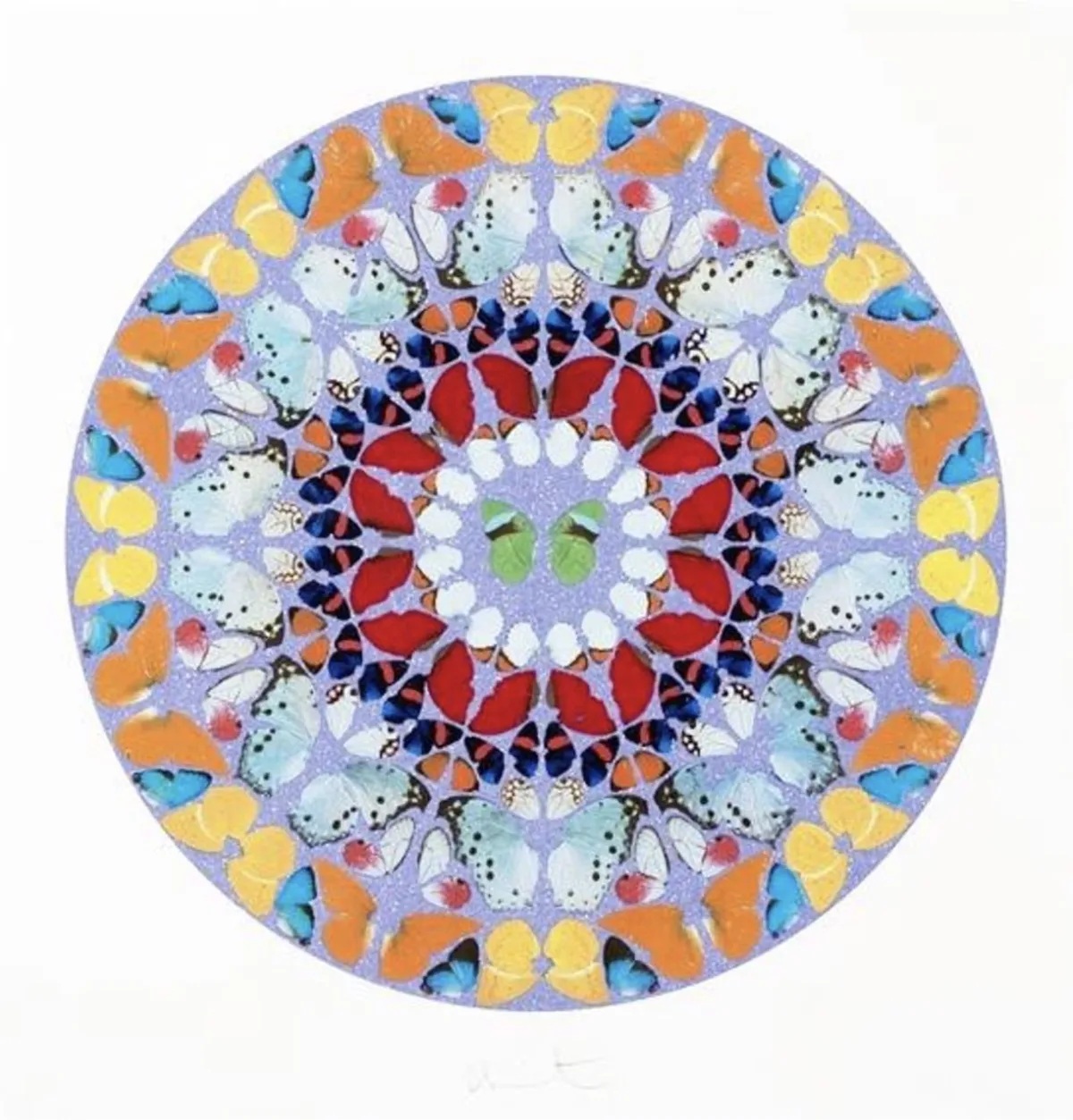
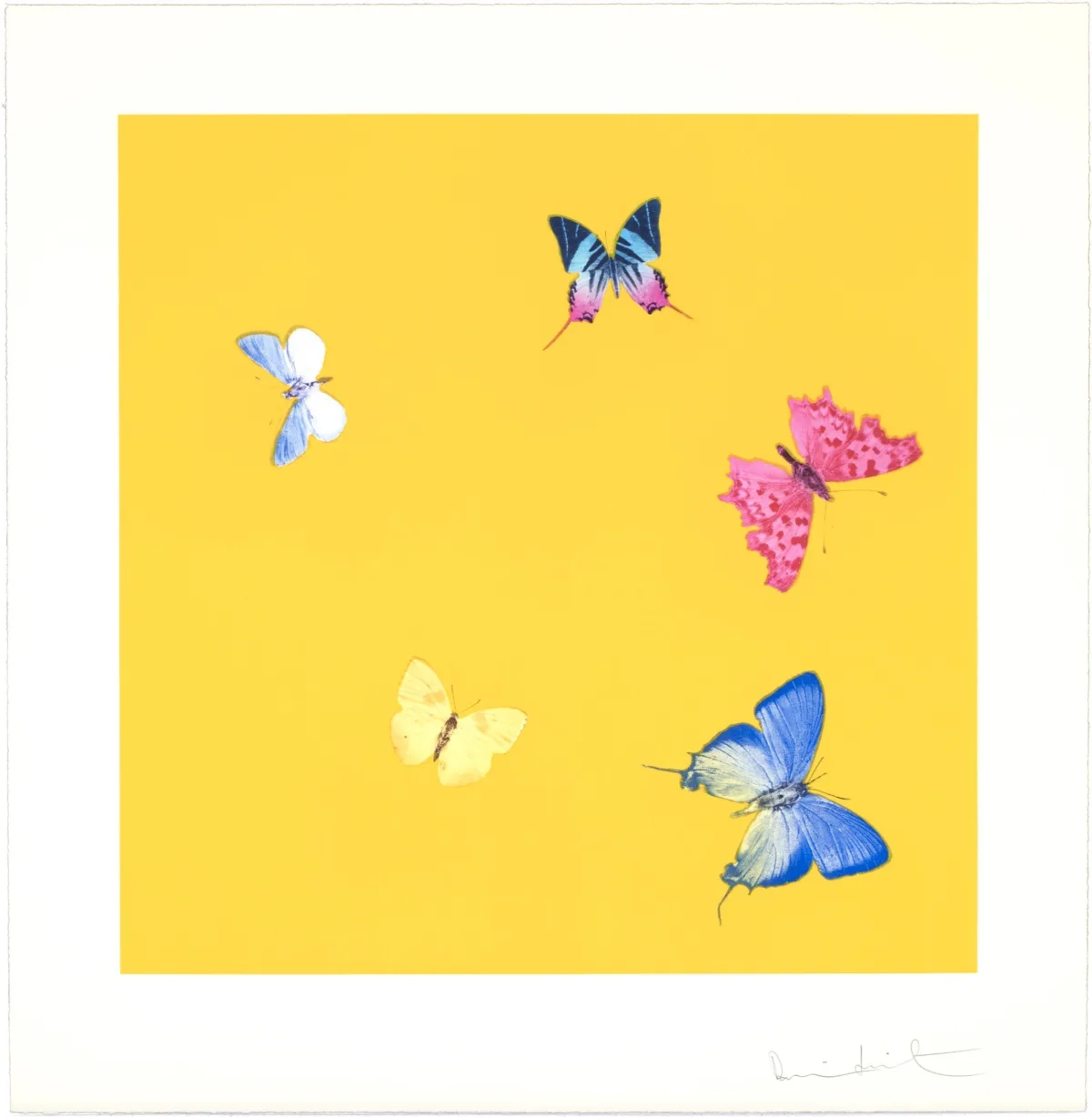
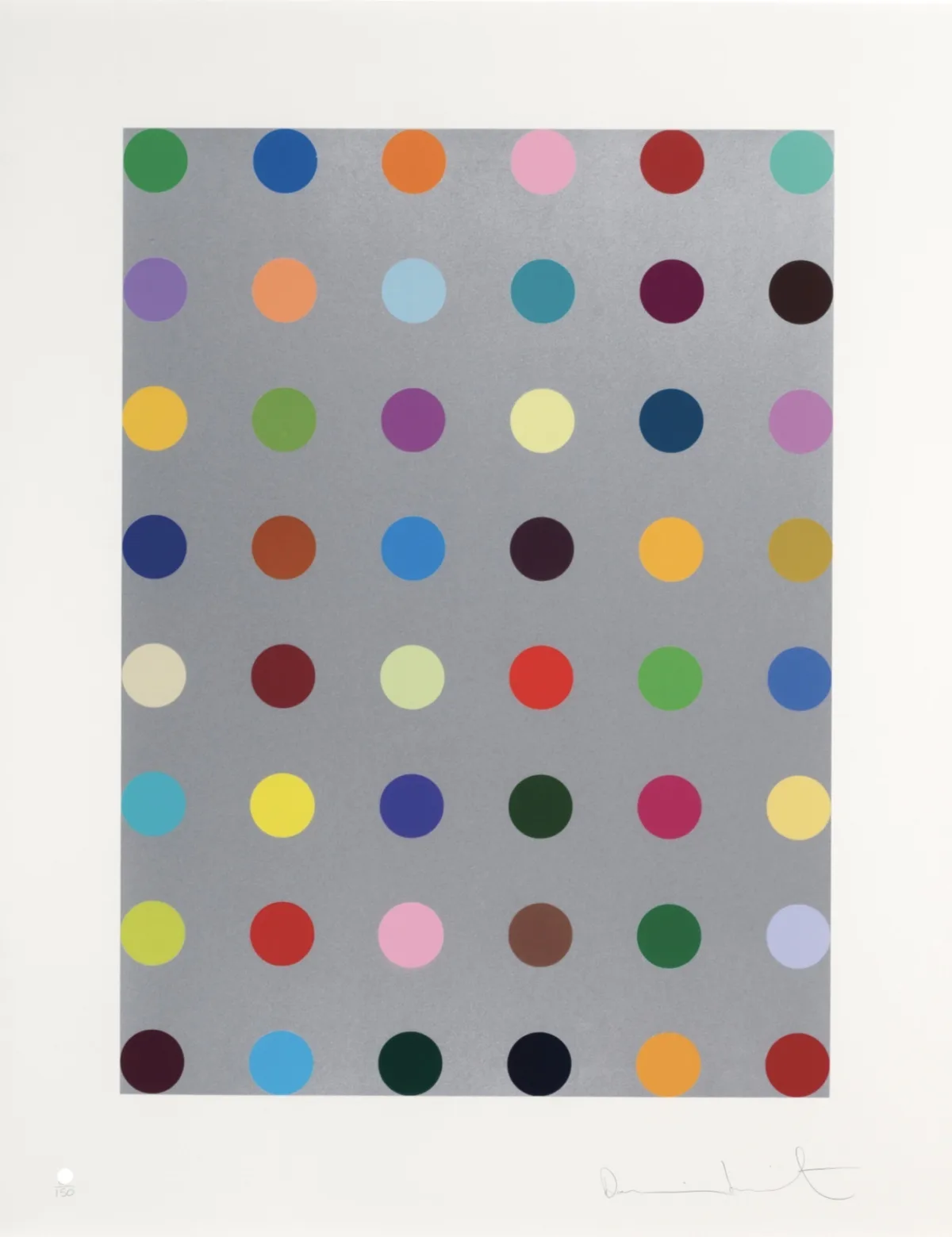
The undeniable star was The Golden Calf, a massive bull preserved in a tank of Hirst’s signature formaldehyde. With hooves and horns cast in solid 18-carat gold and a golden disc resting on its head, it hammered down for a staggering £10.3 million. Surrounding it were other creatures in formaldehyde, surgical spot paintings, spin canvases, and airy butterfly collages.
As much as the art, Hirst knew he was selling a cultural moment and the chance of being part of something everyone was talking about.
Long-Term Impact: A New Era for Collectors and Galleries
What made Beautiful Inside My Head Forever so significant wasn't simply the volume of sales. It forced the art world to think differently about how artists, galleries, auction houses and collectors could interact.
For collectors, it was a moment of genuine empowerment. It reinforced the idea that collecting should be driven by personal conviction and a genuine connection with the work. Acquiring great art no longer meant being on a mailing list.
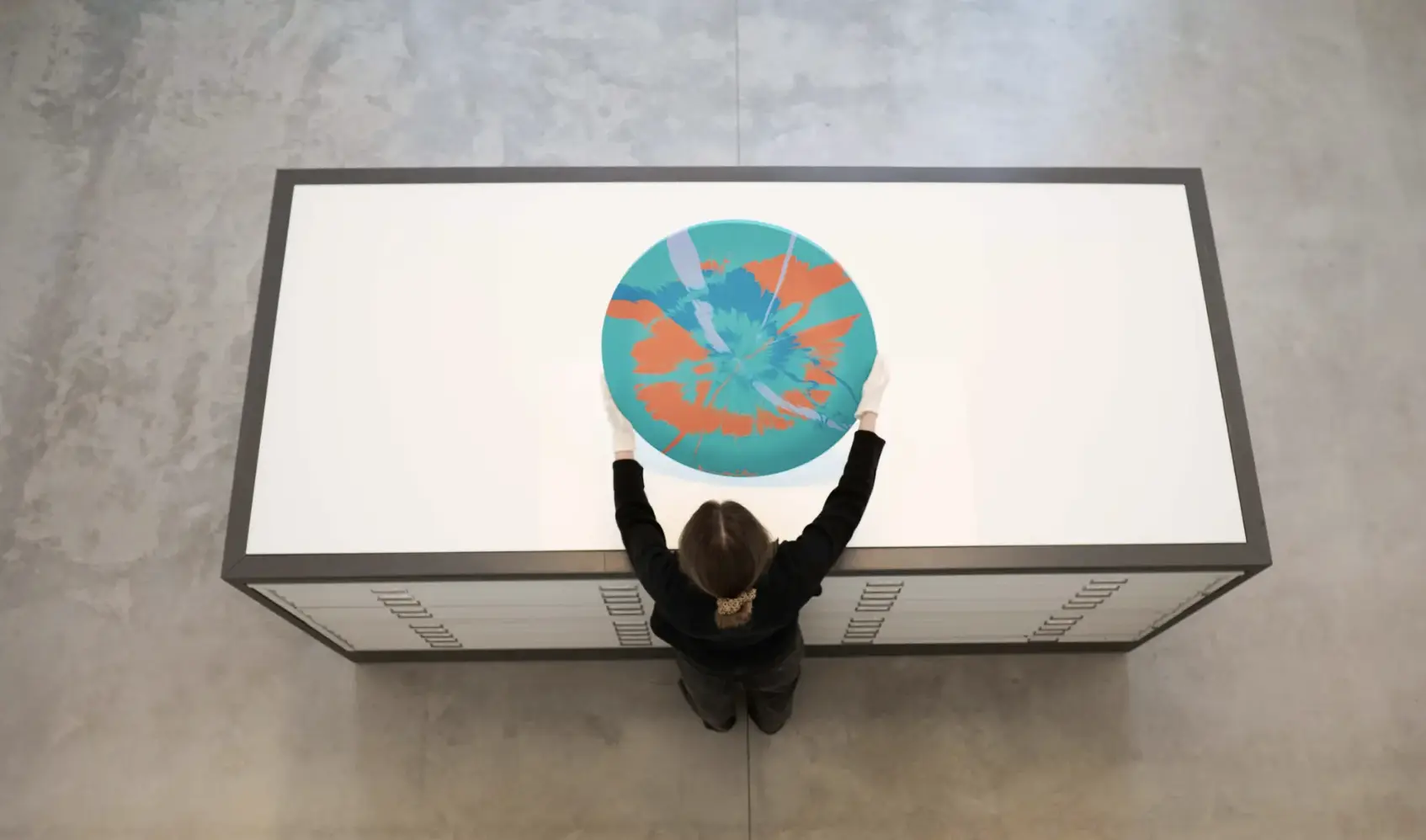
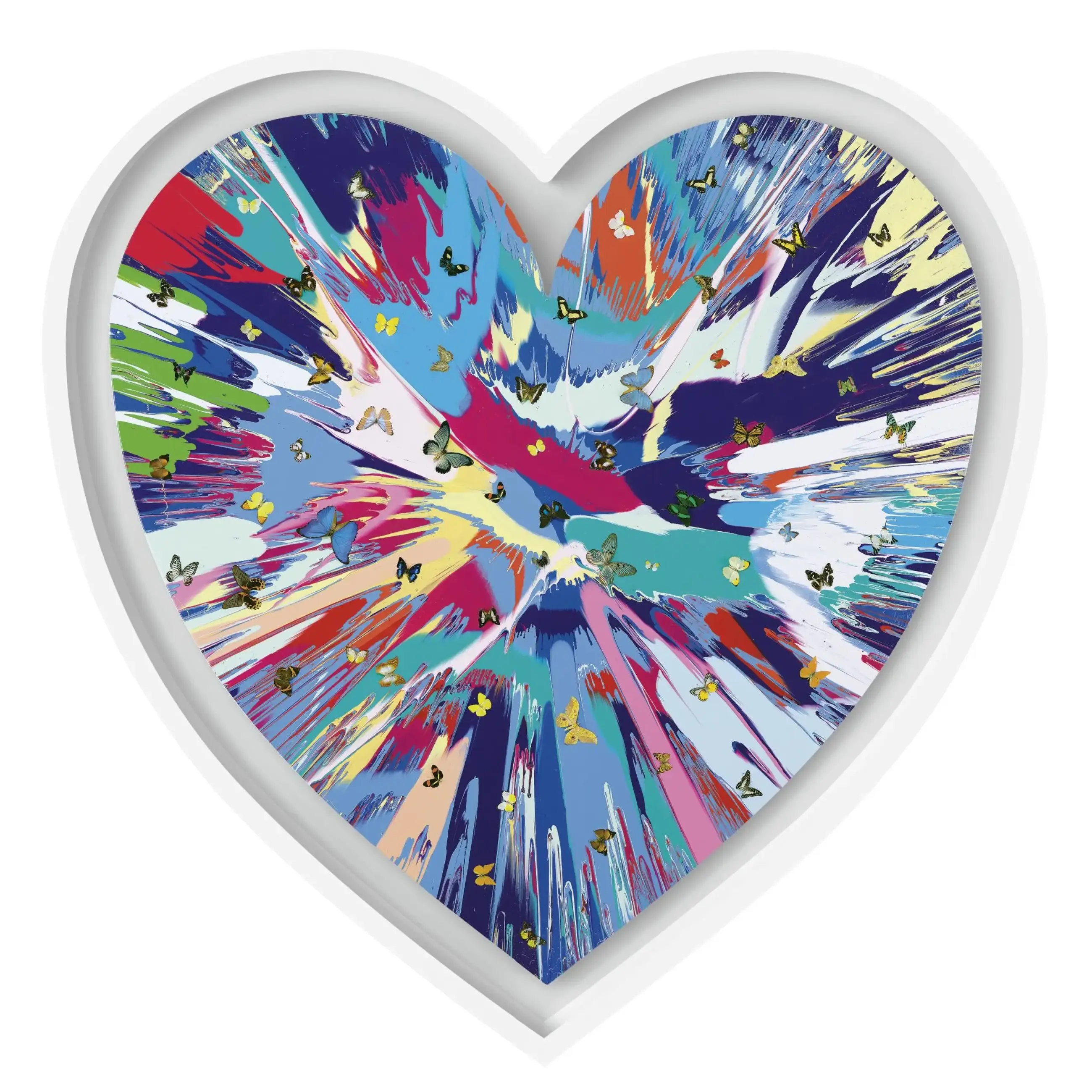
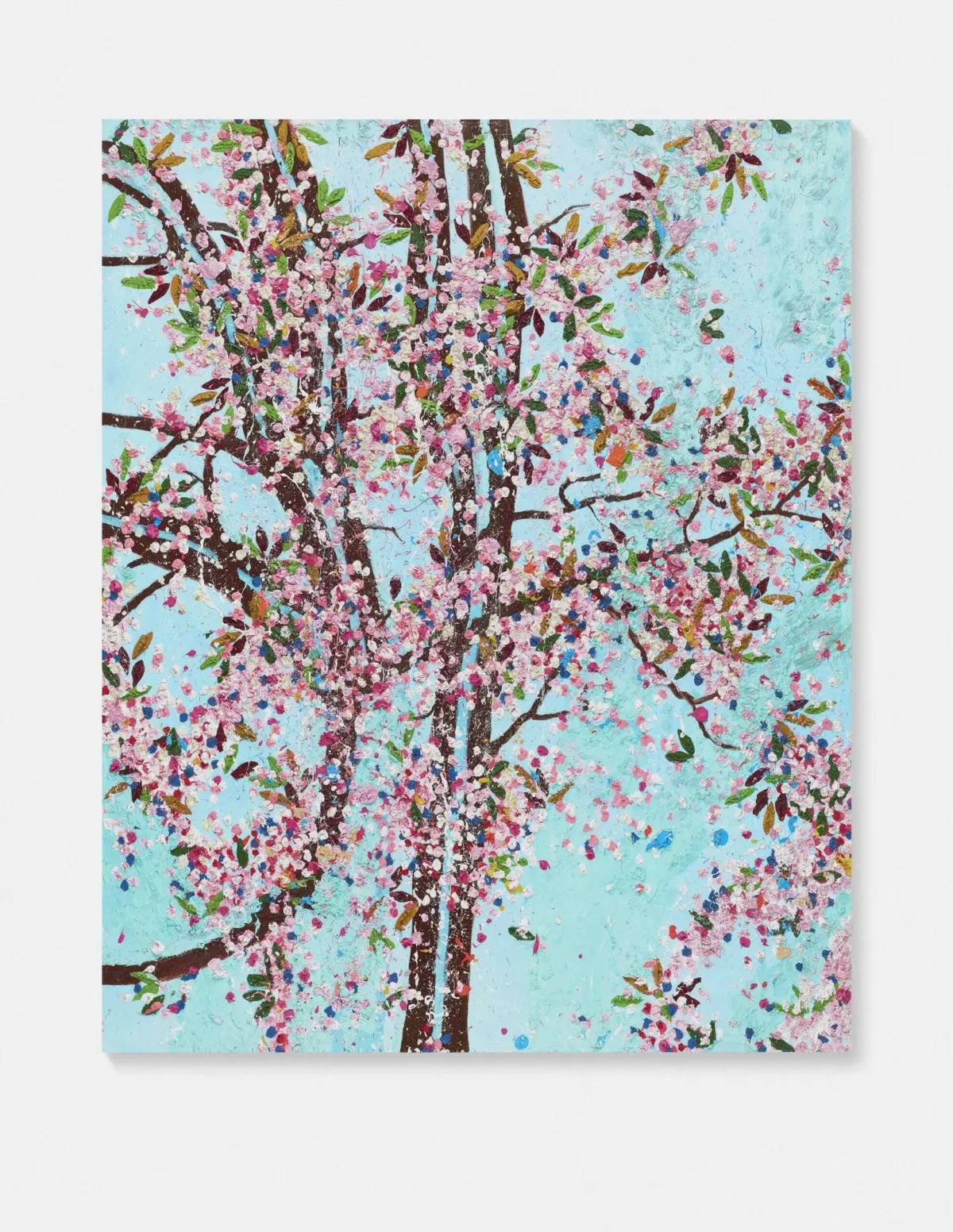
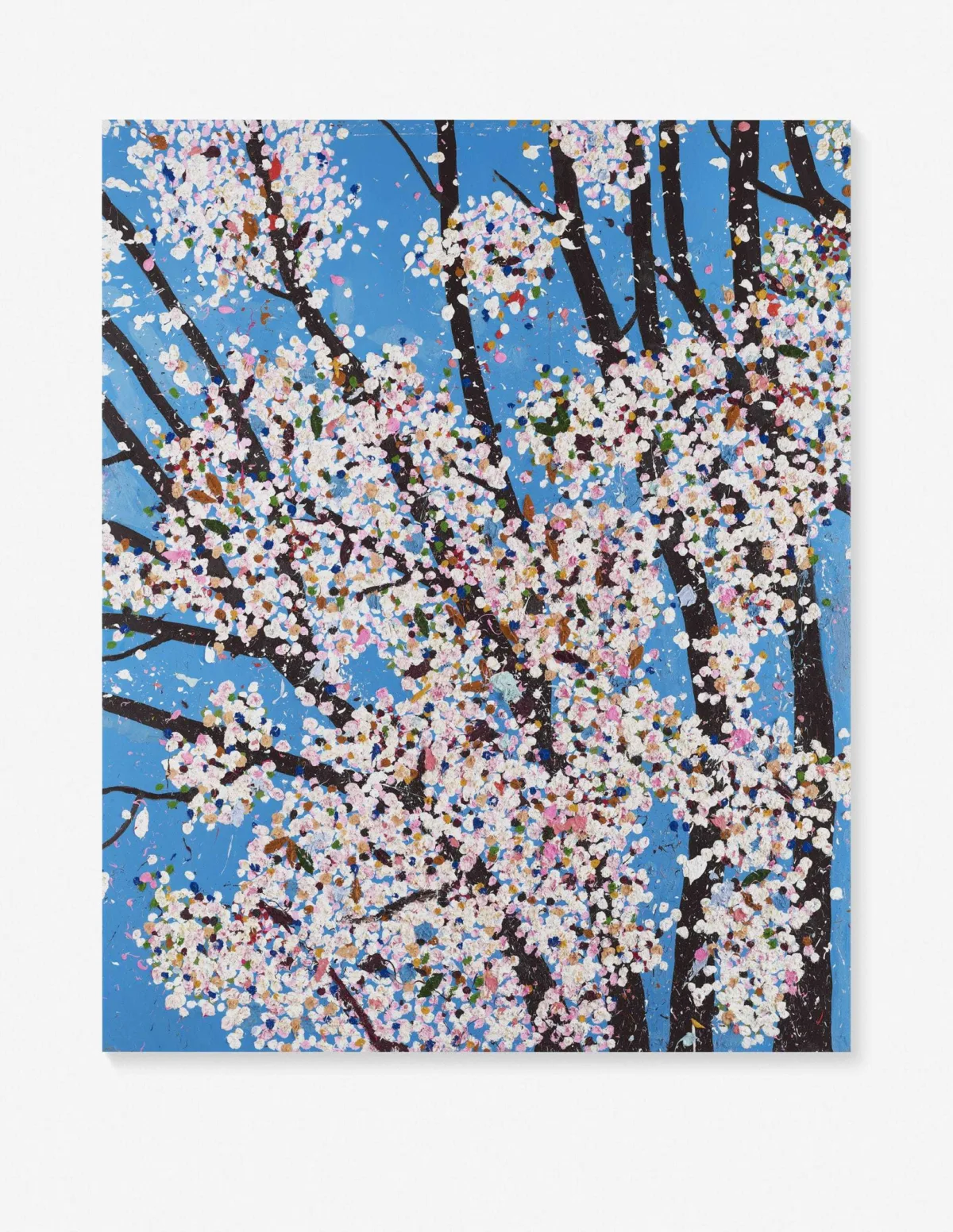
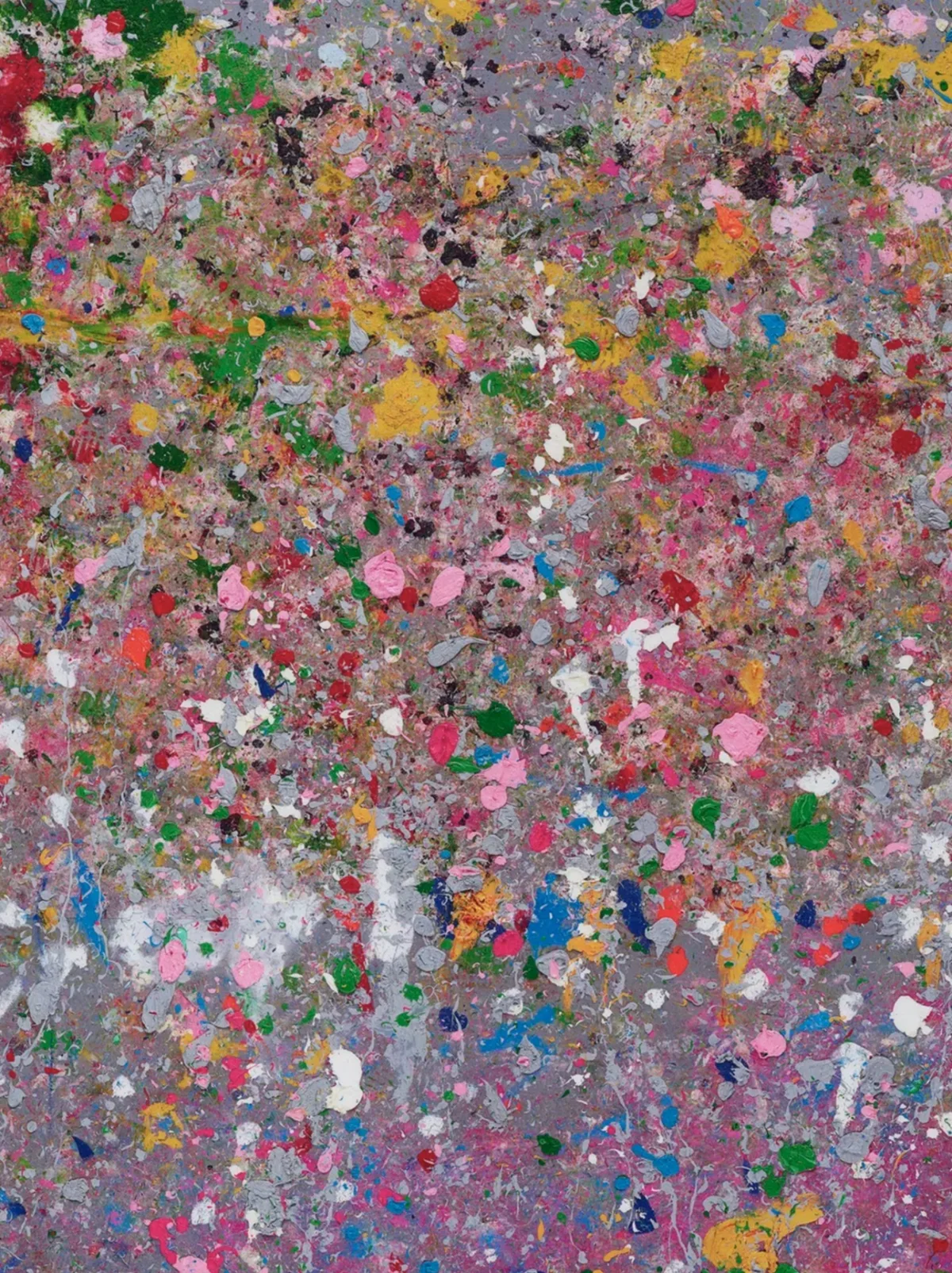
Damien Hirst, H12-2 (Large) Beautiful, Sensory-Driven Only Supernova Painting, 2023
For galleries, it was a reminder that the art market was evolving. Hirst's sale highlighted the different roles they can play. While an auction can create a global spectacle and open up access to a major sale, galleries offer something more sustained: context, expertise, relationships and long-term guidance.
Today, the most successful galleries are more transparent, approachable and collector-focused than ever, working alongside clients to help them build meaningful collections with confidence.
The Numbers that Made History
£111 Million —The total amount raised across the two-day sale.
218 of 223 Lots — The number of works sold.
More than 30% First-Time Buyers — Demonstrating Hirst's ability to bring new collectors into the contemporary art market.
£10.3 Million — The price achieved by The Golden Calf, the highest-priced work in the sale.
21,000 Visitors — The number of people who queued to see the pre-sale exhibition at Sotheby's.
Nearly two decades on, Beautiful Inside My Head Forever still feels remarkably relevant. It didn't spell the end of the gallery system, but it proved that the art market could evolve, and that artists, galleries, auction houses and collectors didn't have to follow a single route. The rules haven't disappeared. But Hirst had shown they could be rewritten.
Contributors
Laura Rivas-Lopez
More about Damien Hirst
-
20 Jul 2026 3 min read
Collector's Guide: Damien Hirst | Spots
Once you become synonymous with an image, have you hit the big time? There are 3 main subjects that Damien...
-
13 Apr 2026 2 min read
Damien Hirst: The importance of the 'Butterfly'
The "Butterfly has been a recurring motif throughout Hirst's career. We take a deeper dive into the significance, relevance and...
-
26 Mar 2026
Renewed Momentum: The Global Art Market Enters a New Phase of Growth
The global art market has returned to growth, driven by renewed strength at the high end and a more balanced...
-
08 Jan 2026
Why January is the Best Time to Buy
January is often seen as a pause in the art world. In reality, it is one of the most constructive...
-
13 Oct 2025 3 min read
Your London Art Week Guide 2025
London Art Week has arrived, and with so much going on, we have done the legwork so you have a...
-
13 Oct 2025 2 min read
Market Watch: Kusama Auction Results
The start of the autumn season has seen some great results for Yayoi Kusama. We've compiled the showstoppers that may...
-
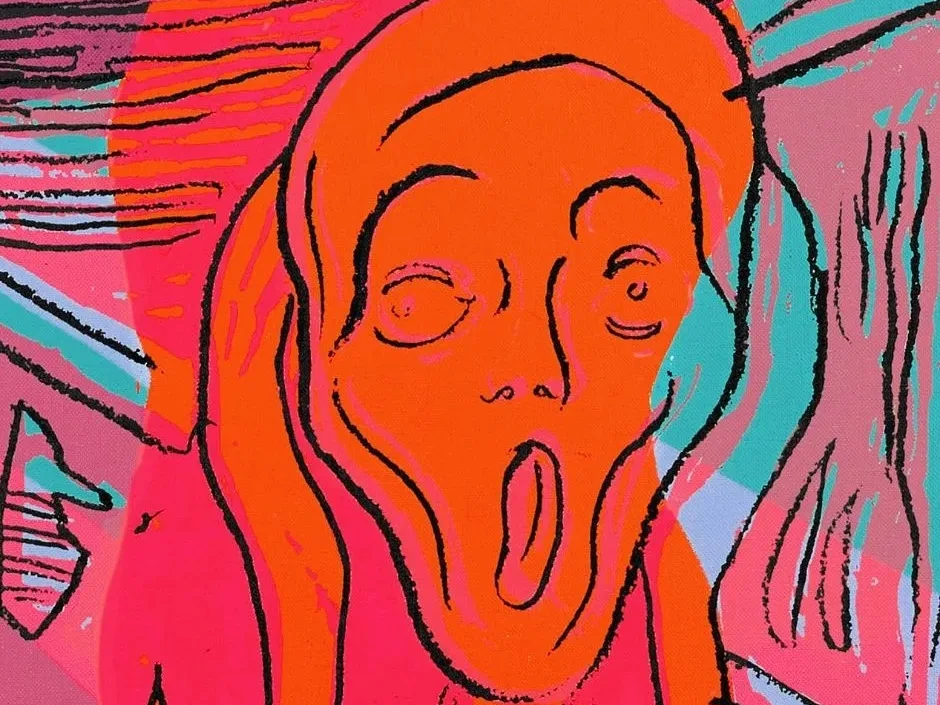
22 Sept 2025 2 min read
Market Watch: Warhol Auction Results
Last week's auctions saw some great results for Andy Warhol which smashed estimation and expectation. We've compiled the showstoppers that...
-

31 Jul 2025 4 min read
The Hang | Your monthly round up of Art Market based News
Kusama dominates Tokyo, Warhol holds the line, and why editioned works are anchoring collector confidence this summer.
-
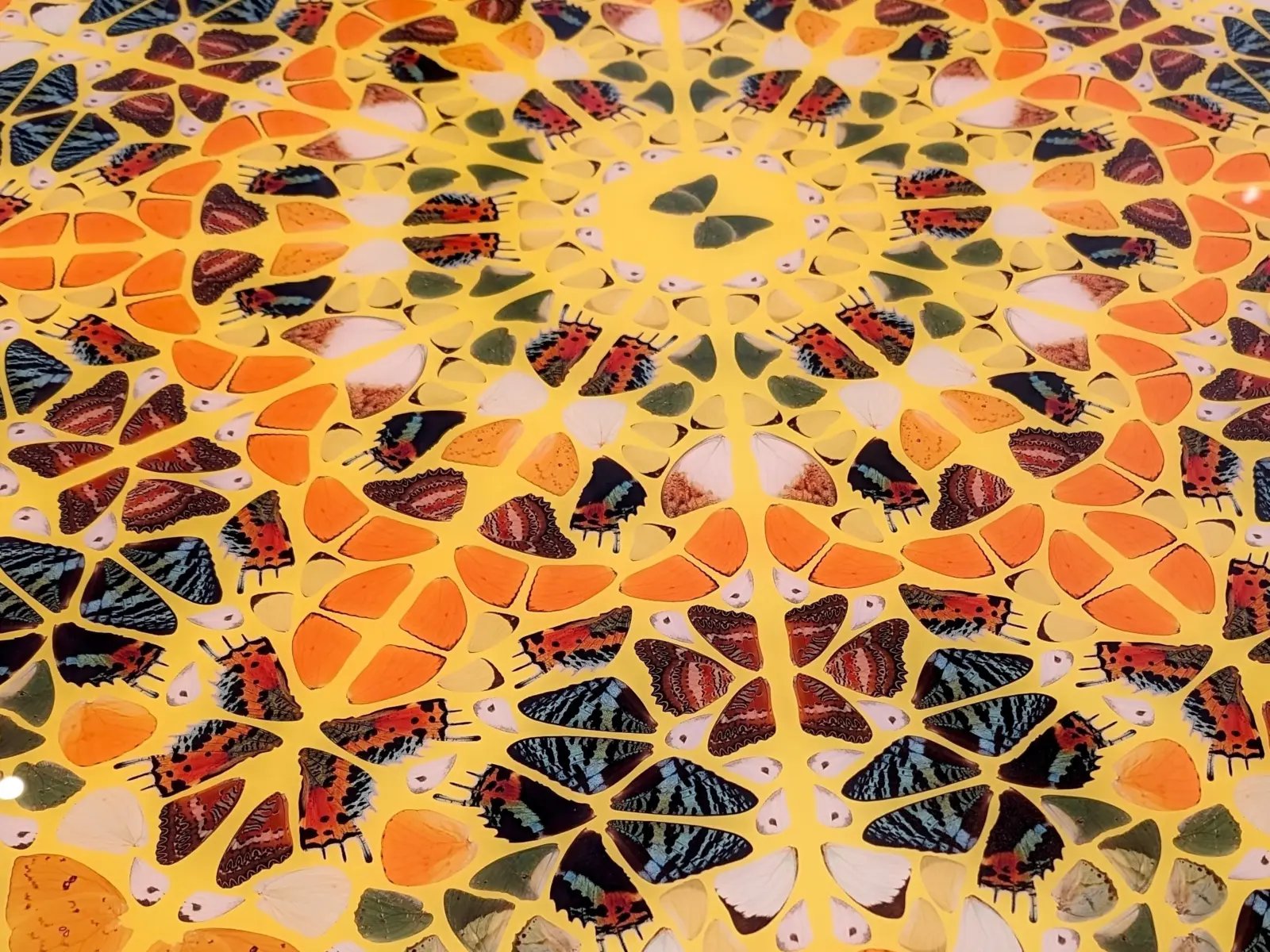
02 Jun 2025 1 min read
Art News: Damien Hirst | Posthumous Paintings
Damien Hirst is never far from an intriguing idea that challenges contemporary art. At 60, most artists might reflect on...
-
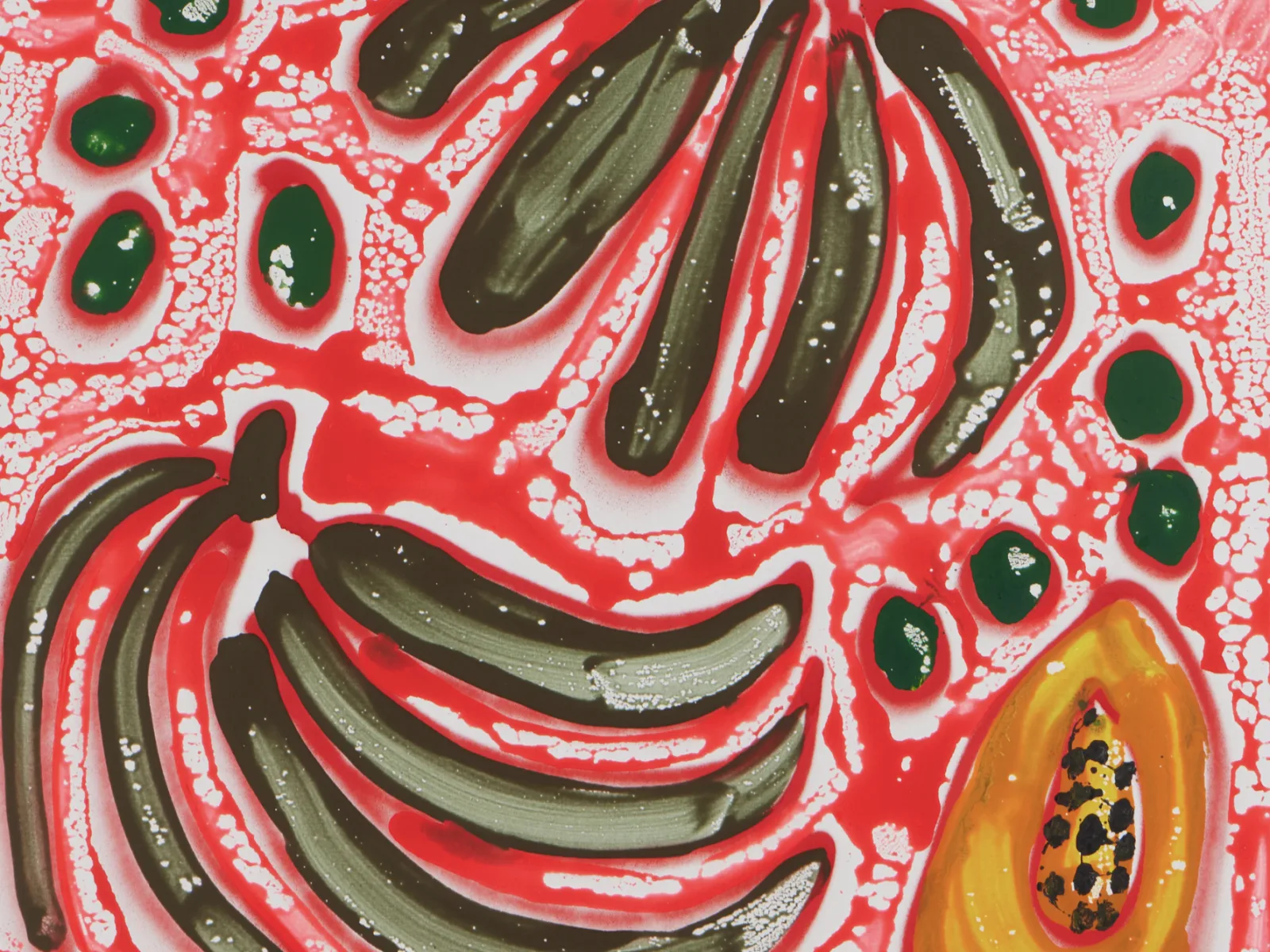
19 Mar 2025 2 min read
Market Watch: Red-Chip Art
Expanding your artworld vernacular, we are here to demystify what Red-Chip Art is and how it is shaking up the...
-
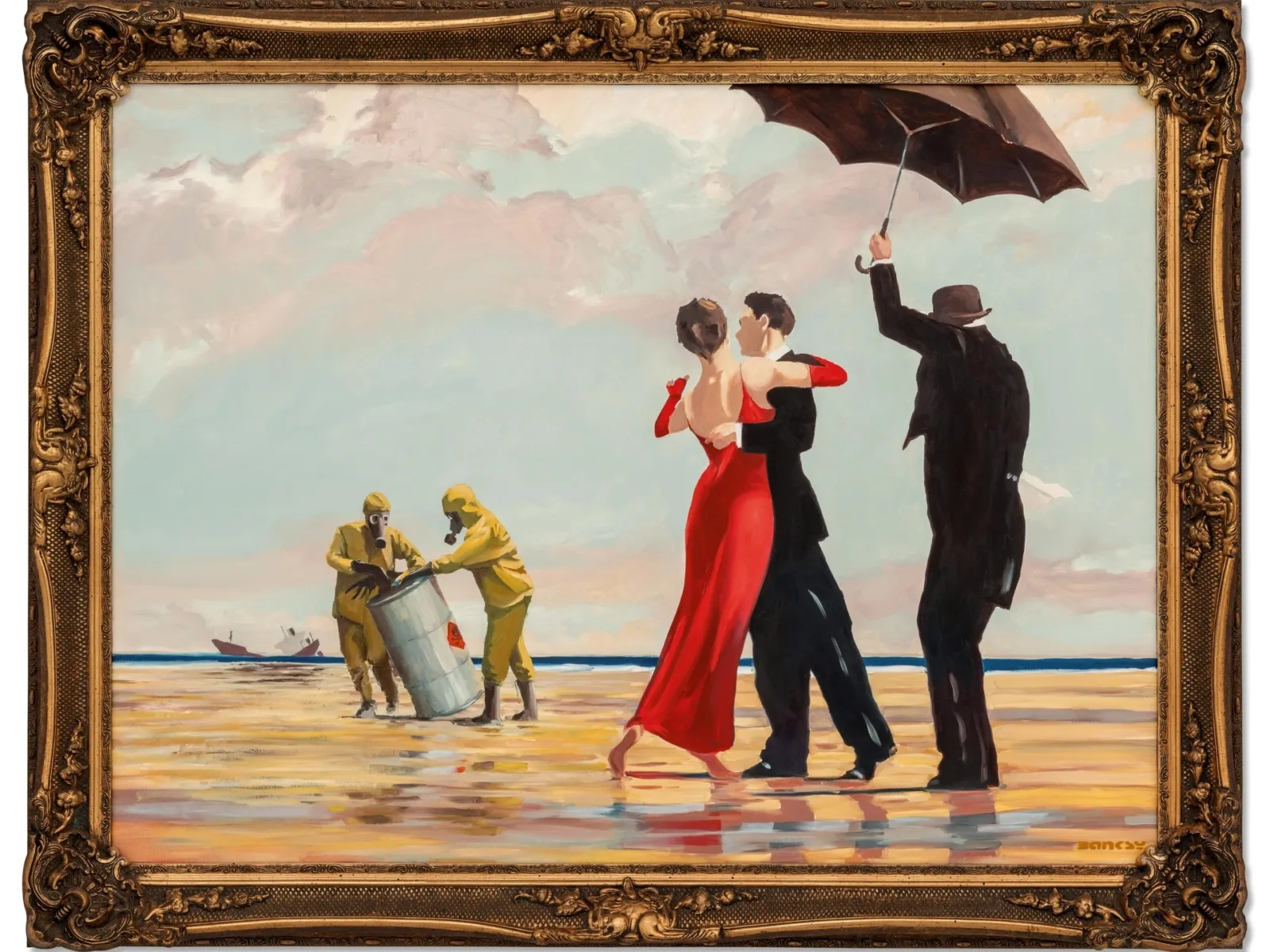
07 Mar 2025 2 min read
Market Watch: Auction highlights | RESULTS Part 2
Sotheby's auction, which totalled £62.5m, also included a £4.3m Banksy sold by blink-182 frontman Mark Hoppus.
-
06 Mar 2025 4 min read
Artist Decoded: Damien Hirst
Take a deep dive into one of the contemporary arts' most polarising artists; Damien Hirst. Rising to notoriety during the...
More from Art Market
-
05 Oct 2026 4 min read
Banksy, Self-destruction and the Art of the Spectacle
Eight years ago, one of the most talked-about moments in contemporary art unfolded in the middle of a Sotheby’s auction...
-
16 Aug 2026
Why Galleries Deliver Better Results for Sellers For Limited Edition Prints
With close to ten years on the auction rostrum, our Senior Acquisitions Specialist Madeleine White has seen both sides of...
-

14 Jul 2026 3 min read
Is the Art Market on the Road to Recovery?
A new report from ArtTactic has shed positive light on the art market. After a few years of uncertainty and...
-
03 Jul 2026 5 min read
The Hang - Your Quarterly Art Market Briefing | Q2 2026
What moved the market, made headlines and mattered most this quarter. Digest the important moments of Q2 with The Hang.
-
22 Jun 2026
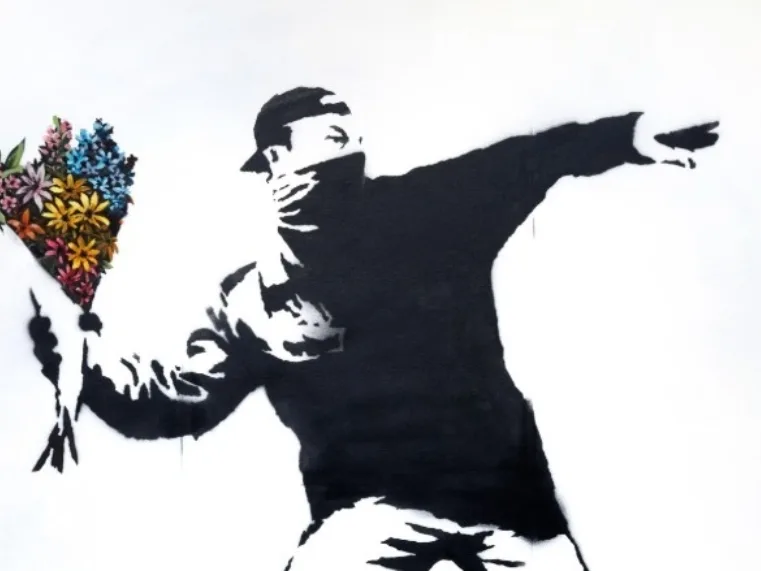
A Life Size example of Banksy’s Love Is In The Air Headlined Sotheby’s Evening Sale
One of Banksy’s most enduring images headlined Sotheby’s Modern & Contemporary Evening Auction in London this week, as Love Is...
-
08 Jun 2026 4 min read
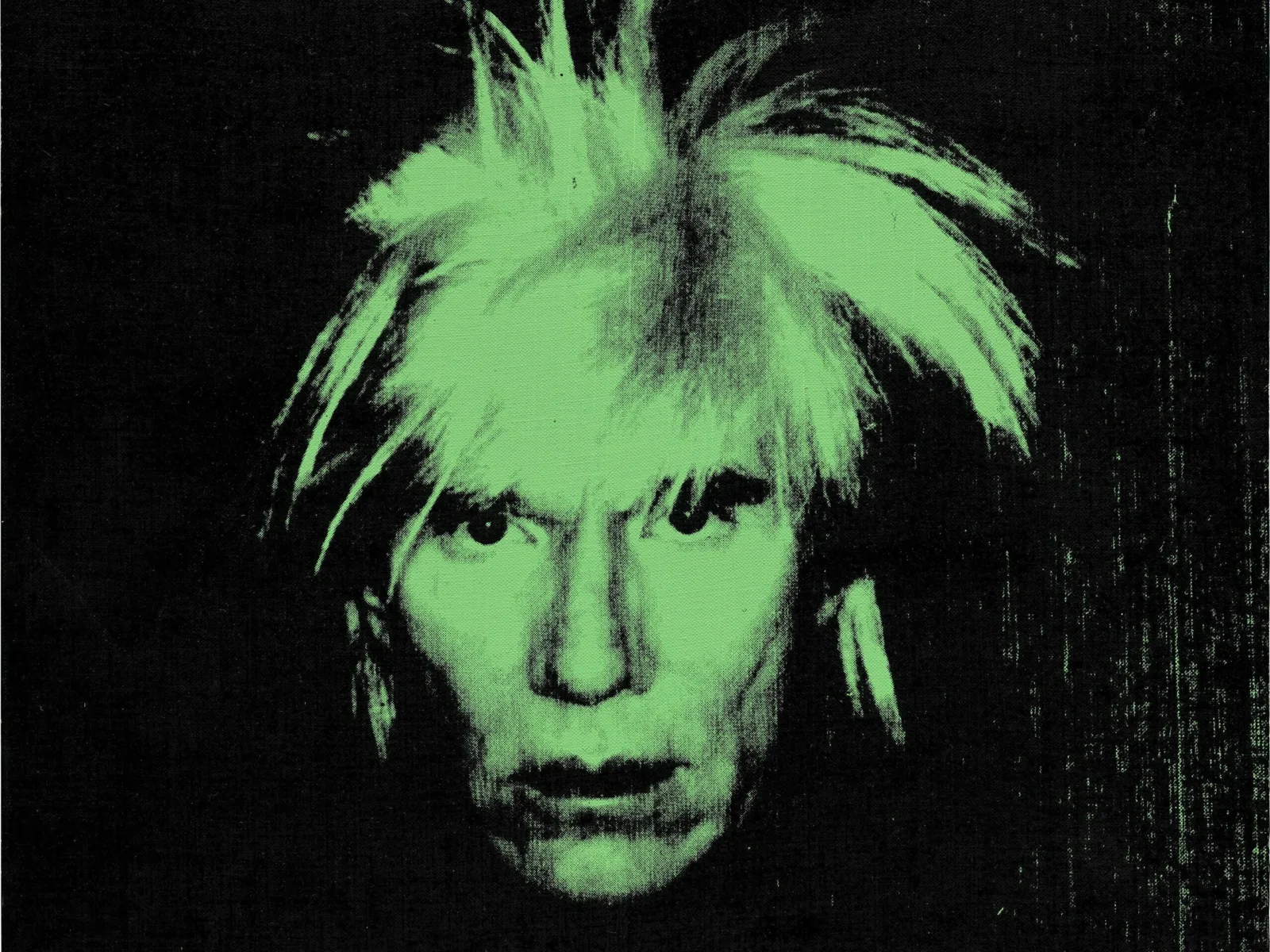
Warhol Wows at Auction
The spring auction season has delivered another powerful endorsement of Andy Warhol's enduring market appeal, with strong results recorded across...
-

21 May 2026
Third Most Expensive Banksy Sells for $18 Million
Banksy’s Girl and Balloon on Found Landscape sold for $18 million at a Fair Warning auction in New York, making...
-
26 Mar 2026 5 min read
The Hang - Your Quarterly Art Market Briefing | Q1 2026
What moved the market, made headlines and mattered most this quarter. Digest the important moments of 2026 with The Hang.
-
26 Mar 2026
Renewed Momentum: The Global Art Market Enters a New Phase of Growth
The global art market has returned to growth, driven by renewed strength at the high end and a more balanced...
-
08 Jan 2026
Why January is the Best Time to Buy
January is often seen as a pause in the art world. In reality, it is one of the most constructive...
-
26 Dec 2025 4 min read
The Hang | December | Your round up of art market for 2025
The year in review: 2025 is coming to a close, and this year has a lot to say for itself.
-
30 Nov 2025 5 min read
Miami Art Week 2025: Where the Art World Touches Down
Miami Art Week 2025 is set to bring the art world back to the city with fresh momentum. From the...